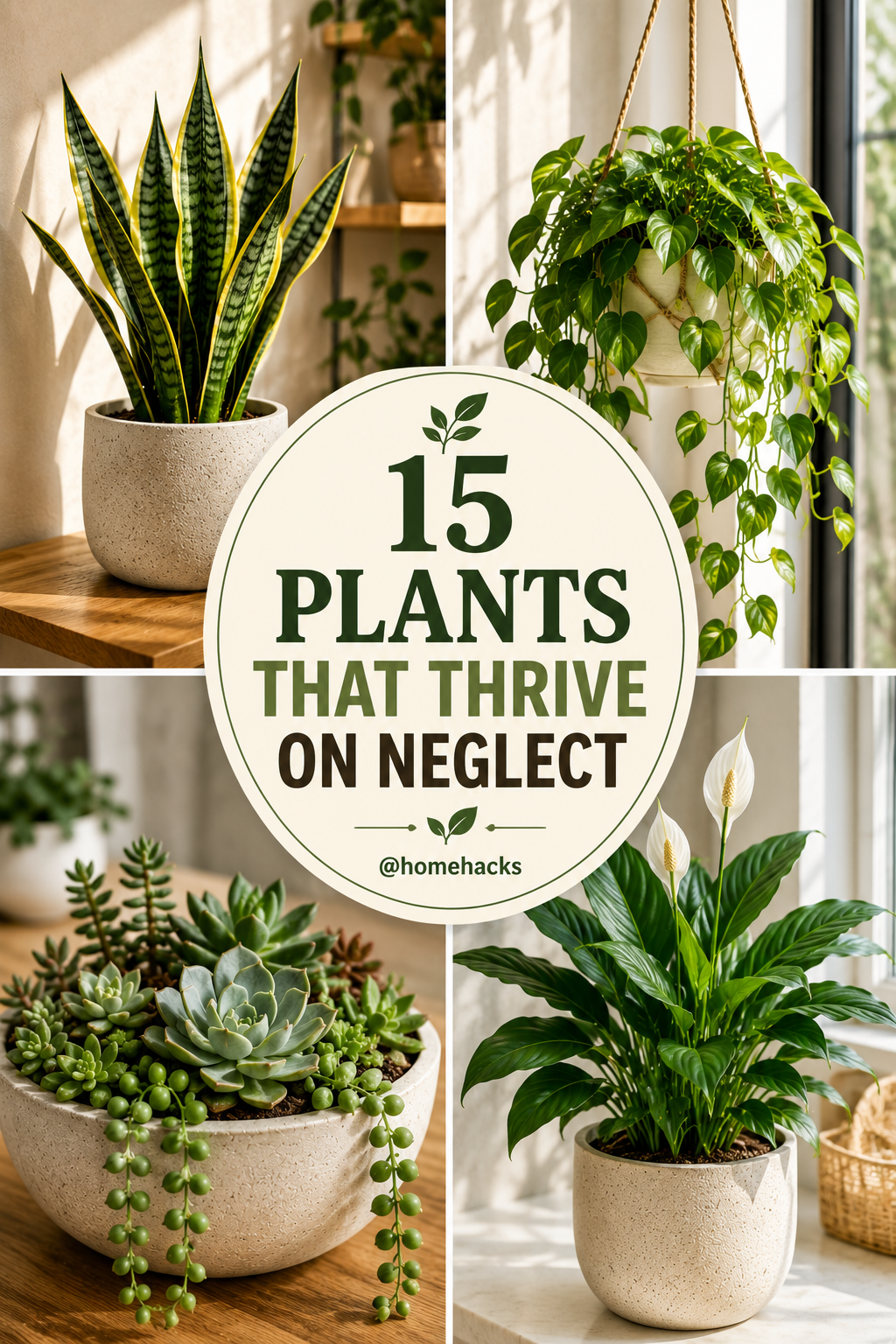
Not everyone has a green thumb, and that’s perfectly okay. Some houseplants are surprisingly tough and can thrive with minimal attention, making them perfect for busy people, beginners, or anyone who occasionally forgets to water their plants.
If you’re looking for beautiful greenery that doesn’t demand constant care, these 15 low-maintenance plants are excellent choices.
1. Snake Plant
Snake plants are nearly impossible to kill.
Why people love them:
- Tolerate low light
- Need very little water
- Improve indoor air quality
- Thrive in almost any room
2. Pothos
Pothos is one of the easiest houseplants to grow.
Benefits:
- Fast-growing vines
- Tolerates low light
- Forgives missed waterings
- Great for shelves and hanging baskets
3. ZZ Plant
The ZZ plant thrives on neglect.
It can:
- Survive low light
- Go weeks without water
- Handle indoor conditions easily
Perfect for offices and apartments.
4. Aloe Vera
This popular succulent stores water in its leaves.
Why it’s great:
- Needs infrequent watering
- Loves bright light
- Useful for soothing minor skin irritations
5. Spider Plant
Spider plants are beginner-friendly and adaptable.
They:
- Grow quickly
- Produce baby plants
- Tolerate occasional neglect
6. Peace Lily
Peace lilies bring elegance to any room.
Benefits:
- Beautiful white blooms
- Thrives in indirect light
- Signals thirst by drooping slightly
7. Jade Plant
A classic succulent known for its longevity.
Features:
- Requires little water
- Easy to maintain
- Attractive thick leaves
8. Cast Iron Plant
Its name says it all.
This plant:
- Tolerates low light
- Handles temperature changes
- Survives neglect better than most plants
9. Philodendron
Philodendrons are known for their attractive foliage and easy care.
They:
- Adapt well to indoor environments
- Need minimal maintenance
- Grow beautifully in indirect light
10. Rubber Plant
Rubber plants offer bold, glossy leaves.
Advantages:
- Drought tolerant
- Easy to care for
- Adds a modern look to interiors
11. Chinese Evergreen
A favorite among indoor plant lovers.
Why it’s popular:
- Thrives in low light
- Requires little maintenance
- Comes in beautiful leaf patterns
12. Ponytail Palm
Despite its name, it’s actually a succulent.
Benefits:
- Stores water in its trunk
- Rarely needs watering
- Unique appearance
13. Succulent Collection
Most succulents share similar benefits:
- Low watering needs
- Compact size
- Easy care
- Stylish appearance
Great for desks and shelves.
14. Heartleaf Philodendron
This trailing plant is ideal for hanging baskets.
Features:
- Fast growth
- Low maintenance
- Tolerates lower light conditions
15. Dracaena
Dracaenas are popular indoor plants for a reason.
They:
- Handle neglect well
- Adapt to different lighting conditions
- Add height and texture to a room
Why Low-Maintenance Plants Are So Popular
These plants are ideal because they:
✔ Require minimal watering
✔ Adapt to indoor environments
✔ Survive occasional neglect
✔ Improve home aesthetics
✔ Add natural beauty without extra work
Tips for Success
Even tough plants need a little care:
- Avoid overwatering
- Use pots with drainage holes
- Place plants according to their light needs
- Remove dead leaves occasionally
Most houseplants are harmed more by overwatering than underwatering.
Must-Have Plant Accessories
To help your plants thrive, consider:
- Self-watering planters
- Decorative plant stands
- Moisture meters
- Grow lights
- Hanging planters
- Plant shelves
These simple accessories can make plant care even easier.
Final Thoughts
You don’t need to be a gardening expert to enjoy a home full of greenery. These 15 resilient plants can handle missed waterings, low light, and busy schedules while still looking beautiful.
Whether you’re decorating a living room, office, bedroom, or apartment, these low-maintenance plants offer an easy way to bring nature indoors without the stress of constant care.