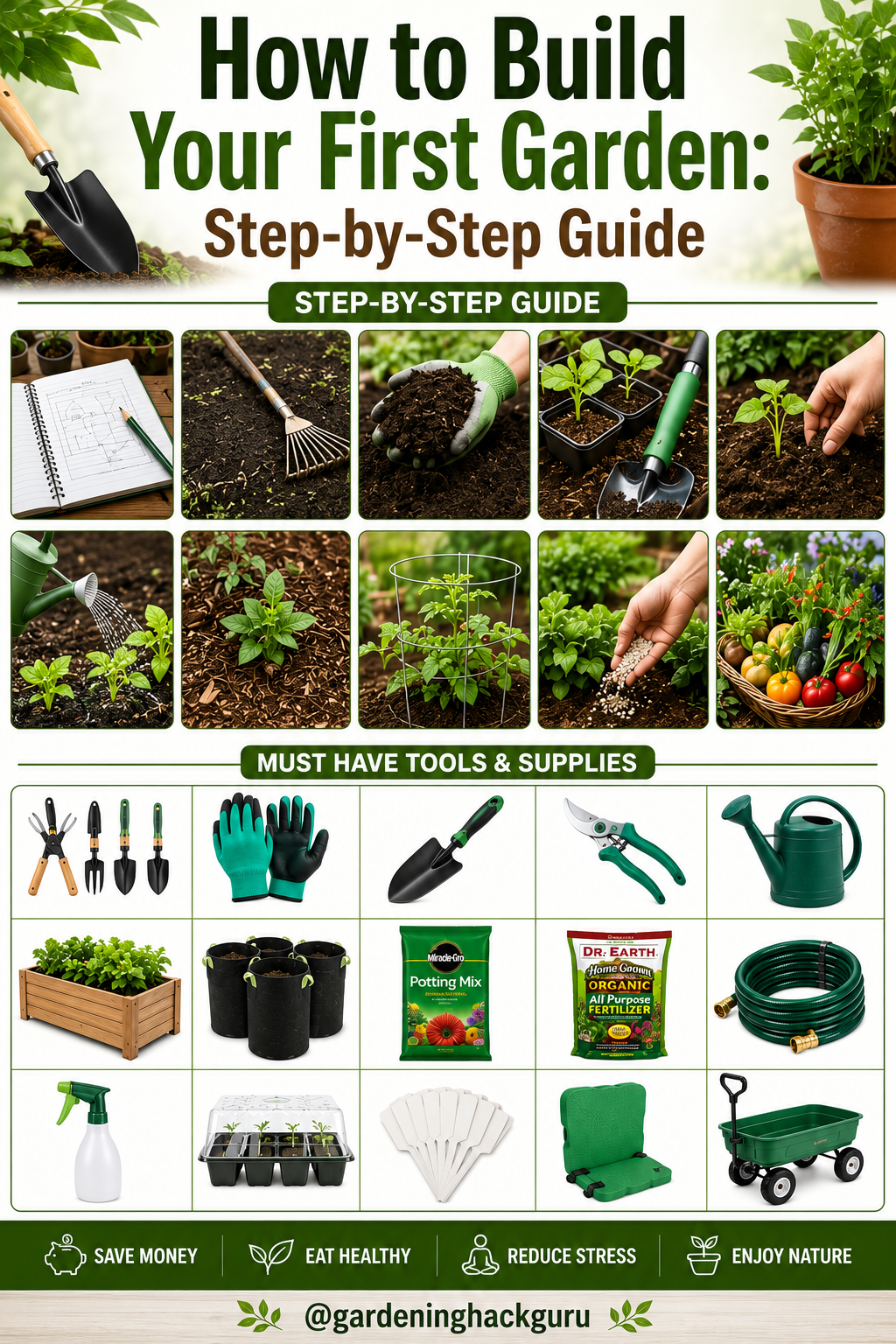
Starting your first garden can feel overwhelming, but with the right plan and tools, anyone can grow beautiful flowers, herbs, fruits, or vegetables at home. Whether you have a backyard, patio, or small balcony, this beginner-friendly guide will walk you through the process and introduce useful gardening products you can easily find online.
Step 1: Choose the Perfect Location
Before planting anything, find a spot that receives at least 6–8 hours of sunlight daily.
Look for:
- Good sunlight exposure
- Easy access to water
- Proper drainage
- Convenient access from your home
Most vegetables thrive in full sun.
Step 2: Decide What to Grow
Choose plants that are beginner-friendly.
Great starter plants include:
- Tomatoes
- Lettuce
- Basil
- Mint
- Peppers
- Green onions
- Cucumbers
Start small and expand as your confidence grows.
Step 3: Select Your Growing Space
You don’t need a huge backyard.
Popular options include:
Raised Garden Beds
Excellent for:
- Vegetables
- Herbs
- Flowers
Grow Bags
Perfect for:
- Tomatoes
- Potatoes
- Peppers
Large Containers
Ideal for balconies and patios.
- Raised garden beds
- Fabric grow bags
- Large planter pots
Step 4: Prepare Quality Soil
Healthy plants start with healthy soil.
Use:
Avoid using heavy garden soil in containers.
Step 5: Gather Must-Have Gardening Tools
The right tools make gardening easier and more enjoyable.
Essential Gardening Tool Set
Useful for:
- Digging
- Planting
- Weeding
Garden Gloves
Protect your hands from dirt and thorns.
Hand Trowel
Perfect for planting seedlings and flowers.
Pruning Shears
Helps keep plants healthy and productive.
Watering Can
Ideal for seedlings and container gardens.
Step 6: Plant Your Seeds or Seedlings
Follow spacing recommendations on seed packets or plant labels.
Tips:
- Plant at the correct depth
- Water immediately after planting
- Avoid overcrowding
Healthy spacing improves airflow and growth.
Step 7: Water Consistently
Water is essential for healthy plants.
Remember:
- Water deeply
- Avoid overwatering
- Water early in the morning
- Garden hoses
- Spray bottles
- Drip irrigation kits
- Hose nozzles
Step 8: Add Mulch
Mulch helps:
- Retain moisture
- Suppress weeds
- Improve soil health
Organic mulch is especially beneficial for vegetable gardens.
Step 9: Feed Your Plants
Plants need nutrients to grow strong and productive.
Consider:
Step 10: Support Growing Plants
Some vegetables need support as they grow.
Examples:
- Tomatoes
- Cucumbers
- Beans
Use:
Step 11: Keep Plants Organized
Organization makes gardening easier.
Helpful products include:
- Plant labels
- Seed storage boxes
- Garden journals
These simple tools help track plant growth and planting dates.
Step 12: Make Gardening Comfortable
Gardening is more enjoyable when you’re comfortable.
Useful accessories:
Beginner Garden Shopping List
If you’re creating your first garden, consider starting with:
✅ Gardening Tool Set
✅ Garden Gloves
✅ Hand Trowel
✅ Pruning Shears
✅ Watering Can
✅ Raised Garden Bed
✅ Grow Bags
✅ Potting Soil
✅ Organic Fertilizer
✅ Garden Hose
✅ Spray Bottle
✅ Seed Starter Kit
✅ Plant Labels
✅ Kneeling Pad
✅ Garden Cart
All of these products are commonly available on Amazon and work well for beginner gardeners.
Benefits of Starting a Garden
🌱 Save Money
🥗 Eat Healthier
😌 Reduce Stress
🌿 Enjoy Nature
Even a small garden can provide fresh food, relaxation, and a rewarding hobby.
Final Thoughts
Building your first garden doesn’t require special skills or a large budget. With quality soil, a few reliable tools, and beginner-friendly plants, you can create a thriving garden right at home.
Start small, learn as you grow, and enjoy the journey. Before long, you’ll be harvesting fresh vegetables, herbs, and flowers from a garden you built yourself.
Happy Gardening!
@gardeninghackguru