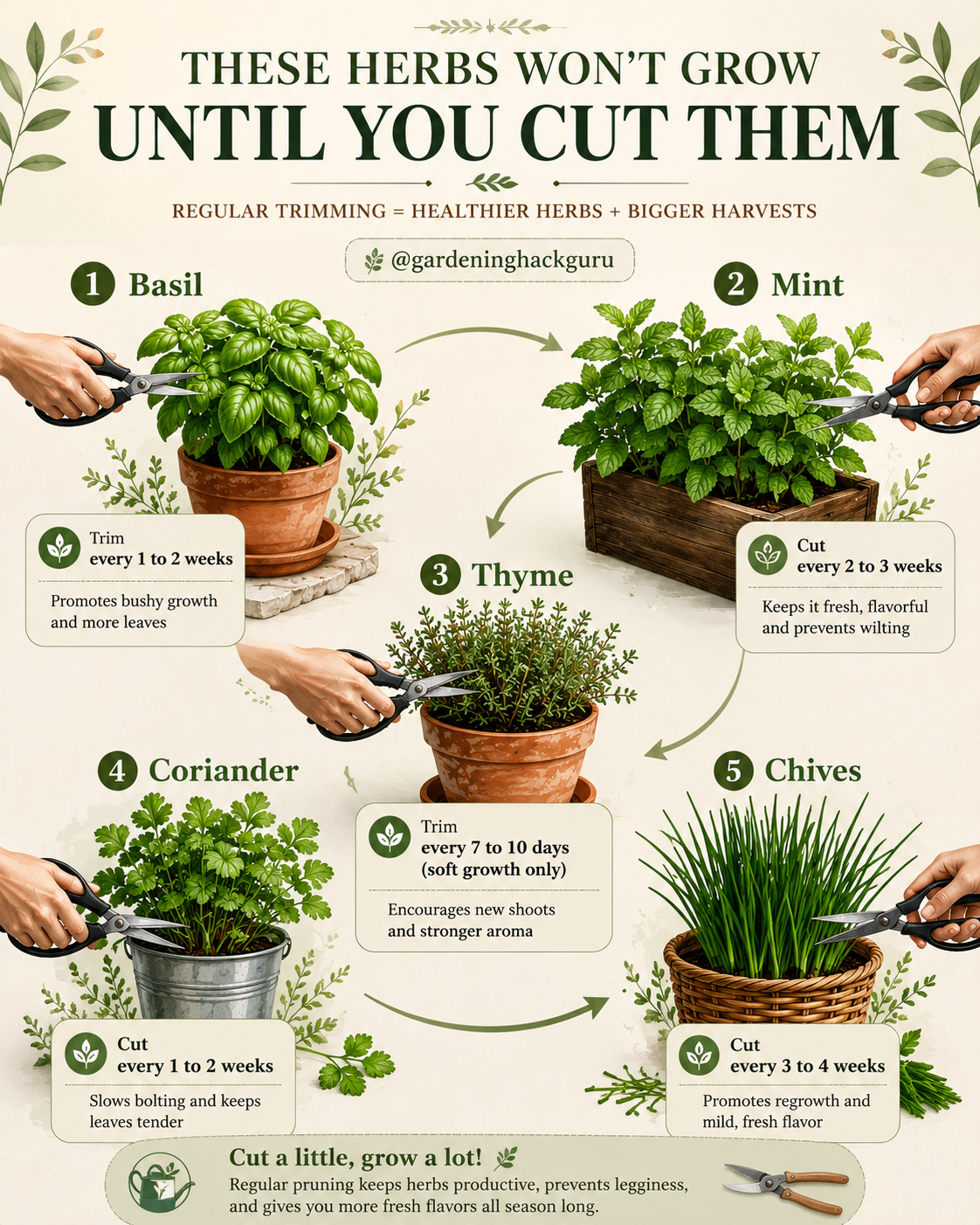
If you’ve ever wondered why your herbs stop growing, become thin, or start looking tired, the secret might be simple: you’re not trimming them enough. Many herbs actually grow fuller, healthier, and more flavorful when they’re harvested regularly.
Pruning encourages new growth, prevents herbs from becoming woody, and helps your plants stay productive for much longer. Whether you grow herbs indoors on a sunny windowsill or outside in a garden, learning when and how to trim them can completely change your herb-growing success.
Why Trimming Herbs Is So Important
When herbs are left untouched for too long, they often become leggy and weak. Cutting them regularly signals the plant to produce fresh stems and leaves. This creates a fuller, bushier herb plant with stronger flavor and healthier growth.
Benefits of trimming herbs:
Encourages faster growth
Prevents plants from becoming woody
Produces more leaves for harvesting
Keeps herbs fresh and healthy
Improves airflow and plant shape
Think of harvesting as helping the plant thrive rather than harming it.
1. Basil 🌱
Basil grows best when trimmed every 1–2 weeks. If you only remove a few leaves from the bottom, the plant can become tall and sparse. Instead, trim just above a leaf node so two new stems can grow from that spot.
Tips:
Never cut more than one-third at once
Pinch off flowers quickly
Regular trimming makes basil bushier
Fresh basil is perfect for pasta, salads, pizza, and homemade pesto.
2. Mint 🍃
Mint is one of the fastest-growing herbs, but it needs regular cutting to stay fresh and manageable. Trim it every 2–3 weeks to encourage soft new leaves.
Why trimming helps mint:
Prevents overcrowding
Stops stems from getting too long
Keeps leaves flavorful and tender
Mint grows aggressively, so frequent harvesting actually keeps the plant healthier.
3. Thyme 🌿
Thyme prefers gentle trimming every 7–10 days, especially on soft green growth. Avoid cutting into old woody stems because they may not regrow well.
Best pruning habits:
Use small scissors for precise cuts
Harvest lightly and often
Remove dry or weak stems
This herb loves sunlight and becomes beautifully fragrant with regular care.
4. Coriander (Cilantro) 🌱
Coriander grows quickly but can bolt fast in warm weather. Cutting it every 1–2 weeks helps delay flowering and encourages fresh leafy growth.
Helpful tips:
Harvest outer stems first
Keep soil slightly moist
Avoid letting flowers fully develop
Fresh coriander adds amazing flavor to curries, soups, tacos, and salads.
5. Chives 🌾
Chives are incredibly easy to maintain and grow back quickly after cutting. Trim them every 3–4 weeks by cutting leaves near the base.
Why gardeners love chives:
Very beginner-friendly
Fast regrowth
Great for indoor gardening
Their mild onion flavor makes them perfect for eggs, soups, potatoes, and dips.
Simple Herb Trimming Tips for Beginners
If you’re new to herb gardening, remember these easy rules:
Always use clean scissors or pruning shears
Cut herbs in the morning for best flavor
Never remove too much at once
Trim regularly instead of waiting too long
Remove flowers if you want more leaf growth
Even small harvests can make a huge difference in how healthy your herbs become.
Grow More by Cutting More 🌿
It may feel strange at first, but trimming herbs is one of the best ways to help them thrive. Herbs like basil, mint, thyme, coriander, and chives actually reward regular harvesting with fuller growth and richer flavor.
With a little pruning and care, your herb garden can stay lush, productive, and beautiful all season long.