50 Cent’s reputation has always extended beyond music. For decades, he has represented resistance — the idea that power, wealth, and influence are not guaranteed shields against challenge.
Recently, that symbolism was echoed by a new online voice declaring allegiance not to violence, but to confrontation of systems, privilege, and inherited power.
The individual’s statement, packed with aggressive metaphors and unapologetic bravado, frames 50 Cent as proof that refusing to “kneel” matters more than background, money, or political lineage.
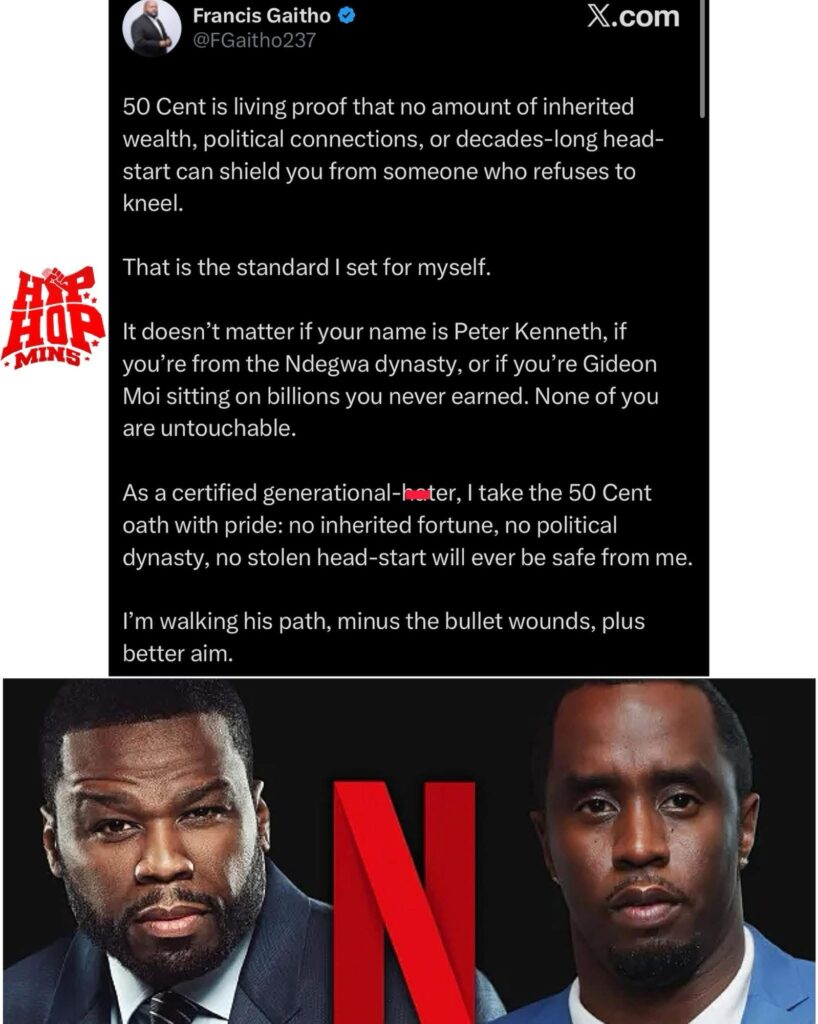
The message wasn’t subtle. It targeted dynasties, inherited fortunes, and elite surnames, positioning itself as a rejection of entitlement rather than a call to physical conflict.
The language leaned heavily into internet-era exaggeration — calling oneself a “generational hater” and referencing an “oath” — terms increasingly used online to describe relentless criticism, exposure, and narrative warfare rather than actual harm.
In this context, “terrorizing” is rhetorical: social pressure, public scrutiny, and refusal to stay silent.
What stood out most was the ironic self-awareness at the end of the statement. By jokingly “minus the bullet wounds,” the speaker acknowledged the dramatic mythology surrounding 50 Cent’s past while distancing themselves from real-world violence.
It was a reminder that today’s battles are often fought with words, platforms, and persistence — not weapons.
Whether taken seriously or seen as performative internet theater, the message reflects a broader cultural moment: frustration with unearned power and admiration for figures who symbolize defiance.
50 Cent, intentionally or not, continues to function as a cultural reference point for people who see resistance itself as the ultimate flex.
In the end, this isn’t about disciples or destruction — it’s about symbolism, influence, and the enduring appeal of someone who built a brand on never backing down.