During the early stages of his court case, P Diddy reportedly made a move meant to control the narrative. Instead of leaving his public image entirely in the hands of lawyers and headlines, he allegedly hired a professional videographer to follow him closely for weeks. The goal was simple: document everything, capture context, and possibly use the footage later to tell his side of the story.
But plans don’t always survive reality.
As the case progressed and the outcome turned against him, the project reportedly fell apart. The videographer, having spent weeks filming, was allegedly never paid for the work. With services rendered and no compensation received, the situation shifted from a private agreement to a business dispute.
What happened next is where things took an unexpected turn.
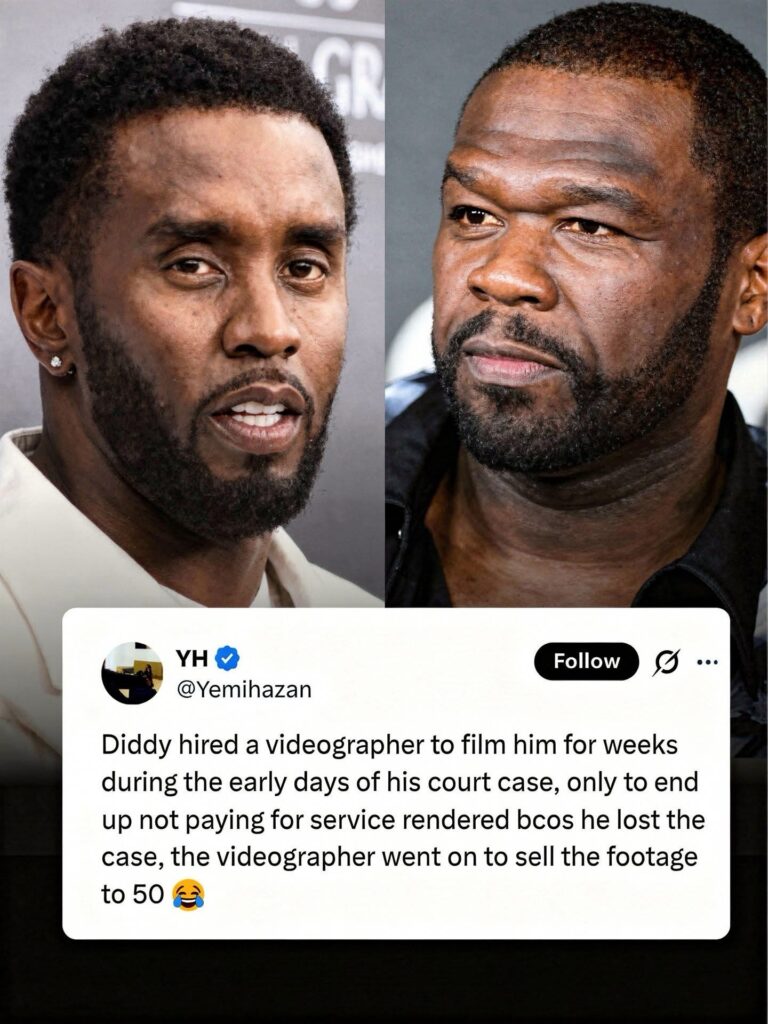
According to reports circulating online, the videographer chose to sell the unreleased footage — not to a media outlet, not to a streaming platform, but to 50 Cent. A man known for turning controversy into content, and narratives into leverage. In one move, material that was originally meant to protect an image allegedly ended up in the hands of someone famous for doing the exact opposite.
The irony is impossible to miss. Footage captured to control perception became evidence of miscalculation. In the entertainment industry, ownership matters — and unpaid work often finds its own path to justice. If true, this situation highlights a harsh lesson: when legal pressure meets bad business decisions, consequences don’t always come from the courtroom. Sometimes, they come from culture.
Once again, 50 Cent appears not as the instigator, but as the final holder of a story that slipped away from someone who thought they had everything under control.