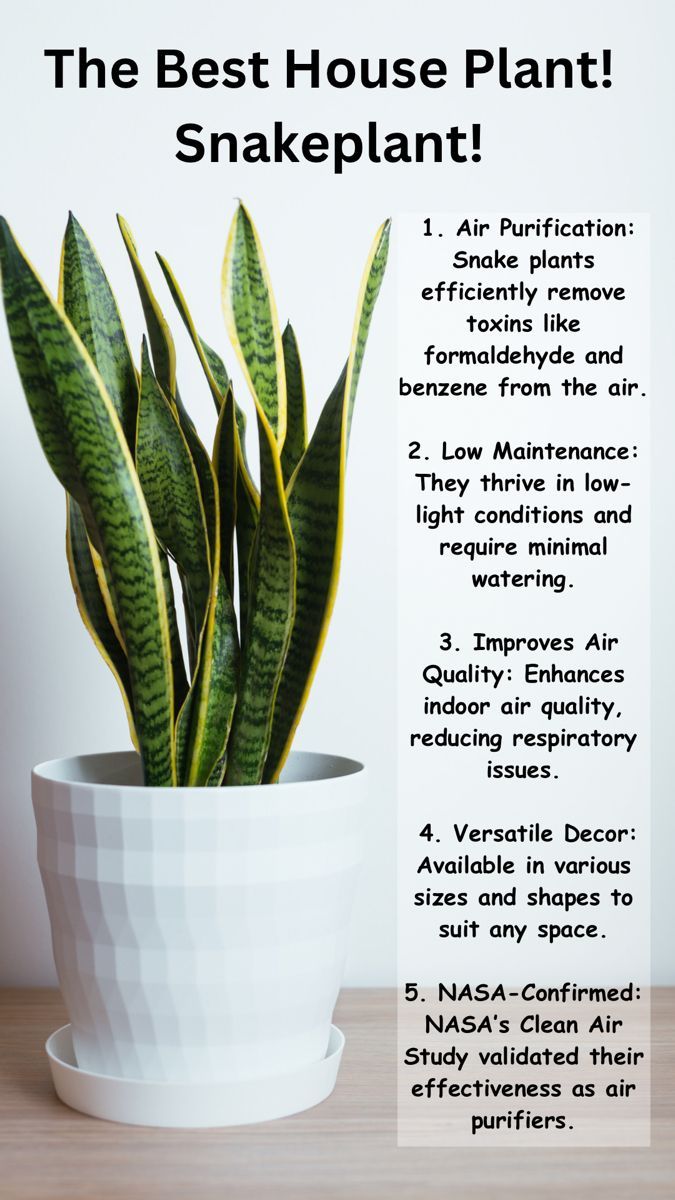
If someone told me they wanted a houseplant but had a history of forgetting to water their plants, didn’t have perfect lighting, and definitely didn’t want something fussy, a snake plant would be near the top of my list.
Snake plants have earned their popularity for a good reason.
They have tall, architectural leaves, don’t demand constant attention, fit beautifully into modern interiors, and can tolerate conditions that would make many other houseplants unhappy.
You may know them as snake plants, mother-in-law’s tongue, or Sansevieria. Botanically, many plants formerly classified as Sansevieria are now placed within the genus Dracaena, so you’ll also see common snake plants sold under names such as Dracaena trifasciata.
But there’s one thing worth clearing up before we get into the benefits.
You’ll often see snake plants described online as powerful “air-purifying plants.” The famous NASA Clean Air Study did find that certain plants could remove some pollutants under controlled experimental conditions. That doesn’t mean one snake plant sitting in your bedroom will meaningfully purify the air in an ordinary home. Real rooms have far more air movement and volume than those experimental setups.
So I’d choose a snake plant because it’s beautiful, resilient, easy to care for, and fantastic for decorating—not as a replacement for ventilation or an actual air purifier.
With that out of the way, here’s why this plant deserves a place in so many homes.
1. Snake Plants Are Wonderfully Low-Maintenance
This is probably their biggest selling point.
Some houseplants seem to notice immediately if you’re three hours late with their preferred watering schedule.
Snake plants are considerably more forgiving.
Their thick leaves store water, which helps them tolerate periods of dry soil. In fact, one of the easiest ways to cause problems with a snake plant is usually giving it too much water rather than too little.
That’s why they’re such a good choice for beginners, frequent travelers, busy households, or anyone who doesn’t want plant care to become another daily chore.
You still need to care for them, of course.
Low-maintenance doesn’t mean no-maintenance.
But compared with many fussier indoor plants, snake plants are remarkably easygoing.
2. They Tolerate Different Light Conditions
Another reason snake plants are so versatile is their ability to tolerate a range of indoor light conditions.
They can survive in relatively low-light areas, which is why you’ll often see them recommended for offices, hallways, bedrooms, and apartments.
But there’s an important distinction between tolerating low light and preferring darkness.
A snake plant will generally grow better when it receives appropriate brighter indirect light.
If you put one in a very dark corner, growth may become extremely slow and the soil will take longer to dry, which can increase the risk of overwatering.
Think of low-light tolerance as flexibility rather than an invitation to put the plant somewhere with virtually no usable light.
3. You Don’t Need to Water Constantly
If you’re someone who forgets watering day, this plant may actually appreciate you.
Rather than watering according to a rigid calendar, check the soil.
Letting the growing medium dry substantially between waterings is generally much safer than keeping it continuously wet.
How frequently you’ll need to water depends on your home’s conditions.
A snake plant in a warm, bright room during active growth may dry faster than one sitting in a cooler, dimmer room.
Pot size, soil, humidity, season, and airflow all matter too.
So ignore anyone who tells you every snake plant needs exactly one cup of water every seven days.
Plants don’t read calendars.
Check the soil instead.
4. Their Architectural Shape Looks Beautiful
Even if snake plants were difficult to care for, people would probably still grow them simply because they look so good.
Their tall, upright leaves create strong vertical lines that work beautifully in contemporary interiors.
Some varieties have deep green leaves with lighter patterns.
Others have striking yellow margins.
There are also compact varieties that work beautifully on shelves and desks.
A large snake plant in a simple ceramic planter can fill an awkward empty corner without making the room feel visually cluttered.
That’s one reason interior designers love them.
They’re decorative without being overly busy.
5. They’re Excellent for Small Homes
Small apartment?
Snake plants are especially useful because many varieties grow primarily upward rather than spreading dramatically outward.
That makes them perfect for narrow corners where a huge, bushy plant would overwhelm the room.
Try one beside a sofa.
Next to a console table.
Near an appropriate bright window.
Beside a dresser.
Or use a smaller variety on a desk or shelf.
You get plenty of greenery without sacrificing much floor space.
For small-space decorating, that’s a big advantage.
6. They Don’t Need Constant Repotting
Snake plants aren’t generally plants you’ll need to move into dramatically larger containers every few months.
Their relatively slow growth indoors means they can often remain in the same appropriately sized container for quite some time.
Eventually, you may notice roots becoming crowded or the plant producing enough new growth that repotting or dividing makes sense.
When that happens, move up gradually rather than putting a small plant into an enormous pot.
Oversized containers can hold excess moisture for longer, which isn’t ideal for a plant that dislikes staying waterlogged.
7. Drainage Matters More Than Fancy Pots
You can buy the most beautiful planter on Pinterest, but if it keeps the roots sitting in soggy soil, your snake plant won’t care how expensive it was.
Drainage is important.
Use an appropriate well-draining potting mix and a container setup that allows excess water to escape.
If you love decorative cachepots without drainage holes, one practical option is to keep the plant in an inner nursery pot that drains properly and place that inside the decorative container.
Just remember to empty accumulated water rather than letting the inner pot sit in it.
Healthy roots are more important than aesthetics.
Fortunately, you can have both.
8. They’re Easy to Style With Other Plants
Snake plants are wonderful anchor plants.
Their tall, structured leaves contrast beautifully with trailing plants and softer foliage.
For example, a tall snake plant can work visually alongside a trailing pothos, provided each plant is placed where its individual growing requirements are met.
You can also use several snake plants of different heights for a simple, cohesive arrangement.
If you prefer minimalist decor, use one mature specimen in a large neutral planter and let it stand alone.
It’s one of those plants that doesn’t need much styling.
9. They Can Work in Bedrooms
Snake plants are frequently marketed specifically as “bedroom plants.”
They’re attractive and quiet companions for a bedroom, but don’t expect one plant to transform your bedroom’s oxygen levels or function like a mechanical air purifier.
Choose one because you enjoy having greenery nearby.
A tall snake plant can look beautiful beside a dresser or in an empty corner, assuming the location provides suitable light.
There’s also something calming about waking up in a room with a little greenery.
Sometimes the visual benefit is reason enough.
10. They’re Easy to Propagate
Once your snake plant becomes established, you may eventually want more.
And fortunately, snake plants can be propagated.
Depending on the plant and variety, division is one straightforward option. Mature plants often develop new shoots connected underground, which can eventually be separated carefully when appropriate.
Leaf propagation is another possibility for some snake plants.
One interesting detail: certain variegated varieties may not retain their exact variegation when propagated from leaf cuttings. Division can be preferable when preserving the original appearance matters.
Either way, one healthy plant can eventually become several.
Free plants are difficult to complain about.
11. They Fit Almost Every Interior Style
This is one reason snake plants never seem to disappear from home-decor inspiration.
Put one in a textured terracotta pot and it feels earthy.
Use a simple white ceramic planter and it feels modern.
Place it in a woven basket-style outer planter and suddenly it works beautifully with relaxed boho decor.
A dark minimalist pot gives it a more dramatic contemporary look.
The plant itself has such a strong, simple shape that it adapts surprisingly well to different rooms.
12. They’re Forgiving—but Not Indestructible
Snake plants have a reputation for surviving neglect, which is mostly deserved.
But please don’t take that as a challenge.
The biggest issue to watch for is excessive moisture.
Soft, mushy leaves, yellowing, or problems around the base can sometimes indicate that something isn’t right, particularly with watering or roots.
On the other hand, severely wrinkled or stressed foliage may suggest the plant has gone too long without adequate water.
Observe the plant rather than blindly following a routine.
Once you learn how your particular snake plant behaves in your particular home, caring for it becomes much easier.
What About the Famous Air-Purifying Claim?
This deserves its own section because it’s probably the most repeated snake-plant claim online.
The NASA Clean Air Study from the late 1980s tested plants in controlled, sealed environments and demonstrated removal of certain volatile organic compounds under those experimental conditions.
That’s interesting research.
But a normal house is not a sealed experimental chamber.
Later research examining how potted plants perform in realistic indoor environments concluded that you’d need an impractically large number of plants to compete with normal building ventilation for pollutant removal.
So saying:
“Snake plants have demonstrated pollutant removal in controlled experiments”
is reasonable.
Saying:
“One snake plant will purify the air in your bedroom and prevent respiratory problems”
goes much further than the evidence supports.
Keep your snake plant because it’s beautiful.
Ventilate your home appropriately and use proven air-quality measures when you actually need to improve indoor air.
Are Snake Plants Safe for Pets?
This is another important point that pretty Pinterest graphics sometimes leave out.
Snake plants aren’t a good plant for pets to chew.
They contain compounds that can cause gastrointestinal problems if ingested by cats or dogs.
If you have a pet that enjoys sampling houseplants, place your snake plant somewhere inaccessible or consider choosing plants that are regarded as pet-safe instead.
If you suspect your pet has eaten a potentially toxic plant, contact a veterinarian or appropriate animal poison service for advice.
Common Snake Plant Mistakes
Overwatering is probably the big one. Don’t keep the growing medium constantly wet.
Using a pot that’s much too large can also make moisture management more difficult.
Assuming low-light tolerant means no light is another mistake. Your plant still needs light to grow.
Leaving water sitting around the roots can cause problems even if your watering frequency seems reasonable.
And finally, don’t constantly fuss over it.
Snake plants don’t need daily attention.
Sometimes the best thing you can do is put one somewhere appropriate and leave it alone for a while.
Where Should You Put a Snake Plant?
A snake plant can work beautifully in many parts of the home.
Try a tall specimen in a living room corner, especially somewhere that needs height.
Place a medium plant on or beside a bedroom dresser.
Use a compact variety in a home office.
Put one near your entryway if there’s suitable light.
They can even work beautifully in certain bathrooms, provided the space offers adequate light and the plant isn’t kept constantly wet.
Instead of choosing the location purely because Pinterest says it looks good there, pay attention to what the plant actually needs.
Good plant styling starts with a healthy plant.
A Simple Snake Plant Care Routine
You don’t need a complicated spreadsheet.
Give it appropriate light.
Check the soil before watering.
Water thoroughly when needed rather than constantly giving tiny sips, then allow excess water to drain appropriately.
Keep an eye out for pests and changes in the leaves.
Wipe accumulated dust from the foliage gently when necessary.
Repot when the plant actually needs it.
That’s essentially it.
For many people, that simplicity is exactly what makes the snake plant such a satisfying houseplant.
Final Thoughts
Is the snake plant really the best houseplant?
There’s no universal winner.
If you want flowers every month, probably not.
If you want something safe for a plant-chewing cat, choose something else.
But if you’re looking for a plant that’s stylish, beginner-friendly, relatively drought tolerant, adaptable to different indoor light conditions, and easy to fit into a small home, it’s difficult to go wrong with a snake plant.
Just don’t buy one because you expect a single pot to magically purify an entire room.
Buy it because it’s beautiful.
Buy it because you don’t have to panic if you forget watering day.
Buy it because that empty corner of your living room needs something tall and green.
And buy it because, unlike some of the more dramatic members of your houseplant collection, your snake plant probably won’t throw a tantrum because you went away for the weekend.
Sometimes the best houseplant is simply the one you can actually keep happy.