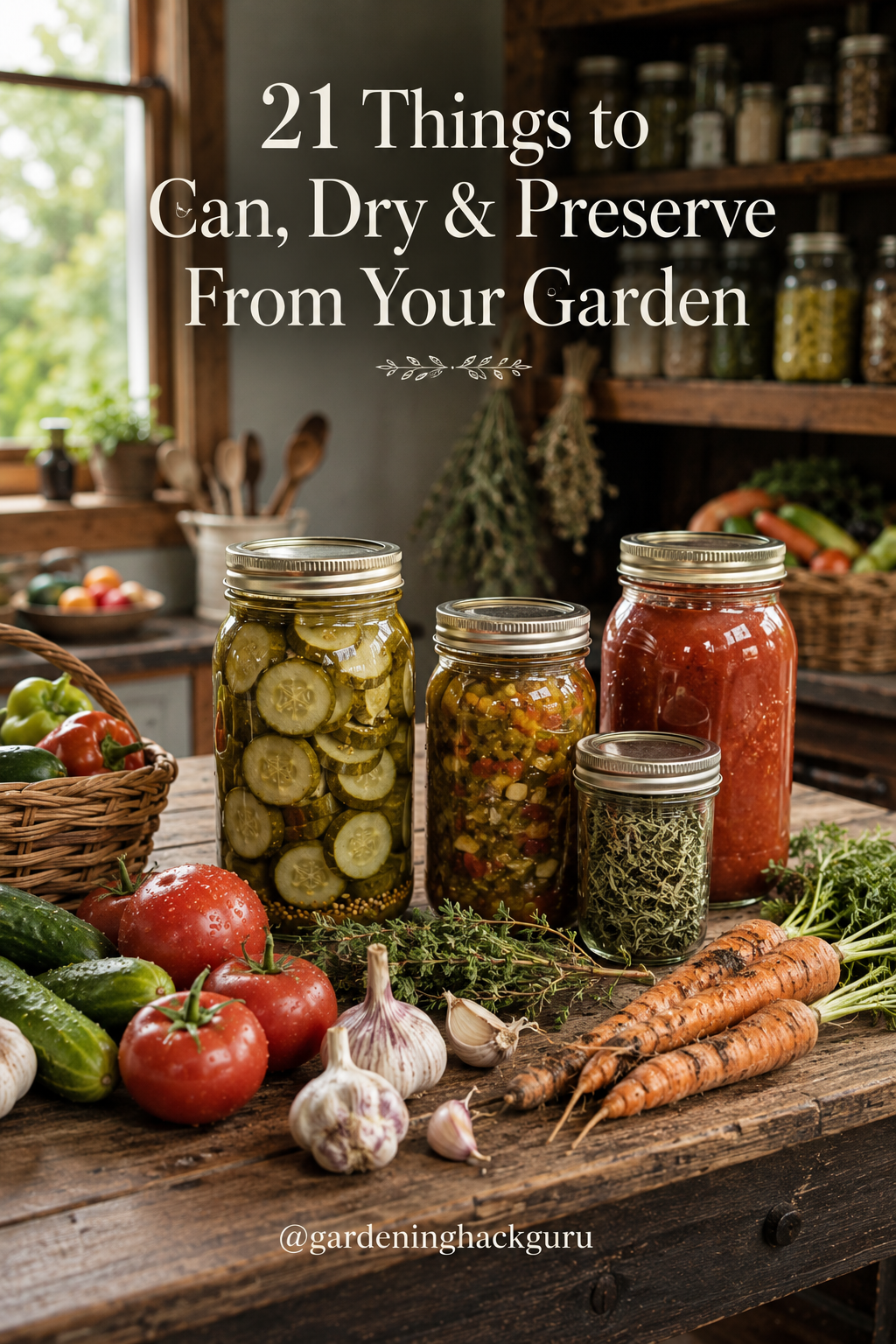
There’s a special kind of satisfaction that comes from walking into your garden, filling a basket with vegetables and herbs, and knowing that none of that harvest has to go to waste. 1
During the height of summer, though, a productive garden can quickly become overwhelming. One week you’re patiently waiting for the first tomato to ripen, and the next you have tomatoes covering the kitchen counter, cucumbers hiding under every leaf, and more zucchini than you remember planting.
That’s when preserving becomes one of the most useful gardening skills you can learn.
Preserving your harvest isn’t only about canning. Depending on the food, you can freeze, dry, ferment, refrigerate, cure, or store it in a cool place. Choosing the right method lets you enjoy something from your garden long after the growing season ends.
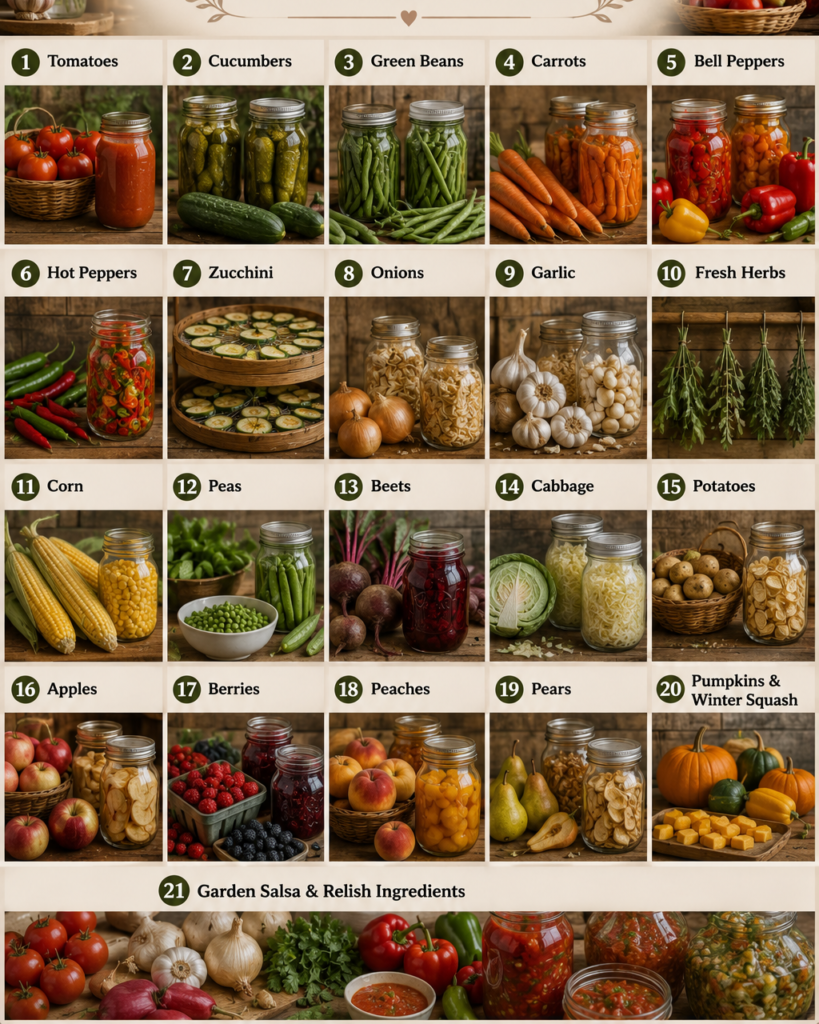
Here are 21 things to can, dry and preserve from your garden, along with practical ideas for making the most of each harvest.
Important: Home canning needs to be done carefully. Use current, tested recipes from trusted food-preservation authorities and follow the specified processing method, jar size, acidity, time, and altitude adjustments. Don’t invent canning recipes or simply seal vegetables in jars for shelf storage.
1. Tomatoes
If I could grow only one crop specifically for preserving, tomatoes would be near the top of my list.
A few productive plants can give you an enormous harvest, and tomatoes can become so many useful pantry and freezer staples.
You can preserve them as tomato sauce, crushed tomatoes, salsa, or other tested tomato recipes. Tomatoes can also be frozen for later cooking.
Another favorite is drying them. Sliced tomatoes become wonderfully concentrated as they dehydrate and can later be added to pasta, soups, breads, and sauces.
One garden crop can fill your kitchen with possibilities.
2. Cucumbers
There is always that moment in cucumber season when you wonder how three plants managed to produce quite so many cucumbers.
Luckily, they’re excellent for preserving.
Pickling cucumbers can be turned into dill pickles, bread-and-butter pickles, relish, and other tested recipes.
You can also make refrigerator pickles if you don’t want to process jars for shelf storage. They won’t last like properly canned pickles, but they’re wonderfully easy for smaller harvests.
Fermentation is another traditional option for cucumbers when you follow reliable fermentation practices.
And honestly, opening a jar of crunchy pickles months after the garden has finished is one of those little pleasures that makes summer gardening worth it.
3. Green Beans
Green beans often arrive faster than you can eat them.
For beginners, freezing is one of the simplest ways to preserve them. Blanch the beans appropriately before freezing to help maintain their quality.
You can also pickle green beans using a tested recipe.
If you want to can plain green beans for shelf storage, remember that they’re a low-acid vegetable and require pressure canning according to a tested process. A boiling-water canner isn’t considered a safe substitute.
4. Carrots
Freshly pulled garden carrots taste completely different from the ones that have spent weeks traveling to a grocery store.
If you harvest more than you can use, you have several options.
Carrots can be frozen after proper preparation and blanching, incorporated into suitable tested pickling recipes, dehydrated for later use in soups and stews, or pressure-canned using tested instructions.
If you have the right storage conditions, some carrots can also be kept surprisingly well without processing them at all.
5. Bell Peppers
A colorful pepper harvest is one of my favorite sights in the late-summer garden.
Fortunately, peppers are wonderfully freezer-friendly.
Wash them, remove the stems and seeds, chop or slice them, and freeze them in portions you’ll actually use. They’re especially convenient for future stir-fries, soups, sauces, omelets, and casseroles.
Peppers can also be dehydrated or preserved through appropriate tested pickling recipes.
Having bags of garden peppers in the freezer makes winter cooking much easier.
6. Hot Peppers
If you’ve ever grown a productive hot pepper plant, you already know how quickly a handful can become a basketful.
Drying is perfect for many hot peppers.
Once thoroughly dried, you can keep them whole or crush them into flakes for cooking.
You can also freeze peppers or make pickled peppers using a tested recipe.
Wear gloves when handling particularly hot varieties, and avoid touching your face and eyes while preparing them.
Those tiny peppers deserve respect.
7. Zucchini
Every gardener eventually learns the first rule of zucchini:
Check the plants frequently.
A small zucchini can seemingly turn into a baseball bat overnight.
Freezing shredded zucchini is one of my favorite ways to deal with an abundance. Portion it before freezing so you can later use it in zucchini bread, fritters, soups, and baked dishes.
Zucchini can also be dehydrated into slices or chips.
For shelf-stable preservation, don’t assume plain zucchini can simply be canned. Stick to specifically tested recipes, such as appropriate relishes or pickled products.
8. Onions
Onions don’t necessarily need a jar.
If you’ve grown storage varieties, proper curing can allow them to keep for months under suitable cool, dry, well-ventilated conditions.
You can also chop and freeze onions for cooked dishes.
Dehydrated onions are another useful pantry ingredient. Once completely dried and properly stored, they’re convenient for soups, sauces, and seasoning blends.
Just be warned: dehydrating onions indoors can make the entire house very aware of what you’re doing.
9. Garlic
Garlic is another crop where curing and storage can be more useful than canning.
After harvesting mature bulbs, cure them appropriately in a dry, ventilated place before storing them under suitable conditions.
You can also dehydrate garlic for seasoning.
Avoid improvising shelf-stable garlic-in-oil mixtures. Garlic stored improperly in oil can create a food-safety risk, so use validated storage guidance rather than assuming oil makes it safe.
10. Fresh Herbs
Fresh herbs are wonderful in summer and heartbreaking to watch disappear after the first frost.
So preserve them while they’re abundant.
Many herbs—including thyme, oregano, rosemary, mint, sage, and similar varieties—can be dried.
Other tender herbs can be frozen, depending on how you plan to use them.
You can also freeze chopped herbs in small portions for future cooking.
A jar of dried herbs from your own garden may not look particularly impressive, but you’ll appreciate it every time you reach for it in January.
11. Corn
Fresh garden corn doesn’t stay at its best for long after harvest, so preservation is particularly useful.
Freezing is a practical choice.
Corn can be prepared and frozen either on the cob or as kernels using appropriate blanching and freezing guidance.
Plain corn is also a low-acid food, so shelf-stable home canning requires a pressure canner and a tested procedure.
Don’t use boiling-water canning for plain corn.
12. Peas
Peas can feel like a lot of work for a surprisingly small bowl of food.
But homegrown peas are worth it.
If you have more than you can eat fresh, freezing is probably the easiest option. Proper blanching before freezing helps maintain quality.
Later, you can toss your frozen garden peas directly into soups, curries, pasta dishes, casseroles, and side dishes.
It’s a simple way to keep a little piece of spring in the freezer.
13. Beets
Beets are incredibly versatile when it comes to preservation.
Pickled beets are a classic, but make sure you’re using a tested recipe with the correct acidity and processing instructions.
Plain beets can also be pressure-canned using validated instructions.
Depending on your storage setup, fresh beets can sometimes be stored for a period after harvest as well.
Don’t throw away beautiful beet greens either. Young, healthy leaves can be used fresh like other leafy greens.
14. Cabbage
One cabbage can become a lot of food.
One of the most traditional ways to preserve cabbage is fermentation—think sauerkraut.
Successful fermentation depends on correct preparation, salt concentration, temperature, and keeping the vegetables properly submerged, so follow a reliable method rather than guessing.
Cabbage can also be incorporated into appropriate pickled products.
And if you’ve never made homemade sauerkraut before, watching a simple head of cabbage transform through fermentation is surprisingly satisfying.
15. Potatoes
Potatoes are another reminder that preservation doesn’t always mean filling Mason jars.
Properly cured potatoes can be stored in a cool, dark, well-ventilated place for an extended period, depending on the variety and storage conditions.
Avoid storing them where they’ll receive significant light, which can contribute to greening.
If potatoes become extensively green or develop significant sprouting or deterioration, don’t assume they’re fine just because they were homegrown.
For gardeners with a good storage space, potatoes can be one of the most valuable crops for extending the harvest into colder months.
16. Apples
If you have even one productive apple tree, autumn can become an exercise in finding places to put apples.
Fortunately, there are plenty of options.
Depending on the variety and your preferred method, apples can become applesauce, apple butter, dried apple slices, pie filling made from a tested recipe, or frozen apple portions.
Some varieties also keep well in suitable cold storage.
Dried apple slices are particularly nice because they take up far less space than baskets of fresh fruit.
17. Berries
Strawberries, raspberries, blackberries, blueberries—berry season never seems long enough.
Freezing is wonderfully simple.
Freeze berries in a way that suits your future use, and later add them to smoothies, oatmeal, sauces, baked goods, or desserts.
Berries can also become jams and preserves when prepared with a tested recipe.
If you enjoy dehydrating, some berries can also be dried, although drying times and results vary considerably.
A freezer filled with summer berries feels like a gift to your future self.
18. Peaches
A perfectly ripe peach doesn’t wait for anyone.
When they’re ready, they’re ready.
Preserving lets you enjoy the harvest without trying to eat an entire basket in three days.
Peaches can be frozen, dried, or canned using tested procedures. They can also become jam and other preserves.
Frozen peach slices are particularly useful for smoothies and desserts, while canned peaches can bring a little summer sunshine to the middle of winter.
19. Pears
Pears can be deceptive.
They seem completely unhurried—and then suddenly the whole basket is ripe.
That’s your signal to start preserving.
Depending on the variety, pears can be canned using a tested method, dried into chewy slices, made into preserves, or prepared for freezing.
Pear butter can also be a lovely way to use a large harvest when made using reliable preservation guidance.
20. Pumpkins & Winter Squash
One of the best things about winter squash is that nature has already given it pretty good packaging.
Many varieties can keep for months when properly cured and stored under suitable conditions.
That’s why I wouldn’t rush to process every squash immediately.
You can also freeze cooked pumpkin or squash purée for soups, breads, pies, and other recipes.
One important canning note: don’t home-can mashed or puréed pumpkin for shelf storage. If you’re canning pumpkin or winter squash, follow current tested instructions for the approved preparation and processing method.
Freezing purée is the simpler choice for many home gardeners.
21. Garden Salsa & Relish Ingredients
Sometimes the best preservation projects happen when several garden crops ripen together.
Tomatoes.
Peppers.
Onions.
Cucumbers.
Herbs.
Suddenly your garden has practically assembled a recipe for you.
Homemade salsa and relish can be wonderful ways to preserve a mixed harvest.
But this is one place where it’s especially tempting to improvise.
For shelf-stable canning, don’t casually change the amounts of low-acid vegetables, acid, or other important components in a tested salsa recipe. Those proportions can affect safety.
If you want complete freedom to experiment with ingredients, make a fresh version or freeze it instead.
You Don’t Have to Can Everything
One of the biggest misconceptions about food preservation is that every overflowing garden basket needs to end up in a Mason jar.
It doesn’t.
Sometimes freezing is easier.
Sometimes drying makes more sense.
Sometimes the vegetable will keep beautifully after curing.
And sometimes the best thing you can do is simply cook a huge dinner and invite somebody over.
Choose the preservation method according to the food—not according to what looks prettiest on a pantry shelf.
A Simple Garden Preservation Routine
You also don’t need to spend one exhausting weekend trying to preserve your entire garden.
I find the idea much more manageable when you work in small batches throughout the season.
Pick what is ripe.
Eat the best produce fresh.
Set aside anything you’ll use during the next few days.
Then preserve the surplus before it starts deteriorating.
A handful of herbs can go into the dehydrator today.
Peppers can go into the freezer tomorrow.
A larger tomato harvest might become sauce on the weekend.
Little by little, your pantry and freezer begin filling up.
Label Everything
This sounds almost too obvious to mention—until you find three mysterious freezer bags six months later.
Label preserved food with at least the contents and date.
For canned goods, labeling the specific recipe or batch can also be helpful.
Rotate your preserved foods so older items are used first, and regularly inspect stored food for signs of spoilage or damaged containers.
And if something about preserved food seems questionable, don’t taste it just to find out.
Keep Food Preservation Safe
There’s a beautiful nostalgia surrounding home canning: Mason jars on farmhouse shelves, handwritten labels, baskets of tomatoes on the counter.
But food safety isn’t the place for nostalgia or guesswork.
Low-acid vegetables generally require pressure canning when being canned plain. Acidified and naturally acidic foods still need appropriate tested recipes and processing. Processing times can also need adjustment based on altitude.
Because recommendations can be updated, check current guidance from reliable sources such as the USDA, the National Center for Home Food Preservation, or your local university extension service before starting a canning project.
You can still keep all the charm of old-fashioned food preservation while using modern food-safety knowledge.
That’s the best combination.
From Garden to Pantry
There’s something deeply satisfying about looking at a shelf of preserved food and remembering where it came from.
Those dried herbs were once spilling over the edge of the garden bed.
Those frozen peppers were picked on a hot August morning.
Those pickles began as tiny cucumber seedlings you weren’t sure would survive.
Preserving your garden harvest isn’t about becoming completely self-sufficient overnight or filling hundreds of perfectly matching Mason jars.
It’s simply about wasting less of what you worked hard to grow.
Start with one crop.
Learn one preservation method well.
Then try another.
Eventually, the gardening season stops ending with the first frost. Pieces of it remain in your pantry, freezer, storage room, and kitchen—waiting to be enjoyed long after the garden has gone quiet.