You don’t need a spare bedroom, a huge house, or an expensive renovation to create a place where you can switch off for a while.
Sometimes all you need is one quiet corner.
A Zen den can be as simple as a comfortable cushion beside a window, a small lamp, a plant, and somewhere to put your tea. It isn’t really about following a particular decorating style. It’s about creating a little part of your home that feels noticeably calmer than everything around it.
And when you’re working with a small home or apartment, that simplicity is actually an advantage. Instead of trying to create an entire wellness room, you can concentrate on making one small area feel really good.
Here are 15 peaceful Zen den ideas for small spaces that can help you create a cozy retreat without taking over your home.
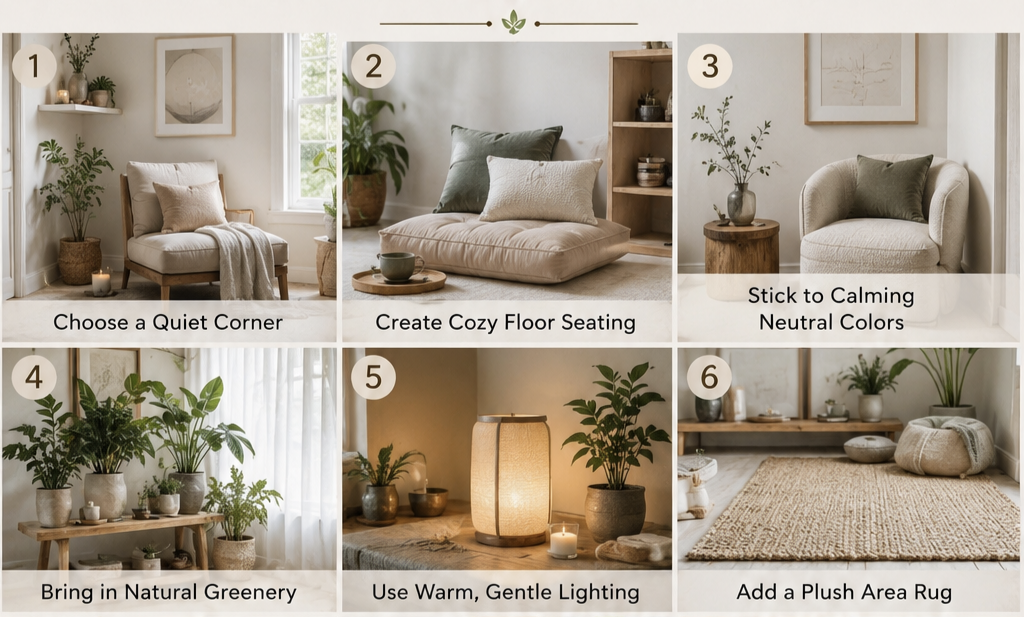
1. Start With the Quietest Corner You Have
Before buying anything, walk around your home and look for a spot you naturally feel comfortable in.
It might be beside a bedroom window, an unused living-room corner, part of a home office, or even that awkward little space at the end of a hallway.
Don’t worry if it’s small.
A Zen den doesn’t need much floor space. In fact, a smaller area can sometimes feel more intimate and comforting.
If possible, choose somewhere away from the television, busy walkways, and the places where household clutter tends to collect.
The goal is to create a spot where you can sit without constantly being reminded that there are dishes to wash.
2. Create Cozy Floor Seating
One of the easiest ways to make a tiny relaxation corner is to skip bulky furniture.
Try a large floor cushion, meditation cushion, pouf, or low lounge chair instead.
Floor seating instantly makes the space feel more casual and relaxed, and it takes up much less visual space than a large armchair.
Add one smaller cushion for back support if you need it.
Comfort matters more than appearance here. If you can’t sit there comfortably for more than five minutes, you probably won’t use the space—no matter how beautiful it looks on Pinterest.
3. Choose Calm, Natural Colors
Color can completely change the mood of a small room.
For a peaceful Zen-inspired space, I love warm whites, cream, oatmeal, beige, taupe, muted sage, dusty green, and soft earthy browns.
You don’t have to repaint the entire room.
You can bring these colors in through a rug, cushions, curtains, pottery, or a throw blanket.
Keeping the palette fairly simple also helps a small space feel less visually busy.
That doesn’t mean everything needs to be beige. A little green, terracotta, charcoal, or warm wood can keep the room from feeling flat.
4. Bring in a Little Greenery
Plants have an easy way of making a room feel softer.
But there’s no need to turn your Zen corner into an indoor jungle.
One healthy floor plant and one smaller plant may be plenty.
Choose plants according to the actual light conditions in your room rather than buying whatever looks prettiest in a photo. A plant that needs bright light isn’t going to become low-light tolerant just because it matches your decor.
If you have a tiny space, trailing plants or plants placed on shelves can add greenery without taking up much floor area.
And if keeping houseplants alive isn’t your thing, that’s fine too. A simple vase with fresh or dried branches can give you a similar natural touch.
5. Use Warm, Gentle Lighting
Overhead lighting can make even a beautifully decorated corner feel a little harsh.
Try adding a small table lamp or floor lamp instead.
A paper, linen, or fabric-style shade can create a softer glow that feels especially nice in the evening.
If your Zen den is beside a window, make the most of natural daylight during the day. Sheer curtains can soften bright light while still keeping the room airy.
You don’t need fifteen candles to make a room relaxing.
Often, one warm lamp is enough.
6. Add a Soft Area Rug
A rug is one of the easiest ways to visually separate your Zen corner from the rest of the room.
This is especially helpful if you’re creating the space inside a bedroom or living room rather than having a dedicated room.
Choose something soft enough to sit or stretch on.
Natural-looking woven textures, low-pile rugs, and subtle neutral patterns all work beautifully.
Make sure the rug suits the way you’ll actually use the space. A beautiful rug that’s impossible to clean probably isn’t very relaxing in the long run.
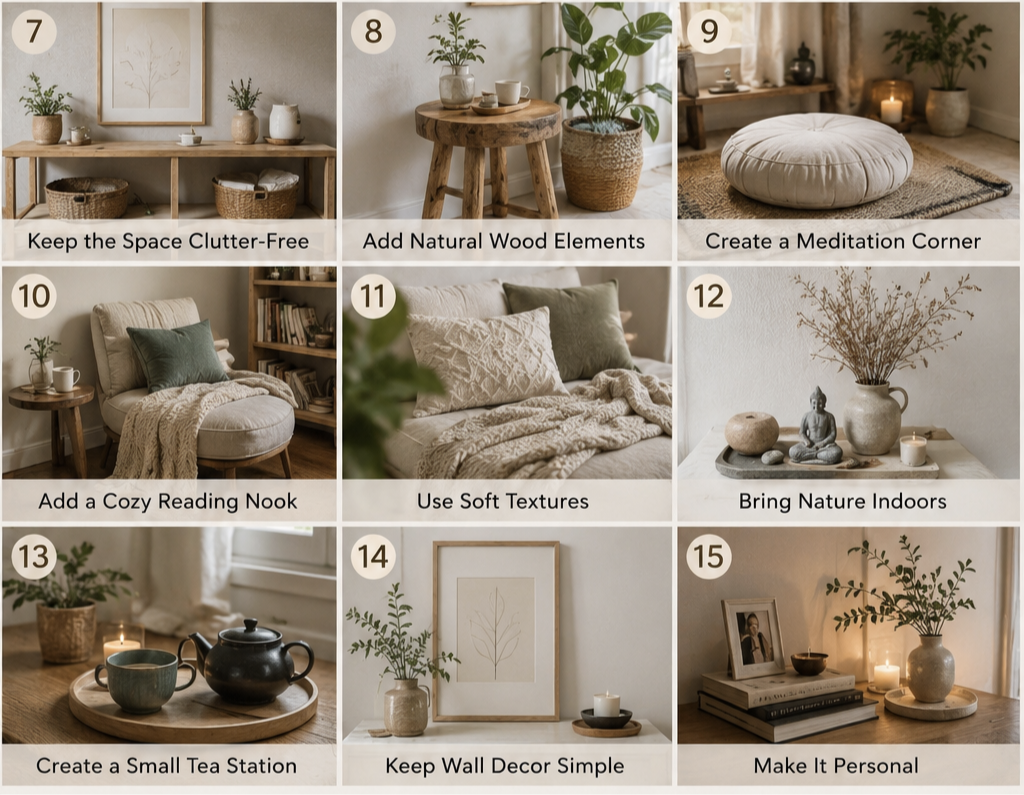
7. Clear Away the Clutter
You can buy all the cushions and plants you want, but if they’re surrounded by piles of paperwork and random chargers, the space probably won’t feel very peaceful.
Before decorating, declutter.
Remove anything that doesn’t belong in your relaxation area.
You don’t need to make the entire house minimalist. Just give this particular corner some breathing room.
A small woven basket is useful for things you want nearby but don’t necessarily want to see—journals, charging cables, extra blankets, or reading material.
The less visual noise there is, the more intentional the space feels.
8. Bring in Natural Wood
Natural wood adds warmth without demanding attention.
A tiny wooden stool can become a side table. A floating wood shelf can hold a few books. A simple wooden tray can hold tea or journaling supplies.
You don’t need everything to match perfectly.
Actually, slightly different natural textures often make a room feel warmer and less staged.
Look for pieces that are useful first.
In a small Zen den, every object should ideally earn its place.
9. Create a Simple Meditation Corner
If meditation is something you enjoy, keep part of the space intentionally empty.
You really don’t need much.
A comfortable cushion and enough floor room to sit is sufficient.
Try not to fill the area with things you think a meditation space is supposed to have. You don’t need elaborate accessories to make the corner meaningful.
The simpler it is, the easier it becomes to use.
And even if you don’t meditate, that open area can be useful for breathing exercises, stretching, or simply sitting quietly for a few minutes.
10. Turn It Into a Cozy Reading Nook
Maybe meditation isn’t your thing at all.
Your Zen den can be a reading corner instead.
Add a comfortable seat, good reading light, a soft throw, and a small place to set down a mug.
Keep a few books nearby rather than moving your entire bookshelf into the corner.
There’s something lovely about having a specific place where you can leave your phone somewhere else and read for half an hour.
A peaceful space should work with the things that actually help you unwind.
11. Layer Soft, Comfortable Textures
Minimal doesn’t have to mean cold.
Soft textures are what keep a neutral Zen space feeling cozy.
Try combining linen curtains, a cotton throw, a textured rug, one or two cushions, and perhaps a woven basket.
You don’t need seven decorative pillows.
A few tactile materials are usually more effective than piling on lots of accessories.
The room should look comfortable enough that you want to sit down, not so perfectly arranged that you’re afraid to touch anything.
12. Bring Nature Indoors in Small Ways
Plants aren’t the only way to introduce nature.
You could use a handmade ceramic vase, a smooth stone, dried grasses, a piece of interesting wood, or a few branches clipped from your garden where appropriate.
Natural materials tend to bring texture without adding lots of color or visual clutter.
Just keep it subtle.
A Zen-inspired room shouldn’t start looking like you’ve emptied an entire craft store into it.
One or two natural details can say more than a shelf packed with decorative objects.
13. Create a Small Tea Station
This might be my favorite idea.
A little tea ritual can make the space feel like somewhere you intentionally go to slow down.
You don’t need a full tea cabinet.
Place a small wooden tray on a side table with a favorite mug and perhaps a teapot. Keep the actual food and anything requiring refrigeration stored appropriately elsewhere.
Then, when you want some quiet time, make your tea in the kitchen and bring it over.
It’s less about displaying tea accessories and more about creating a routine.
Sometimes the ritual itself is what tells your brain, I’m done with the busy part of the day.
14. Keep the Wall Decor Simple
Blank walls don’t always need filling.
If your Zen corner needs something above it, choose one piece you genuinely enjoy.
A minimalist botanical print, abstract artwork, woven wall hanging, or simple mirror can be enough.
Avoid turning the wall into a crowded gallery unless that genuinely makes you feel relaxed.
For a small room, one slightly larger piece often looks calmer than several tiny pieces competing for attention.
Leave some empty wall around it.
Negative space is part of the design too.
15. Make the Space Personal
This is what stops your Zen den from looking like a furniture catalog.
Add something that means something to you.
Maybe it’s a photograph, a favorite book, something you brought home from a trip, a handmade ceramic cup, or a small object with a memory attached to it.
You don’t need to explain it to anyone.
The room is for you.
Just avoid turning meaningful objects into another collection that needs organizing. Pick one or two things that genuinely make you happy when you see them.
You Don’t Need a Whole Room
One of the biggest misconceptions about creating a peaceful home retreat is that you need a dedicated room.
You really don’t.
You can create a Zen den in:
- A bedroom corner
- An unused living-room nook
- A home-office corner
- A window seat
- A small sunroom
- A quiet section of a studio apartment
- An underused landing or alcove
Even a few feet of space can work if you define it intentionally.
A rug, floor cushion, plant, and lamp can visually separate the corner without adding walls or permanent changes.
What Should You Put in a Small Zen Den?
Start with comfort rather than decoration.
I’d begin with somewhere comfortable to sit, good lighting, and one soft textile such as a rug or throw.
Then add only what you’ll actually use.
For example, if you read there, add a lamp and a small stack of books. If you journal, keep your notebook and pen nearby. If you meditate, protect enough open floor space to sit comfortably.
The best Zen den isn’t the one with the most accessories.
It’s the one with the fewest distractions.
Keep Technology From Taking Over
This one can make a surprisingly big difference.
If you’re creating the space specifically to unwind, try not to make your phone the centerpiece.
You don’t necessarily have to ban technology entirely. Maybe you use your phone for meditation audio or relaxing music.
But give it a designated place rather than holding it the entire time.
You could keep a small basket beside the chair where your phone goes while you read or journal.
Even twenty minutes away from constant notifications can make the corner feel different from the rest of your home.
Think About Sound Too
A peaceful space isn’t only about what you can see.
If your home is noisy, soft furnishings such as rugs, curtains, cushions, and upholstered seating can help make a room feel less echoey.
You might also enjoy quiet instrumental music, nature sounds, or simply silence.
There’s no universal “Zen” soundtrack.
Choose whatever helps you settle into the space.
Don’t Try Too Hard to Make It Perfect
This might be the most important part.
Your Zen den doesn’t need to look exactly like the ones you saved on Pinterest.
Your floor cushion might get wrinkled.
Your plant might grow sideways toward the window.
There may be a half-finished book sitting on the table.
That’s fine.
A space you genuinely use will always look a little more lived-in than a professionally styled photograph.
And that’s actually a good thing.
Final Thoughts
Creating a Zen den isn’t really about decorating another part of your home.
It’s about giving yourself a place to slow down.
Start with one quiet corner. Clear away the clutter. Add comfortable seating, gentle lighting, a little greenery, and a few natural textures.
Then think about what you actually want to do there.
Read.
Journal.
Stretch.
Drink tea.
Meditate.
Or simply sit without doing anything for a few minutes.
You don’t need a spare room or a huge budget to make your home feel more peaceful. Sometimes one thoughtfully designed corner is enough to change the way an entire room feels.
And if your Zen den becomes the place you naturally wander toward at the end of a long day, then you’ve done it right.