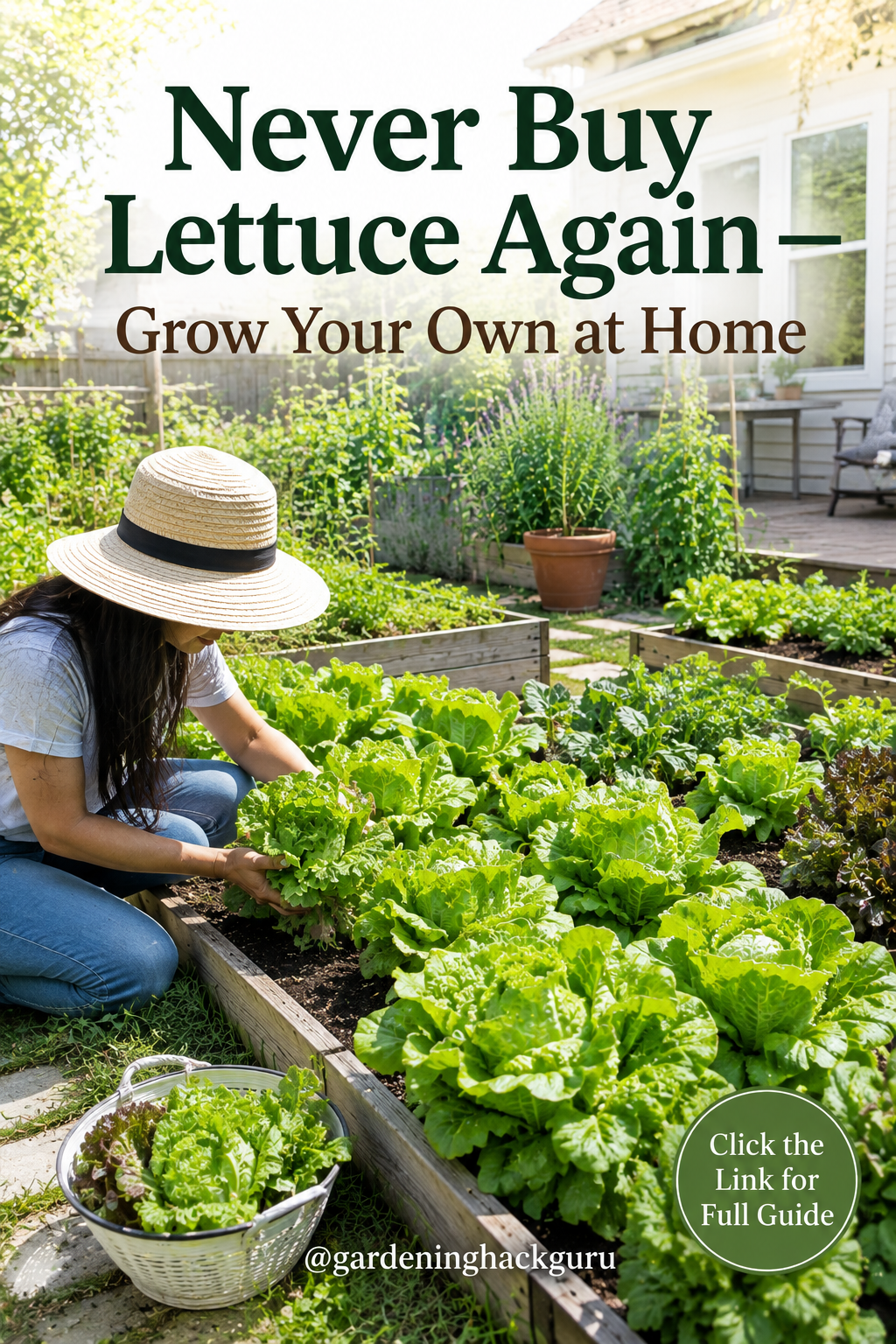
There’s something surprisingly satisfying about walking outside, picking a few crisp lettuce leaves, and turning them into lunch just minutes later.
No plastic bag. No forgotten lettuce slowly wilting in the back of the refrigerator. And no last-minute trip to the grocery store because you suddenly decided you wanted a salad.
Lettuce is also one of the easiest vegetables to grow at home. You don’t need a huge backyard or years of gardening experience. A small raised bed, a few containers, or even a sunny balcony can provide enough space for a surprisingly good harvest.
And once you learn one simple trick—harvesting the outer leaves while allowing the center to continue growing—the same plants can provide fresh leaves again and again.
Here’s how to start your own lettuce garden at home.
Why Lettuce Is Perfect for Beginner Gardeners
Some vegetables require months of patience before you get anything to eat.
Lettuce is different.
Many loose-leaf varieties can begin giving you baby leaves within just a few weeks of planting. Even full heads generally mature relatively quickly compared with crops like tomatoes, peppers, or pumpkins.
Lettuce also doesn’t need extremely deep soil, which makes it perfect for:
- Raised garden beds
- Patio containers
- Window boxes
- Grow bags
- Balcony gardens
- Small backyard vegetable patches
Another advantage is that you can grow several varieties together.
Instead of having only one type of lettuce like you might buy at the supermarket, your garden could contain green leaf lettuce, red leaf lettuce, romaine, butterhead, and colorful salad mixes.
When Is the Best Time to Grow Lettuce?
Lettuce loves cool weather.
For most gardeners, spring and fall are the easiest growing seasons. Ideal growing temperatures are generally somewhere around 45–70°F (7–21°C).
Once summer becomes very hot, lettuce may begin growing rapidly upward and producing flowers. This process is called bolting.
When lettuce bolts, the leaves often become tougher and more bitter.
That’s why timing matters.
In colder regions, start planting in early spring and continue planting small batches every couple of weeks.
In areas with hot summers, grow lettuce during spring and again when temperatures begin cooling in late summer or fall.
Gardeners in mild climates may even be able to grow lettuce through much of the winter.
Choose the Right Lettuce
You have plenty of choices, but lettuce generally falls into a few common categories.
Loose-Leaf Lettuce
This is probably the easiest option for beginners.
Rather than waiting for one tight head to develop, you can harvest individual outer leaves while leaving the center of the plant growing.
Popular types come in green, bronze, and deep red colors.
Romaine
If you love crunchy Caesar salads, grow romaine.
It develops upright leaves with crisp ribs and can either be harvested young or allowed to develop into a mature head.
Butterhead
Butterhead varieties produce tender, soft leaves and loosely formed heads.
They’re wonderful for salads and sandwiches and are particularly nice if you prefer lettuce with a delicate texture.
Crisphead
Iceberg is the classic example.
It produces dense, crunchy heads, but it generally requires more time and careful temperature management than loose-leaf varieties.
For your first home lettuce garden, loose-leaf lettuce is usually the easiest place to begin.
Start With Good Soil
Healthy lettuce starts underground.
Lettuce prefers loose, fertile soil containing plenty of organic matter. The soil should hold enough moisture to prevent plants from constantly drying out while still draining properly.
Before planting in a raised bed, mix some finished compost into the upper layer of soil.
For containers, use a good-quality potting mix rather than digging ordinary garden soil out of your yard. Garden soil can become dense and compacted inside containers.
Lettuce generally prefers soil around pH 6.0–7.0, although you don’t need to obsess over exact numbers for a casual backyard garden.
Good soil, consistent moisture, and reasonable temperatures will take you a long way.
How to Plant Lettuce Seeds
Lettuce seeds are tiny, so they don’t need to be buried deeply.
Prepare the soil until the surface is relatively fine and loose.
Scatter or place your seeds according to the spacing recommended for your particular variety. Cover them with only a very thin layer of soil, generally around 1/8 to 1/4 inch.
Then water gently.
A harsh stream from the hose can wash tiny seeds into one corner of your garden, so use a watering wand or gentle spray.
Keep the soil consistently moist while the seeds germinate.
Depending on temperature and variety, you’ll often see tiny seedlings appearing within roughly a week or two.
Don’t Crowd Your Plants
This is one of the easiest mistakes to make.
You sprinkle seeds across the bed, dozens germinate, and suddenly you have a beautiful green carpet.
It looks wonderful initially.
But overcrowded lettuce eventually competes for sunlight, nutrients, water, and airflow.
Thin seedlings according to the mature size of your chosen variety. Small leaf lettuce can grow relatively close together, while full-sized heads need considerably more room.
Don’t feel bad about removing seedlings.
The tiny leaves you thin out are edible, so toss them into your next salad instead of throwing them away.
Give Lettuce the Right Amount of Sun
Lettuce generally grows well with several hours of direct sunlight each day.
During cool spring weather, a sunny position can be excellent.
But when temperatures climb, afternoon shade can become extremely valuable.
If you live somewhere with intense summer sunshine, try planting lettuce where it receives morning sun followed by some afternoon shade.
You can also grow taller vegetables nearby to provide partial seasonal shade.
Just don’t bury your lettuce in complete darkness—it still needs adequate light to develop healthy leaves.
Keep the Soil Consistently Moist
Lettuce leaves contain a lot of water, so inconsistent watering quickly affects the plants.
The goal is even moisture, not swampy soil.
Stick your finger into the top inch of soil. If it feels dry, it’s probably time to water.
Containers generally dry faster than raised beds, particularly during warm or windy weather, so check them more frequently.
Whenever possible, water around the base of the plants rather than constantly soaking the foliage.
Early morning is usually an excellent time to water because plants have moisture available before the warmer part of the day.
Use Mulch to Make Life Easier
A thin layer of organic mulch can make your lettuce patch much easier to manage.
Try clean straw, shredded leaves, or another suitable garden mulch.
Mulch helps reduce evaporation from the soil and can suppress weeds.
It also prevents as much soil from splashing onto your beautiful lettuce leaves during heavy rain or watering.
Don’t pile mulch tightly against young stems. Leave a little breathing room around each plant.
The Secret to a Continuous Lettuce Harvest
Here’s the trick that can dramatically increase how much lettuce you get from a small garden:
Don’t plant everything on the same day.
Instead, practice succession planting.
Plant a small amount of lettuce.
Wait approximately 10–14 days.
Plant another small batch.
Continue the pattern while weather conditions remain suitable.
Your first planting will mature first, followed by the second, third, and fourth.
Instead of suddenly having 20 mature heads of lettuce that need eating immediately, you’ll have fresh lettuce becoming ready at different times.
For a household that regularly eats salads, succession planting is incredibly useful.
Try the Cut-and-Come-Again Method
You don’t necessarily have to pull the entire lettuce plant out of the ground.
With many loose-leaf varieties, simply harvest the larger outer leaves.
Leave the smaller center leaves and growing point intact.
The plant continues producing new foliage, allowing you to return later for another harvest.
Alternatively, some gardeners cut loose-leaf lettuce above the crown and allow it to regrow.
Results vary depending on variety, weather, and growing conditions, but it can give you additional harvests before the plant eventually needs replacing.
Harvest in the Morning
If you’ve ever picked vegetables early in the morning, you’ve probably noticed how crisp they feel.
Lettuce is particularly nice when harvested during the cooler part of the day.
Take a clean pair of garden scissors or simply pick individual leaves carefully by hand.
Choose healthy outer leaves and avoid damaging the center if you’re planning to continue harvesting from the plant.
Bring your harvest inside and rinse it thoroughly with cool water.
Dry it well before refrigerating.
A salad spinner makes this job much easier.
Watch for Slugs and Snails
Unfortunately, humans aren’t the only creatures who appreciate tender lettuce.
Slugs and snails can turn perfect leaves into hole-filled leaves surprisingly quickly.
Check underneath leaves and around the edges of your raised beds, particularly in damp conditions.
You may also encounter aphids, caterpillars, or other garden pests depending on where you live.
Don’t panic when you see a few holes.
Homegrown vegetables don’t have to look supermarket-perfect.
Regularly inspect your plants and identify the pest before deciding how to manage it. Row covers can also provide useful physical protection from certain insects.
How to Grow Lettuce in Containers
No raised beds?
No problem.
Lettuce is one of the best vegetables for container gardening because its root system doesn’t require enormous depth.
Choose a container with drainage holes and fill it with quality potting mix.
Wide containers are especially useful because they give you more surface area for multiple plants.
Try combining several lettuce colors in one large planter. Green and burgundy leaves together can look almost ornamental.
Keep the container near your kitchen door and suddenly harvesting salad becomes incredibly convenient.
Just remember that containers can dry out quickly, so check the soil regularly.
What About Hot Summer Weather?
Heat is lettuce’s biggest challenge.
When temperatures rise, plants may bolt.
You can delay this somewhat by providing afternoon shade, maintaining consistent moisture, mulching the soil, and selecting heat-tolerant varieties.
Shade cloth can also help during unexpectedly hot periods.
But sometimes the smartest gardening decision is simply to accept the season.
When summer becomes too hot, grow other vegetables and return to lettuce when cooler fall temperatures arrive.
Gardening becomes much easier when you work with the seasons instead of constantly fighting them.
Build a Small Salad Garden
Once you’ve mastered lettuce, you can turn one raised bed or several containers into your own little salad station.
Grow lettuce alongside vegetables and herbs such as:
Radishes, green onions, parsley, cilantro, carrots, arugula, spinach, and chives.
If you have more room, add cherry tomatoes and cucumbers nearby.
Imagine walking outside before dinner with an empty bowl and returning to the kitchen with fresh lettuce, herbs, tomatoes, cucumbers, and green onions.
That’s when a backyard vegetable garden starts feeling genuinely useful.
How Much Lettuce Should You Grow?
You probably don’t need an enormous bed like a commercial farm.
For a small household, several plants growing at different stages can provide a surprisingly steady supply—especially when you’re harvesting individual leaves.
Start small during your first season.
Pay attention to how much lettuce your household actually eats, how quickly your plants grow, and which varieties perform best in your climate.
Next season, you’ll know exactly how much space to dedicate.
Your First Harvest Will Change the Way You See Lettuce
Growing lettuce isn’t complicated, expensive, or reserved for people with huge vegetable gardens.
Start with one packet of seeds.
Fill a container or prepare a small section of your raised bed.
Plant a few seeds, keep the soil moist, and watch what happens.
Within weeks, those tiny seedlings can become something you actually put on your dinner table.
And once you’ve eaten lettuce picked only minutes before dinner, that bag that’s been sitting under supermarket lights suddenly isn’t quite as exciting.
You may not literally stop buying lettuce forever—weather, travel, and changing seasons have their own plans—but during your growing season, a small patch of backyard lettuce can provide an impressive amount of fresh food.
Plant a little, plant often, harvest the outer leaves, and keep it growing.
That’s the simple secret to having fresh lettuce just a few steps from your kitchen. 🥬🌱