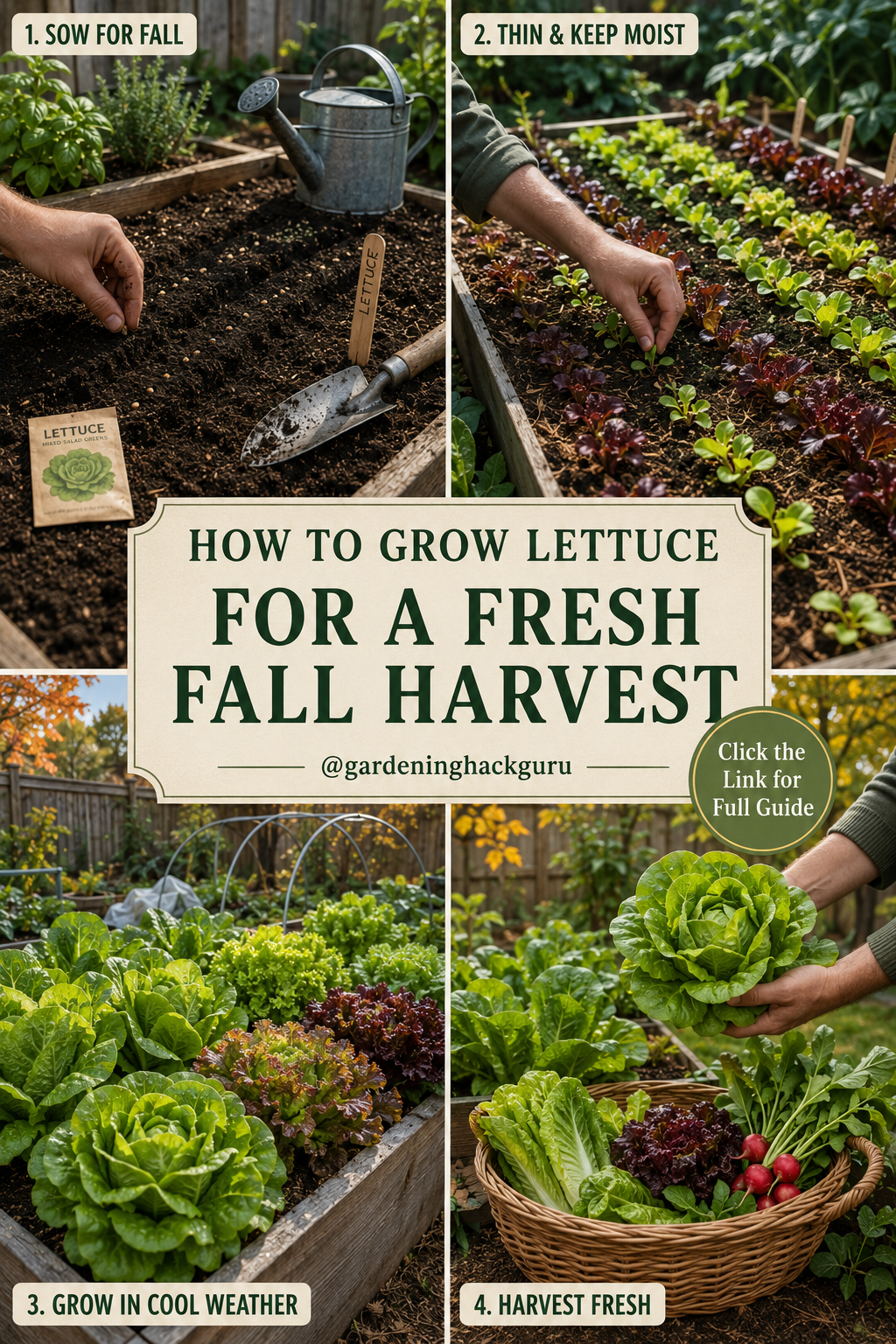
When summer begins winding down, you don’t have to put your vegetable garden to bed. In fact, late summer can be the perfect time to start one of the easiest and most rewarding cool-season crops: lettuce.
Lettuce generally prefers cooler growing conditions, making fall an excellent season for crisp romaine, tender butterhead, colorful loose-leaf varieties, and baby salad greens. With good timing and a little protection from lingering summer heat, you can enjoy fresh lettuce well into autumn.
Whether you’re growing in raised beds, containers, or a traditional vegetable garden, here’s how to grow lettuce for a delicious fresh fall harvest.
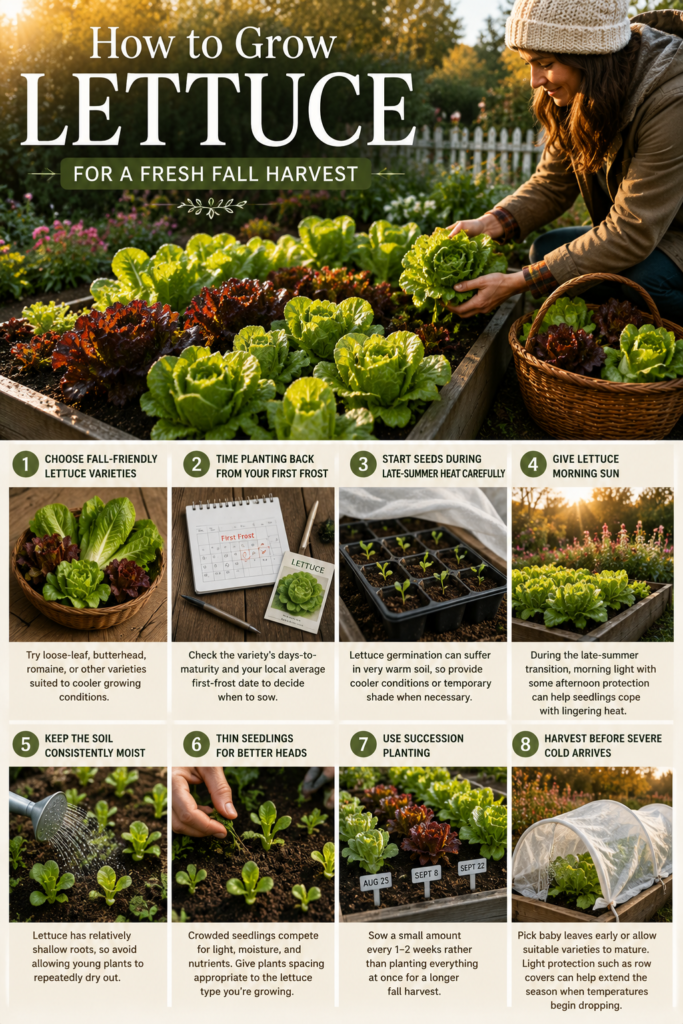
1. Choose the Right Lettuce for Fall
Start by selecting varieties suited to your growing conditions and the amount of time you have before colder weather arrives.
Four popular types to consider are:
- Loose-leaf lettuce — Fast-growing and excellent for repeated leaf harvesting.
- Butterhead lettuce — Produces tender, loosely formed heads with soft leaves.
- Romaine lettuce — Upright, crisp and excellent for salads.
- Baby-leaf mixes — Great when you want a relatively quick harvest.
Check the seed packet for days to maturity. If your fall growing season is short, choose quicker-maturing varieties or plan to harvest them as baby greens.
Planting several colors and textures also makes your fall garden—and your salads—much more interesting.
2. Work Backward From Your First Frost
Timing is one of the most important parts of fall lettuce growing.
Find the average first-frost date for your area and check how many days your chosen lettuce variety needs to mature.
Then count backward to estimate when you should plant.
Give yourself a little extra time because shortening autumn days and cooler temperatures can slow plant growth compared with spring.
Remember that an average frost date is only a guide. Weather varies from year to year, so keep an eye on your local forecast as fall approaches.
3. Be Careful With Late-Summer Heat
One of the trickiest parts of growing fall lettuce is that you often need to start it while the weather still feels like summer.
Lettuce seeds can struggle to germinate when soil temperatures are excessively warm.
If your garden is still very hot, consider starting seeds in containers or trays somewhere cooler and transplanting them later.
You can also provide temporary afternoon shade to a newly seeded outdoor bed.
Keep the seedbed evenly moist while germination occurs. Tiny seeds near the soil surface can dry surprisingly quickly during hot weather.
4. Prepare Loose, Fertile Soil
Lettuce grows quickly and performs best in soil that is fertile, loose, and well drained.
Before planting, remove existing weeds and incorporate finished compost if your soil needs additional organic matter.
Raised beds work particularly well because they’re easy to prepare and maintain.
Avoid compacted or constantly waterlogged soil.
Lettuce has relatively shallow roots, so maintaining consistent moisture in the upper portion of the soil is particularly important.
5. Sow Lettuce Seeds Shallowly
Lettuce seeds are tiny and don’t need to be planted deeply.
Follow the depth recommendations printed on your particular seed packet.
After sowing, gently firm the soil and water carefully so you don’t wash the seeds into piles.
A watering wand with a gentle setting works well.
If you’re planting several varieties, add simple garden markers immediately. Tiny lettuce seedlings can look surprisingly similar when they first emerge.
6. Thin Seedlings Instead of Letting Them Crowd
Seeing dozens of seedlings emerge can feel like success, but leaving all of them crowded together usually doesn’t produce better lettuce.
As seedlings develop, thin them according to the spacing recommended for the variety you’re growing.
Head-forming lettuce generally needs more room than lettuce grown specifically for baby leaves.
Proper spacing gives plants better access to:
- Sunlight
- Moisture
- Nutrients
- Air circulation
Don’t automatically throw away healthy thinnings. If they’re large enough and clean, some can be used as tender baby greens.
7. Keep the Soil Consistently Moist
Because lettuce has relatively shallow roots, it doesn’t appreciate repeatedly drying out.
Check the soil regularly and water when necessary.
Your goal is consistent moisture without permanently soggy conditions.
Watering requirements will vary with temperature, rainfall, container size, soil type, and plant size, so don’t rely solely on a fixed calendar.
A light layer of appropriate organic mulch around established plants can help conserve moisture and reduce weeds.
8. Give Fall Lettuce Enough Light
Lettuce needs light to grow well, but late-summer conditions can still be intense.
During hot weather, a location with morning sun and some protection from the harshest afternoon heat can be useful.
As temperatures become cooler and autumn progresses, sunlight becomes increasingly valuable.
If you’re growing in containers, you have an advantage: you can move them to better locations as seasonal conditions change.
Watch the plants themselves. Very stretched, weak growth may indicate insufficient light.
9. Use Succession Planting
Don’t plant every lettuce seed on the same day.
Instead, sow smaller batches every week or two while conditions remain suitable.
This is called succession planting.
Rather than having twenty heads ready simultaneously, you can create a more continuous supply.
For example:
Week 1: Sow loose-leaf lettuce
Week 2: Sow romaine
Week 3: Sow another small batch of leaf lettuce
Week 4: Sow baby salad greens
Adjust the schedule according to your climate and how quickly autumn weather arrives.
10. Protect Lettuce as Temperatures Drop
Lettuce generally enjoys cool weather, and many varieties can tolerate light cold better than warm-season vegetables.
However, tolerance varies by variety and conditions.
As colder nights arrive, lightweight row covers or frost cloth can provide additional protection.
Simple hoops over a raised bed make it easy to add and remove protective fabric when needed.
Don’t allow heavy material to crush tender plants, and provide ventilation when warmer daytime conditions return.
If severe freezing weather is expected, harvesting mature lettuce beforehand may be the safest choice.
🌱 Growing Fall Lettuce in Raised Beds
Raised beds are ideal for a fall lettuce garden.
You can organize several varieties into short rows or blocks and install hoops over the bed for seasonal protection.
For a beautiful edible layout, try combining:
Back: Upright romaine
Middle: Butterhead varieties
Front: Loose-leaf lettuce and baby greens
Add burgundy or red-leaf lettuce among the green varieties for extra color.
Keep spacing practical rather than trying to create perfectly packed Pinterest-style rows.
Healthy plants need room to mature.
🪴 Growing Lettuce in Containers
No backyard garden? You can still grow lettuce.
Because many lettuce varieties don’t require enormous containers, they’re well suited to patios, balconies, and decks.
Choose containers with drainage holes and fill them with good-quality potting mix.
Wide containers are particularly useful because they provide plenty of surface area for multiple plants.
Container soil can dry faster than garden beds, so check moisture frequently—especially during warm late-summer days.
🥬 Harvest Baby Lettuce for Faster Results
You don’t always have to wait for a full head.
Many lettuce varieties can be harvested as baby leaves while they’re still young and tender.
This can be particularly useful when your fall growing window is short.
Take outer leaves carefully while leaving enough of the plant intact to continue growing, where appropriate for the variety.
Alternatively, harvest entire young plants for baby salads.
Always use clean scissors or a sharp garden knife.
✂️ Harvest Mature Lettuce
For head-forming varieties, harvest when the head reaches a useful size and before quality begins declining.
Morning can be a great time to harvest because the plants are generally well hydrated and temperatures are cooler.
Cut the head near the base using a clean knife.
For loose-leaf lettuce, you can often harvest outer leaves gradually while allowing younger central growth to continue.
Bring harvested lettuce indoors promptly rather than leaving it sitting in warm sunlight.
🧺 Keep Harvested Lettuce Fresh
Freshly harvested lettuce can wilt quickly if handled poorly.
After harvesting, remove damaged or heavily soiled outer leaves.
Wash lettuce when you’re ready to prepare or store it, then dry it thoroughly. Excess moisture during storage can encourage deterioration.
A salad spinner is useful for removing water from leafy greens.
Store clean, dry lettuce under appropriate refrigeration so you can enjoy your harvest for several meals.
🚫 Common Fall Lettuce Growing Mistakes
Planting Too Early in Extreme Heat
Fall lettuce often needs to be started while summer is still lingering, but excessively hot soil can interfere with germination.
Planting Too Late
Waiting until autumn feels cool may leave too little time for plants to mature before severe cold arrives.
Letting Seedlings Dry Out
Young lettuce has shallow roots and can suffer quickly when the upper soil becomes completely dry.
Overcrowding
More seedlings don’t necessarily mean more lettuce. Thin plants according to their mature size.
Growing in Deep Shade
Cool weather doesn’t mean lettuce wants darkness. Plants still require adequate light.
Overwatering
Consistently moist soil is different from permanently saturated soil.
Forgetting About Frost
Cool-season crops can still be damaged by sufficiently cold conditions. Monitor forecasts and provide protection when appropriate.
🌿 A Simple Fall Lettuce Timeline
Your exact timing depends on your climate, but the overall process looks like this:
Late Summer: Choose varieties and begin sowing.
Early Growth: Keep seedlings cool enough to establish and maintain consistent moisture.
Several Weeks Later: Thin plants and continue succession sowing.
Early Fall: Plants grow rapidly as temperatures become more favorable.
Mid-Fall: Begin harvesting baby greens and mature lettuce.
Late Fall: Use row covers when needed and harvest remaining mature plants before damaging cold.
The most important factor is your local first-frost date, not the calendar alone.
🌱 What Can You Grow Alongside Fall Lettuce?
If you have extra raised-bed space, other cool-season crops can complement your lettuce garden.
Depending on your climate and timing, possibilities include:
- Radishes
- Spinach
- Arugula
- Green onions
- Kale
- Cilantro
Choose crops with compatible seasonal requirements and avoid overcrowding.
Radishes are especially useful because they grow relatively quickly and can be harvested before slower crops need additional room.
🥬 How to Get a Longer Fall Harvest
The secret to extending your lettuce season isn’t one special fertilizer or gardening trick.
Combine several small strategies:
Plant at the right time.
Choose appropriate varieties.
Succession sow instead of planting everything at once.
Maintain consistent moisture.
Protect plants during cold nights when practical.
Together, these steps can provide a much longer harvest than simply planting one packet of seeds and hoping for the best.
Final Thoughts
Fall is one of the most satisfying seasons for growing lettuce.
As intense summer heat fades, crisp green romaine, tender butterhead, colorful loose-leaf lettuce, and baby greens can transform an empty raised bed into a productive autumn garden.
The key is to start before fall fully arrives.
Work backward from your first expected frost, select varieties that fit your growing window, protect young seedlings from excessive late-summer heat, and keep the soil consistently moist.
Then sow additional small batches as the season progresses.
With thoughtful timing, the garden that looked tired at the end of summer can soon be overflowing with fresh, crisp lettuce ready for your fall salads.