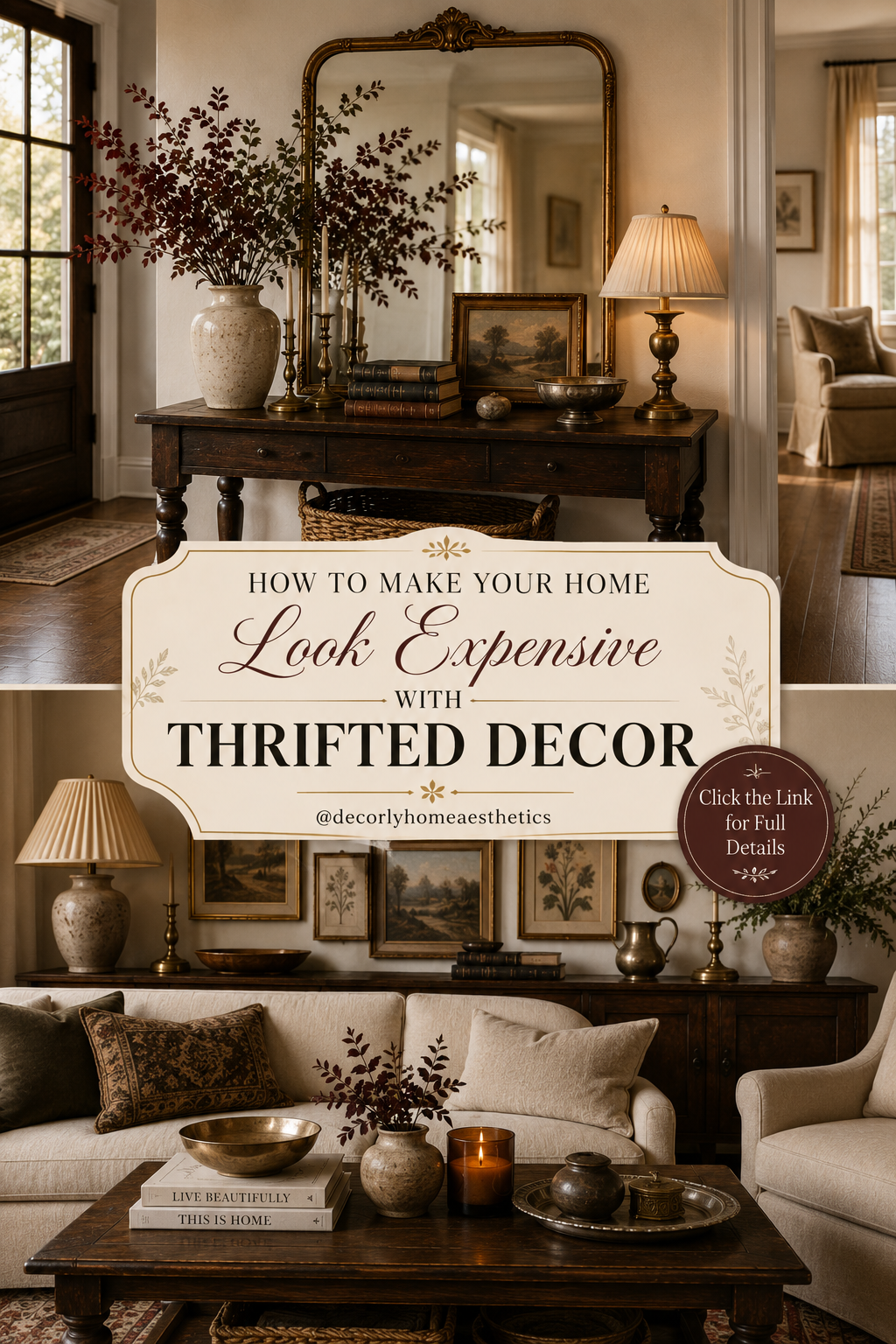
Creating a home that looks sophisticated and expensive doesn’t necessarily require designer furniture or a huge decorating budget. Some of the most beautiful interiors are filled with objects that have been collected slowly—an antique mirror discovered at a thrift store, an old landscape painting found at an estate sale, or a solid-wood side table that simply needed a little attention.
In fact, thrifted décor can often give a home something brand-new furniture cannot: character.
The secret is knowing what to look for and, perhaps more importantly, knowing how to style those finds once you bring them home. Instead of filling your rooms with random secondhand pieces, focus on timeless materials, substantial scale, beautiful shapes, and objects that complement the furniture you already own.
Here are 12 ways to make your home look expensive using thrifted décor.
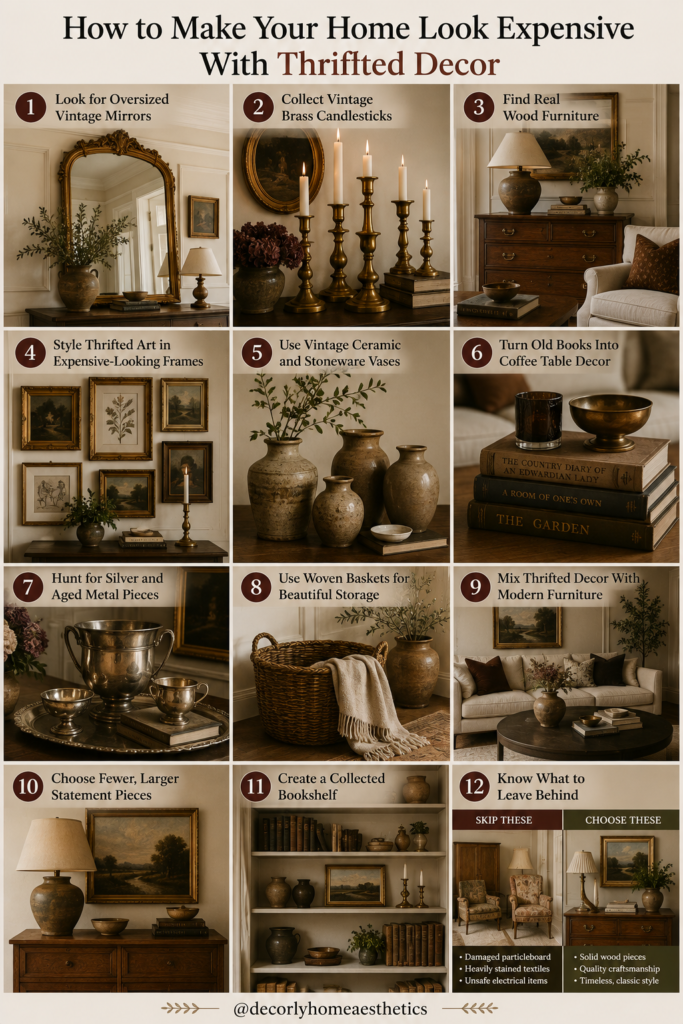
1. Look for Oversized Vintage Mirrors
An oversized mirror can completely transform an entryway, dining room, bedroom, or living room.
When thrifting, pay attention to mirrors with substantial frames rather than worrying about whether the finish is perfect.
Ornate wood, aged brass, dark timber, and antique-style gold frames can all look beautiful in a sophisticated interior. A little patina often makes a piece more interesting.
Try placing a large gilded mirror above a dark-wood console table and styling the surface underneath with only a few carefully selected objects.
The contrast between a dramatic antique-inspired mirror and a clean, uncluttered arrangement can make the entire room feel much more luxurious.
2. Collect Vintage Brass Candlesticks
Vintage brass is one of the easiest materials to incorporate into an expensive-looking home.
Look for candlesticks in different heights and slightly different shapes rather than trying to find a perfectly matching set.
Group two or three together on a mantel, dining table, console, or coffee table.
Their aged finish adds warmth without feeling flashy.
Brass looks particularly beautiful alongside dark walnut, creamy linen, vintage books, marble, stone, and deep green foliage.
If you find pieces with natural tarnishing, you don’t necessarily need to polish them until they shine. A softly aged finish can provide exactly the collected character you’re trying to achieve.
3. Prioritize Real Wood Furniture
One of the best things to search for secondhand is solid-wood furniture.
Thrift stores, estate sales, and local marketplaces can contain beautifully constructed tables, cabinets, desks, stools, and nightstands that would be expensive to buy new.
Look beyond the existing finish.
A piece may appear dated because of its stain or hardware, while the underlying construction and shape are excellent.
Check drawers, joints, legs, and structural stability carefully before purchasing.
Dark walnut and medium-toned woods are especially beautiful when paired with modern cream upholstery and light walls.
And don’t assume every old wooden piece needs to be painted. Sometimes cleaning it, repairing minor damage, and allowing the natural wood grain to remain visible creates a much richer result.
4. Style Thrifted Art in Beautiful Frames
Original artwork can instantly make a home feel more personal and collected.
Search for small oil paintings, landscapes, botanical illustrations, sketches, still lifes, and interesting prints.
Don’t dismiss a piece simply because you dislike its existing frame.
A relatively inexpensive painting can look dramatically different when placed inside an aged-gold, dark-wood, or antique-style frame.
You can also create a small gallery wall using artwork in different sizes and frames.
The key is maintaining some visual connection between the pieces—perhaps similar muted colors or a shared vintage character.
Avoid making everything perfectly symmetrical. A slightly collected arrangement often feels more authentic.
5. Use Vintage Ceramic and Stoneware Vases
Beautiful pottery adds texture without creating visual clutter.
Look for ceramic and stoneware pieces in cream, taupe, brown, olive, charcoal, and other earthy tones.
Interesting silhouettes matter more than elaborate decoration.
A large vintage vessel filled with olive branches or seasonal foliage can become a statement piece on a console table.
Smaller pottery can be used on bookshelves or coffee tables.
Try mixing handmade-looking ceramics with smoother modern objects. The contrast helps prevent the room from looking overly rustic.
You don’t need dozens of pieces.
One substantial vase often looks more expensive than an entire shelf filled with small decorative accessories.
6. Turn Old Books Into Beautiful Décor
Vintage books are inexpensive styling tools that can bring warmth and history to a room.
Look for hardcovers with beautiful neutral, burgundy, olive, brown, or faded cloth covers.
Stack two or three on a coffee table and place a small decorative bowl or object on top.
Use them underneath lamps or pottery to vary the height of bookshelf arrangements.
Books can also fill awkward gaps on consoles and built-ins without looking like unnecessary decoration.
Whenever possible, choose subjects you actually find interesting.
A home feels much more authentic when the books aren’t there purely as props.
7. Hunt for Silver and Aged Metal Pieces
Don’t automatically walk past tarnished silver-colored objects.
Vintage trays, bowls, small dishes, champagne buckets, and decorative vessels can add a sophisticated old-world element to modern rooms.
Their imperfect finish is often what makes them beautiful.
Use an aged tray on a coffee table to group candles and smaller objects, or place a silver bowl on top of stacked books.
You can also mix silver with brass.
Older interiors frequently contain multiple metal finishes, so everything doesn’t need to match perfectly.
Keeping the surrounding palette restrained will help different metals feel intentional rather than chaotic.
8. Use Woven Baskets for Beautiful Storage
Thrifted baskets can solve two problems at once: storage and texture.
Look for substantial baskets made from natural woven materials in warm neutral shades.
Place a large one underneath a console table for blankets, shoes, or everyday items.
Use another beside a sofa for throws.
Smaller baskets can organize shelves or cabinets.
Avoid filling every room with baskets, however. One or two substantial pieces usually have more visual impact than several small ones.
Check secondhand baskets carefully for damage, cleanliness, and odors before bringing them into your home.
9. Mix Vintage Finds With Modern Furniture
This is perhaps the most important rule.
If everything in a room is vintage, the space can begin to feel like an antique shop rather than a sophisticated home.
Instead, create contrast.
Place an antique wooden coffee table in front of a clean cream sofa.
Hang an ornate gilded mirror above a simple modern console.
Pair an old landscape painting with contemporary lighting.
Put a vintage ceramic lamp on a streamlined side table.
The modern pieces provide visual calm, while the vintage objects add character.
This tension between old and new is what gives many designer interiors their collected appearance.
10. Choose Fewer, Larger Statement Pieces
One of the easiest thrifting mistakes is buying something simply because it’s inexpensive.
Five small decorative objects costing very little each can quickly create clutter without improving the room.
Instead, be selective.
Look for one oversized mirror rather than five tiny wall decorations.
Choose one substantial ceramic vessel instead of several little vases.
Wait for a beautiful wooden side table rather than purchasing something you don’t really love just because it’s cheap.
Scale makes a difference.
Larger pieces give the eye somewhere to rest and can make an interior feel more intentional.
Before buying anything, ask yourself:
“Would I still want this if it weren’t inexpensive?”
If the answer is no, leave it behind.
11. Create a Collected Bookshelf
Bookshelves are perfect places to combine thrifted and modern décor.
Start with books, then introduce a few larger objects.
Try combining vintage hardcovers, handmade pottery, framed artwork, brass candlesticks, and one or two sculptural pieces.
Lean a small painting against the back of the shelf instead of hanging everything.
Place some books vertically and stack others horizontally.
Most importantly, leave empty space.
You don’t need to fill every shelf from edge to edge.
Negative space helps individual objects stand out and makes inexpensive finds look much more considered.
A bookshelf should appear as though it developed naturally over years rather than being decorated in one afternoon.
12. Know What to Leave Behind
Successful thrifting is just as much about what you don’t buy.
Not every bargain belongs in your home.
Be cautious with furniture that has serious structural damage, strong odors, significant moisture damage, or signs of pests.
Inspect upholstered items particularly carefully before bringing them indoors.
Older electrical items such as lamps may also need professional inspection or rewiring before use.
And don’t purchase something simply because it looks vintage.
Your goal isn’t to make the house old-fashioned. It’s to find beautiful objects that add character to your existing style.
The best thrifted homes are highly edited.
How to Create an Expensive-Looking Thrifted Color Palette
A consistent color palette can make completely unrelated secondhand finds feel connected.
For a warm, sophisticated look, try:
Cream + Walnut + Aged Gold + Antique Brass + Olive Green + Chocolate Brown + Warm Linen
Use cream and linen as the light foundation.
Bring in walnut and dark wood through furniture.
Then introduce aged brass and gold in smaller amounts through mirrors, candlesticks, frames, and decorative objects.
Olive or burgundy foliage can provide subtle seasonal color without dominating the room.
Because the palette is controlled, objects from completely different decades can still look beautiful together.
Don’t Remove Every Sign of Age
A common mistake is refinishing vintage objects until they look brand new.
Some imperfections are worth keeping.
Minor scratches in solid wood, subtle tarnishing on brass, softened book covers, and aged finishes can contribute to the character of a piece.
Of course, damaged items should still be cleaned, repaired, and made safe for use.
But don’t confuse age with something that needs to be erased.
The patina is often exactly what separates an interesting vintage object from a mass-produced reproduction.
Style Your Finds Instead of Displaying Everything
Thrifting can become addictive because there’s always another interesting object to discover.
But you don’t have to display everything at once.
Rotate your collection.
Keep your favorite pieces visible and store others until you want to refresh the room.
On a console table, for example, you might need only:
One lamp + one large mirror + one ceramic vase + two brass candlesticks + a few books.
That’s enough to create a complete composition.
When styling a coffee table, perhaps use a vintage tray, two books, one pottery piece, and a candle.
Giving objects breathing room is one of the simplest ways to make them appear more valuable.
Final Thoughts
Making your home look expensive with thrifted décor isn’t about convincing people that inexpensive objects cost more than they did.
It’s about creating a home with character, craftsmanship, and personality without believing that beautiful design has to come from expensive stores.
Look for solid wood, aged brass, interesting pottery, substantial mirrors, original artwork, old books, woven materials, and objects with beautiful shapes.
Then mix those discoveries with simpler modern furniture.
Be patient enough to wait for pieces you genuinely love and selective enough to leave unnecessary finds behind.
Over time, your home begins to tell a story.
Instead of looking like every room was purchased from the same furniture collection, it feels layered and personal—as though the best pieces were discovered slowly over many years.
And that collected, individual quality is often exactly what makes a home look truly expensive.