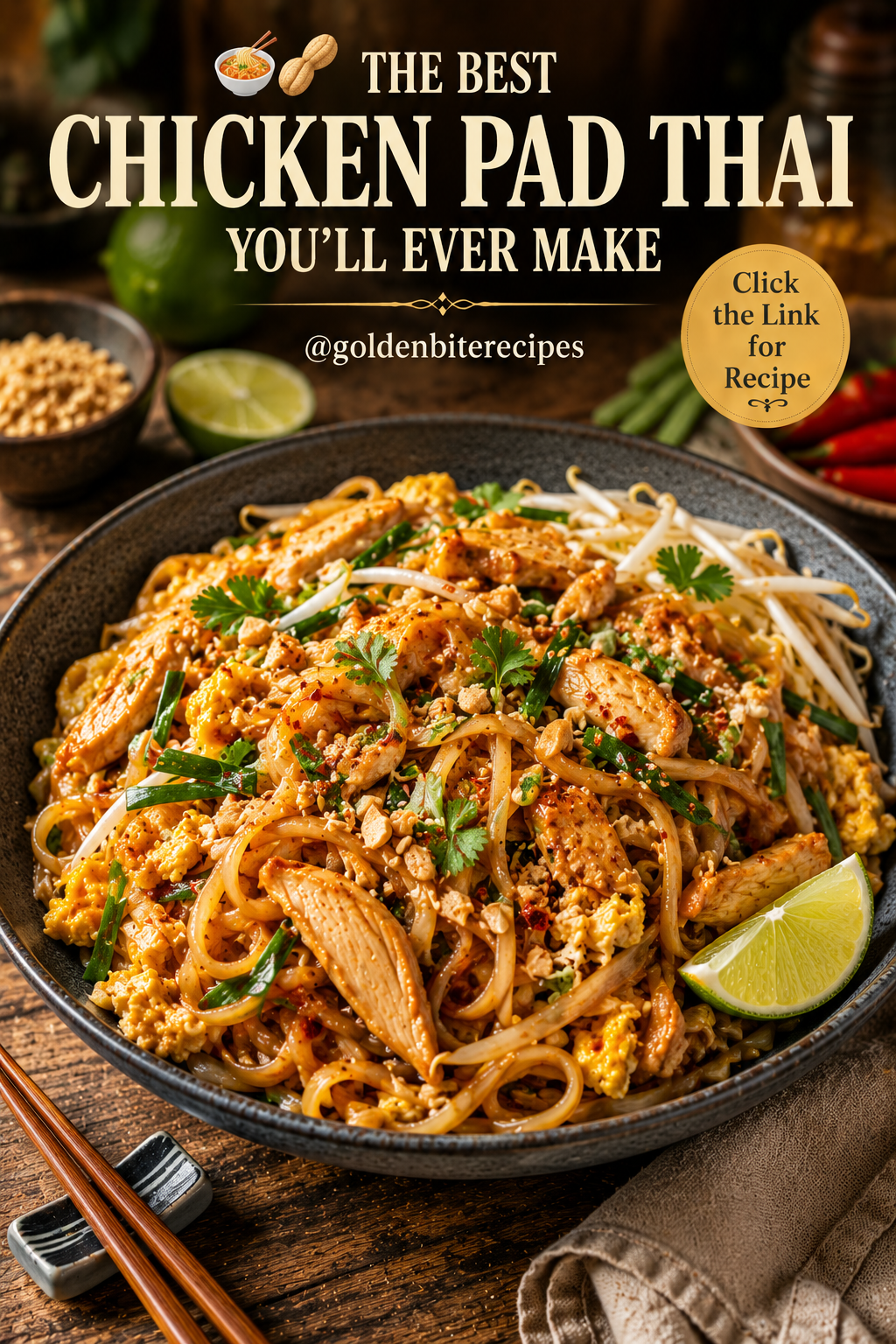
Skip the takeout tonight—this homemade Chicken Pad Thai is loaded with tender chicken, chewy rice noodles, scrambled egg, crunchy bean sprouts, crushed peanuts, and fresh lime, all tossed in an irresistible sweet, salty, tangy sauce.
It comes together in about 30 minutes, making it perfect for busy weeknights while still delivering that restaurant-style flavor everyone loves.
Why You’ll Love This Chicken Pad Thai
- Ready in about 30 minutes
- Sweet, savory, tangy, and slightly spicy
- Tender chicken and chewy rice noodles
- Easy homemade Pad Thai sauce
- Perfect for busy weeknights
- Easy to customize
- Better than takeout
Ingredients
For the Pad Thai
- 8 oz flat rice noodles
- 1 lb boneless, skinless chicken breast, thinly sliced
- 2 tablespoons vegetable oil
- 2 large eggs, lightly beaten
- 2 garlic cloves, minced
- 1 cup fresh bean sprouts
- ½ cup sliced green onions or garlic chives
- ⅓ cup roasted peanuts, roughly crushed
- Fresh lime wedges
- Fresh cilantro, optional
For the Pad Thai Sauce
- 3 tablespoons tamarind paste or concentrate, adjusted to strength
- 3 tablespoons fish sauce
- 2½ tablespoons brown or palm sugar
- 1 tablespoon soy sauce
- ½–1 teaspoon chili flakes, optional
Step-by-Step Instructions
1. Prepare the Rice Noodles
Soak or cook the rice noodles according to the package directions until they’re flexible but still slightly firm.
Drain and set aside. Avoid overcooking because they’ll continue cooking in the skillet.
2. Make the Pad Thai Sauce
Whisk together the tamarind, fish sauce, sugar, soy sauce, and optional chili flakes.
Taste and adjust if necessary. You’re looking for a balance of tangy, salty, and sweet rather than an overwhelmingly sweet sauce.
3. Cook the Chicken
Heat 1 tablespoon of oil in a large wok or skillet over medium-high heat.
Add the sliced chicken and stir-fry for approximately 4–5 minutes, until lightly golden and safely cooked through.
Transfer to a plate.
4. Scramble the Eggs
Add the remaining oil to the skillet.
Add the garlic and cook briefly until fragrant.
Push it to one side and pour in the beaten eggs. Let them set slightly before scrambling them into bite-sized pieces.
5. Add the Noodles
Add the drained rice noodles to the skillet.
Pour the prepared Pad Thai sauce over the noodles and toss continuously for 2–3 minutes until the noodles become tender and absorb the sauce.
If they seem dry, add a tablespoon or two of water.
6. Return the Chicken
Add the cooked chicken back to the skillet and toss everything together until evenly coated.
7. Add the Vegetables
Add the bean sprouts and green onions or garlic chives.
Stir-fry for only another minute so they stay fresh and slightly crunchy.
8. Add the Peanuts
Sprinkle in half of the crushed peanuts and gently toss.
Save the rest for serving.
9. Finish and Serve
Divide the Pad Thai between bowls and top generously with crushed peanuts and fresh chives.
Serve immediately with lime wedges so everyone can squeeze fresh lime juice over their noodles.
Tips for Restaurant-Style Pad Thai
Don’t overcook the noodles. Slightly underdone noodles are ideal before they hit the hot skillet.
Use tamarind. It’s responsible for much of Pad Thai’s distinctive tangy flavor.
Cook over fairly high heat. This helps everything come together quickly without turning mushy.
Have everything ready before cooking. Pad Thai moves quickly once the wok gets hot.
Finish with fresh lime. That final squeeze makes the flavors much brighter.
Easy Variations
Shrimp Pad Thai
Replace the chicken with peeled shrimp for another classic combination.
Chicken & Shrimp Pad Thai
Use half chicken and half shrimp for a restaurant-style mixed version.
Spicy Pad Thai
Increase the chili flakes or serve Thai chili powder on the side.
Vegetable Pad Thai
Replace the chicken with tofu and add carrots, bell peppers, broccoli, or mushrooms. For a fully vegetarian version, also substitute the fish sauce.
Extra Peanut Pad Thai
Add extra crushed roasted peanuts and a small spoonful of peanut butter to the sauce for a nuttier, nontraditional twist.
What to Serve With Chicken Pad Thai
Chicken Pad Thai is satisfying on its own, but you can turn it into a larger Thai-inspired dinner with fresh spring rolls, Thai cucumber salad, chicken satay, crispy wontons, or a light Asian-style salad.
Storage & Reheating
Store leftovers in an airtight container in the refrigerator for up to 3 days.
When reheating, add a splash of water and warm gently in a skillet. This helps loosen noodles that have absorbed extra sauce overnight.
For the best texture, add fresh bean sprouts, peanuts, and lime after reheating.
Frequently Asked Questions
What noodles are used for Pad Thai?
Flat dried rice noodles are traditionally used. Look for noodles labeled Pad Thai rice noodles.
What gives Pad Thai its signature flavor?
The combination of tamarind, fish sauce, and palm or brown sugar creates its characteristic sweet-salty-sour balance.
Can I make it without fish sauce?
Yes. You can substitute a vegetarian fish sauce or additional soy sauce, though the flavor will be somewhat different.
Why are my noodles mushy?
They were likely soaked or cooked too long before stir-frying. Keep them slightly firm initially.
Can I prepare anything ahead?
Yes. Mix the sauce, slice the chicken, chop the garnishes, and prepare the noodles beforehand. Then the actual stir-frying takes only a few minutes.
Final Thoughts
This Chicken Pad Thai brings together chewy noodles, juicy chicken, scrambled eggs, crunchy peanuts, fresh bean sprouts, and that signature sweet-tangy Pad Thai sauce.
Finish it with a generous squeeze of lime, and you’ve got an easy homemade dinner that may have you skipping takeout altogether.