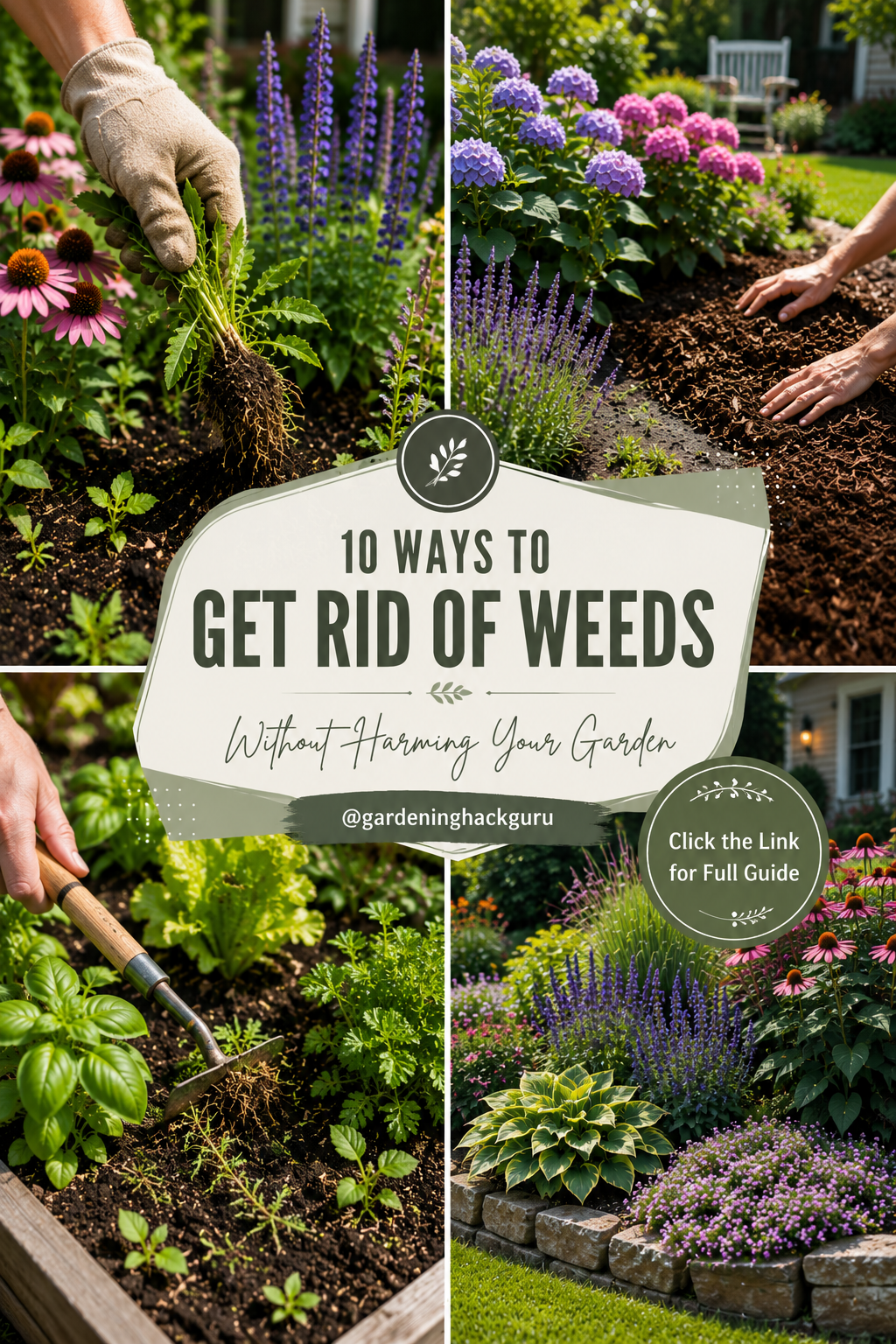
Weeds are one of those garden problems that never seem completely finished. You pull a few today, and somehow another group appears a week later.
The challenge becomes even greater when weeds grow between vegetables, underneath shrubs, or right beside flowers you want to protect. Aggressive weed-control methods can sometimes damage desirable plants along with the weeds.
Fortunately, you don’t need to rely on harsh treatments everywhere. A combination of hand removal, mulch, smart planting, and early prevention can keep weeds under control while protecting the rest of your garden.
Here are 10 practical ways to get rid of weeds without harming your garden.
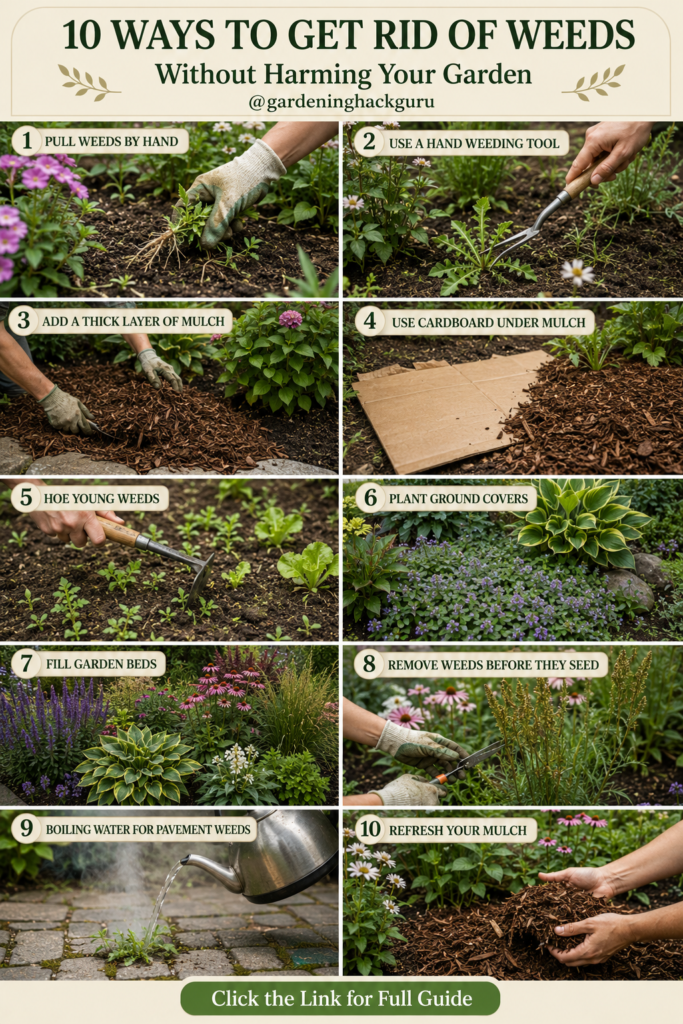
1. Pull Weeds by Hand
Sometimes the simplest method is still the best.
Hand-pulling gives you precise control, making it especially useful when weeds are growing close to flowers, vegetables, or young plants.
For easier removal, pull weeds when the soil is slightly moist. The roots are more likely to slide out of damp soil than hard, dry ground.
Grip the weed close to the soil surface and pull slowly upward.
The goal is to remove as much of the root system as possible. If a substantial root remains underground, some weeds can quickly grow back.
For weeds with long taproots, use a weeding tool rather than pulling aggressively and accidentally snapping the root.
2. Use a Hand Weeding Tool
Some weeds simply don’t want to come out.
Dandelions and other deep-rooted weeds can break when pulled by hand, leaving enough root underground for regrowth.
A narrow hand weeder allows you to loosen the soil around the root without disturbing a large section of your flower bed.
Push the tool into the soil beside the weed, loosen the root gently, and lift the entire plant.
This method is particularly helpful in established beds where you don’t want to disturb neighboring plant roots.
3. Add a Thick Layer of Mulch
Mulch is one of the most useful tools for preventing weeds.
Weed seeds need suitable conditions to germinate, including access to light. Covering exposed soil with mulch makes it harder for many weeds to become established.
Organic mulch options include:
- Shredded bark
- Wood chips
- Pine needles
- Shredded leaves
- Composted bark
For many garden beds, a layer around 2–3 inches deep provides useful weed suppression without creating an excessively thick layer.
Keep mulch slightly away from the crowns and stems of plants rather than piling it directly against them.
As a bonus, organic mulch can help conserve soil moisture and gradually contribute organic matter as it decomposes.
4. Use Cardboard Under Mulch
If you’re dealing with a particularly weedy open area, cardboard can provide an additional barrier.
Start by cutting or pulling down large existing weeds.
Lay plain, non-glossy cardboard over the soil, overlapping the edges so weeds can’t easily emerge through gaps.
Remove plastic tape, labels, and other non-compostable materials first.
Then cover the cardboard with a generous layer of mulch.
This technique can be especially useful when creating a new garden bed or suppressing vegetation around established shrubs where digging isn’t desirable.
Avoid placing thick cardboard directly over plants you want to keep.
5. Hoe Young Weeds Before They Grow
Tiny weeds are much easier to control than mature ones.
Walk through your vegetable and flower beds regularly and look for newly germinated weeds.
Use a sharp garden hoe to lightly disturb or slice them near the soil surface.
There’s usually no reason to deeply cultivate the entire bed. Excessive digging can bring buried weed seeds closer to the surface where they may germinate.
A quick, shallow pass when weeds are tiny can save considerably more work later.
6. Grow Ground-Cover Plants
Bare soil is an invitation for weeds.
One attractive solution is filling suitable areas with desirable low-growing plants.
Depending on your climate, garden conditions, and location, possibilities might include plants such as creeping thyme or other appropriate ground covers.
As these plants spread, their foliage shades portions of the soil and occupies space where weeds might otherwise establish.
Ground covers can be particularly useful:
- Along pathways
- Under taller perennials
- Around garden edges
- Between ornamental plants
Choose non-invasive species suitable for your region and growing conditions.
The objective is to reduce empty soil without introducing another plant that becomes difficult to control.
7. Fill Garden Beds With Well-Spaced Plants
Professional-looking gardens often contain layers of plants rather than enormous areas of exposed soil.
This approach can also help with weeds.
As properly spaced perennials, shrubs, grasses, and flowers mature, their foliage shades more of the soil beneath them.
Less light reaching the soil can mean fewer opportunities for certain weeds to thrive.
You might combine taller plants toward the back, medium-height flowering perennials through the center, and lower-growing plants near the front.
Just don’t confuse dense planting with overcrowding.
Every plant still needs enough room for mature growth, airflow, water, and nutrients.
8. Remove Weeds Before They Produce Seeds
One weed today can become a much bigger problem if it’s allowed to reproduce.
That’s why timing matters.
If you notice weeds beginning to flower, prioritize removing them before mature seeds are produced and scattered around the garden.
This is particularly important for prolific annual weeds capable of producing large numbers of seeds.
If a weed already has mature seed heads, handle it carefully. Rather than shaking it around the garden or immediately adding it to a casual compost pile, contain the seed heads appropriately.
Preventing the next generation is one of the most effective long-term weed-management strategies.
9. Use Boiling Water Only on Hardscape Weeds
Weeds growing between patio pavers or driveway cracks present a different problem from weeds growing inside a flower bed.
Carefully applied boiling water can damage weeds growing in these isolated hardscape areas.
However, there’s an important warning:
Boiling water can damage any plant tissue it touches.
Don’t pour it around flowers, vegetables, lawns, shrubs, or tree roots.
Reserve this approach for cracks and isolated paved areas where desirable plants aren’t nearby, and take care to avoid splashing yourself.
For weeds inside garden beds, hand-pulling and targeted weeding tools are much safer choices.
10. Keep Refreshing Your Mulch
Mulching isn’t a one-time job.
Organic mulch gradually decomposes, shifts, and becomes thinner. Eventually, patches of exposed soil begin appearing again.
Check your beds periodically and top up mulch where necessary.
You don’t need to keep piling new mulch endlessly on top of old layers. Maintain an appropriate overall depth and loosen compacted material when necessary.
Regular maintenance keeps beds looking tidy while continuing to suppress new weed growth.
🌱 Why Do Weeds Keep Coming Back?
Even a well-maintained garden will occasionally produce weeds.
Seeds can arrive through:
- Wind
- Birds and other animals
- Foot traffic
- Newly introduced soil or compost
- Existing seeds already present in the ground
Some weed seeds can remain dormant in soil for extended periods before conditions allow them to germinate.
That’s why the realistic goal isn’t necessarily a garden where no weed ever appears.
Instead, aim to prevent weeds from becoming established enough to compete with your desired plants.
🚫 Be Careful With Homemade Weed Killers
You’ll often see recipes online recommending vinegar or salt as “natural” weed killers.
Natural doesn’t automatically mean harmless to your garden.
Vinegar can damage the foliage of desirable plants if it contacts them, while salt can harm plants and negatively affect soil conditions.
That makes these treatments poor choices around flower beds, vegetables, shrubs, and other plants you want to protect.
For weeds growing among desirable plants, physical removal and prevention are usually more targeted approaches.
🌼 How to Keep Flower Beds Weed-Free Longer
The best strategy combines several methods instead of relying on one solution.
Start by removing established weeds and their roots. Then cover exposed soil with appropriate mulch.
Fill larger gaps with desirable plants over time, and inspect your garden regularly for new seedlings.
Removing five tiny weeds during a quick morning garden walk is much easier than tackling fifty mature weeds later in the season.
Consistency matters more than perfection.
🥕 Weed Control in Vegetable Gardens
Vegetable gardens require particular care because you don’t want to accidentally damage shallow crop roots.
Use light hand-weeding and shallow hoeing between rows while weeds are young.
Mulching around established vegetables can also reduce weed pressure while helping retain soil moisture.
When hoeing, stay far enough away from crop stems to avoid disturbing their roots.
The closer a weed is to a vegetable plant, the more useful careful hand-pulling becomes.
🌿 A Simple Weekly Weed Routine
You don’t need to spend an entire weekend weeding if you stay ahead of the problem.
Once or twice each week, walk through your garden and check for young weeds. Pull anything growing close to desirable plants and lightly hoe small weeds in open areas.
Look for thinning mulch and weeds beginning to flower.
This simple habit prevents many small problems from becoming major ones.
Final Thoughts
Getting rid of weeds doesn’t have to mean spraying everything growing in your garden.
Start with the most targeted methods: pull weeds with their roots, use a hand weeder for stubborn plants, remove seedlings while they’re young, and stop weeds before they produce seeds.
Then focus on prevention.
Mulch exposed soil, use suitable ground covers, maintain healthy plantings, and regularly refresh garden beds as needed.
The result won’t necessarily be a garden where a weed never appears—and that’s okay. Instead, you’ll have a healthier, more manageable garden where weeds are controlled without unnecessarily putting your flowers, vegetables, and other plants at risk.