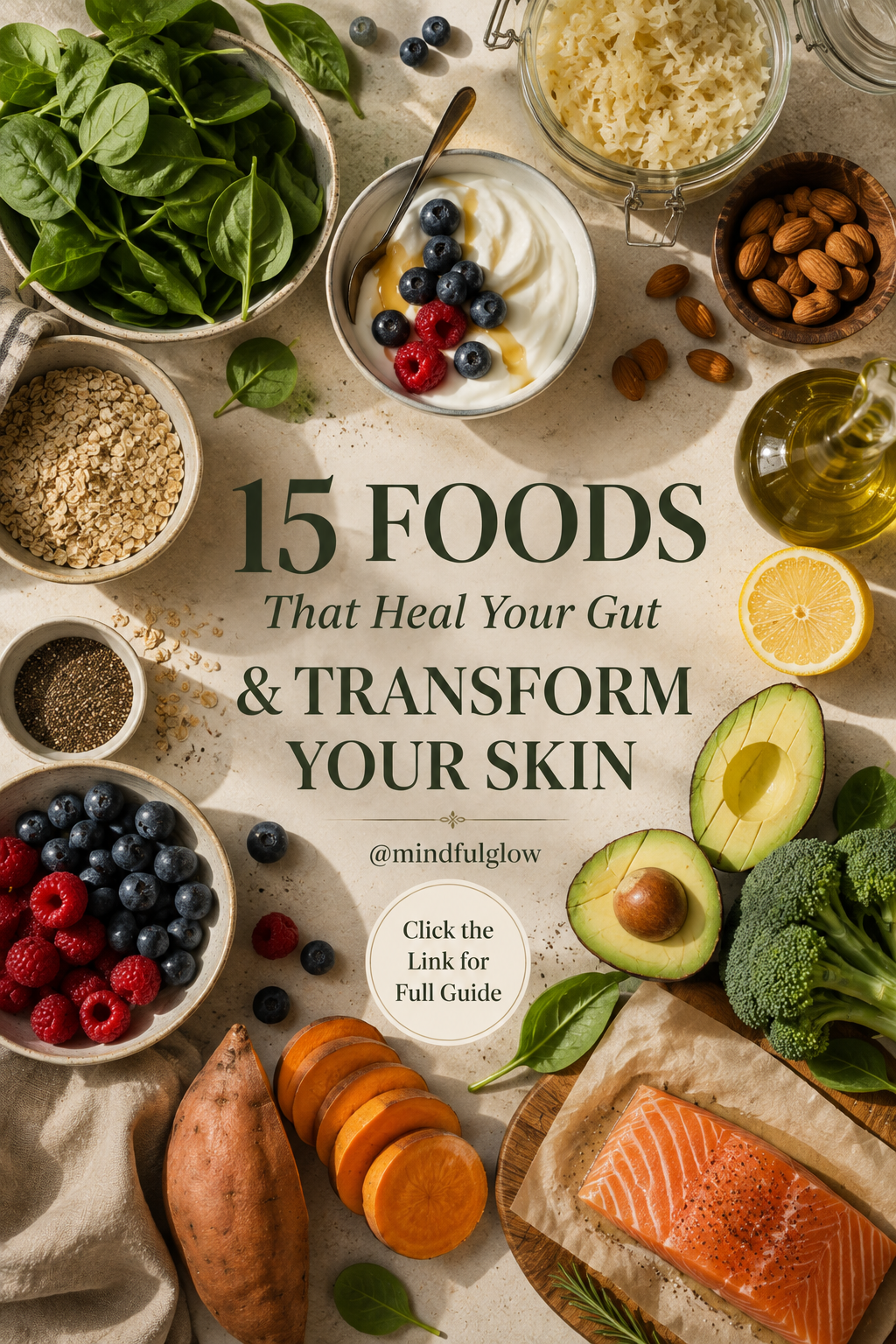
Beautiful skin isn’t only about what you put on your face. Your everyday diet, hydration, sleep, stress levels, genetics, hormones, and overall health can all influence how your skin looks and feels.
One particularly interesting relationship is the gut-skin connection. Your digestive system is home to a huge community of microorganisms, often called the gut microbiome. Researchers continue to study how the gut, immune system, inflammation, and skin interact.
That doesn’t mean one smoothie or “superfood” will magically cure breakouts. But building a varied, nutrient-rich diet can support digestive health while supplying your skin with protein, healthy fats, vitamins, minerals, antioxidants, and fiber.
If you’re ready to work on your glow from the inside out, here are 15 foods worth adding to your grocery list.
1. Greek Yogurt
Greek yogurt is an easy way to add protein and fermented food to your diet.
Some varieties contain live and active cultures, while yogurt also provides nutrients such as calcium and vitamin B12.
For an easy breakfast, combine plain Greek yogurt with berries, oats, chia seeds, and nuts.
Try it: Choose unsweetened yogurt and add fresh fruit for sweetness.
2. Kefir
Kefir is a fermented milk drink with a pleasantly tangy flavor.
Because it’s fermented using cultures of bacteria and yeast, it can be another way to introduce fermented foods into your routine.
Blend kefir with berries and oats for an easy breakfast smoothie, or enjoy a small glass alongside breakfast.
3. Sauerkraut
Sauerkraut is traditionally made by fermenting cabbage.
It can provide fiber and, when it hasn’t been heat-treated after fermentation, may contain live microorganisms.
Add a small serving to grain bowls, sandwiches, salads, or roasted vegetables.
Just remember that some varieties can be relatively high in sodium, so portions matter.
4. Kimchi
Another fermented favorite, kimchi is traditionally made with vegetables such as cabbage and radish combined with seasonings.
Its strong flavor means a little can transform a simple meal.
Try adding kimchi to rice bowls, eggs, noodles, or alongside vegetables and protein.
5. Oats
If your goal is supporting your gut, don’t overlook simple foods.
Oats provide soluble fiber, including beta-glucan, making them a convenient whole-grain addition to breakfast.
Create overnight oats with yogurt, chia seeds, berries, and nuts for a meal that combines several foods from this list.
6. Blueberries
Blueberries are tiny but nutrient-dense.
They’re known for their colorful plant compounds, including anthocyanins, and they’re an easy way to add fruit and fiber to your diet.
Add them to yogurt, oatmeal, smoothies, or simply eat them as a snack.
And don’t limit yourself to blueberries. Strawberries, raspberries, and blackberries are excellent choices too.
7. Avocado
Avocado provides fiber along with mostly unsaturated fats.
It’s also incredibly versatile.
Spread it over whole-grain toast, add it to salads and grain bowls, blend it into dips, or serve it alongside eggs.
Healthy skin needs adequate nutrition overall, and dietary fats are part of a balanced eating pattern.
8. Spinach
Spinach deserves a permanent place in your refrigerator.
This leafy green provides nutrients including folate, vitamin K, carotenoids, and vitamin C.
Add a handful to omelets, soups, curries, pasta, smoothies, or salads.
If eating giant salads every day isn’t your thing, cooking spinach makes it surprisingly easy to eat a generous portion.
9. Chia Seeds
These tiny seeds are an easy source of fiber and plant-based omega-3 fatty acid ALA.
They’re also incredibly convenient because you can sprinkle them over foods you’re already eating.
Add chia seeds to yogurt, oatmeal, smoothies, or make chia pudding overnight.
Just remember that chia absorbs a lot of liquid, so adequate hydration is important.
10. Ground Flaxseed
Flaxseed is another useful addition when you’re trying to increase plant variety and fiber.
Ground flaxseed is generally more practical than whole seeds because the hard outer shell of whole flax can pass through digestion relatively intact.
Stir a spoonful into oatmeal, yogurt, smoothies, pancakes, or homemade muffins.
11. Salmon
Salmon provides high-quality protein and long-chain omega-3 fatty acids.
Protein supplies amino acids your body needs to maintain and repair tissues, while omega-3 fats are an important part of an overall nutritious diet.
Pair salmon with roasted vegetables, brown rice, quinoa, or potatoes for an easy dinner.
If salmon isn’t your favorite, other oily fish can provide similar nutrients.
12. Sweet Potatoes
The beautiful orange color of sweet potatoes comes partly from carotenoids such as beta-carotene.
Your body can convert beta-carotene into vitamin A, which has important functions throughout the body, including normal skin function.
Roast sweet-potato wedges, add cubes to grain bowls, mash them, or bake a whole sweet potato and fill it with vegetables and protein.
13. Almonds
Almonds provide healthy fats, plant protein, fiber, and vitamin E.
They’re also one of the easiest foods on this list to incorporate into everyday life.
Keep a small portion available for snacks, sprinkle chopped almonds over yogurt, or add almond butter to oatmeal and fruit.
14. Extra-Virgin Olive Oil
Extra-virgin olive oil is a staple of Mediterranean-style eating patterns and provides predominantly monounsaturated fat along with various plant compounds.
Use it as a salad dressing, drizzle it over roasted vegetables, or combine it with lemon and herbs for a simple homemade dressing.
You don’t need enormous quantities—a little goes a long way.
15. Broccoli
Broccoli brings fiber, vitamin C, folate, vitamin K, and various plant compounds to the table.
Roasting it with olive oil can turn even reluctant broccoli eaters into fans.
You can also steam it, stir-fry it, add it to pasta, or serve it alongside salmon and sweet potatoes.
The Real Secret: Variety
It’s tempting to search for one perfect food that will “fix” your gut or give you flawless skin.
Unfortunately, nutrition doesn’t work that way.
A better approach is to focus on your overall eating pattern.
Try incorporating a wide variety of vegetables, fruits, whole grains, legumes, nuts, seeds, fermented foods, healthy fats, and quality protein sources.
Your gut microbiome interacts with the foods you eat, and dietary variety can help you consume a broader range of fibers and nutrients.
Instead of asking:
“What’s the best food for gut health?”
Try asking:
“How many different nutritious plant foods can I include this week?”
That small mindset shift can make healthy eating much more interesting.
Build a Gut & Skin-Friendly Day
You don’t need complicated recipes to use these foods.
A simple day might look like this:
Breakfast: Greek yogurt with oats, blueberries, chia seeds, and almonds.
Lunch: A grain bowl with spinach, avocado, roasted broccoli, and a small serving of sauerkraut.
Snack: Fruit with almond butter or kefir blended with berries.
Dinner: Salmon with roasted sweet potatoes and vegetables, finished with extra-virgin olive oil.
The goal isn’t perfection. It’s consistency.
Don’t Forget the Basics
Food matters, but glowing skin isn’t created by diet alone.
Adequate sleep, hydration, sun protection, regular movement, stress management, and a skincare routine appropriate for your skin can matter too.
And if you’re dealing with persistent acne, eczema, digestive symptoms, unexplained reactions, or another ongoing concern, don’t assume that simply removing foods will solve it. A dermatologist, doctor, or registered dietitian can help you investigate what’s actually happening.
Be particularly cautious with restrictive “gut healing” diets promoted online. Cutting out large groups of nutritious foods without a clear reason can make eating unnecessarily complicated and potentially reduce nutritional variety.
Final Thoughts
You don’t need an expensive supplement cabinet or an Instagram-perfect refrigerator to support your body.
Start with ordinary foods.
Buy some berries.
Add spinach to dinner.
Try fermented yogurt.
Sprinkle chia seeds over breakfast.
Eat more vegetables.
Choose whole grains.
Cook salmon occasionally if you enjoy it.
Drizzle olive oil over your salad.
Small choices repeated consistently are much more valuable than chasing the latest wellness trend.
Your glow isn’t created by one magical ingredient.
It’s built through the way you care for yourself—from the inside out.