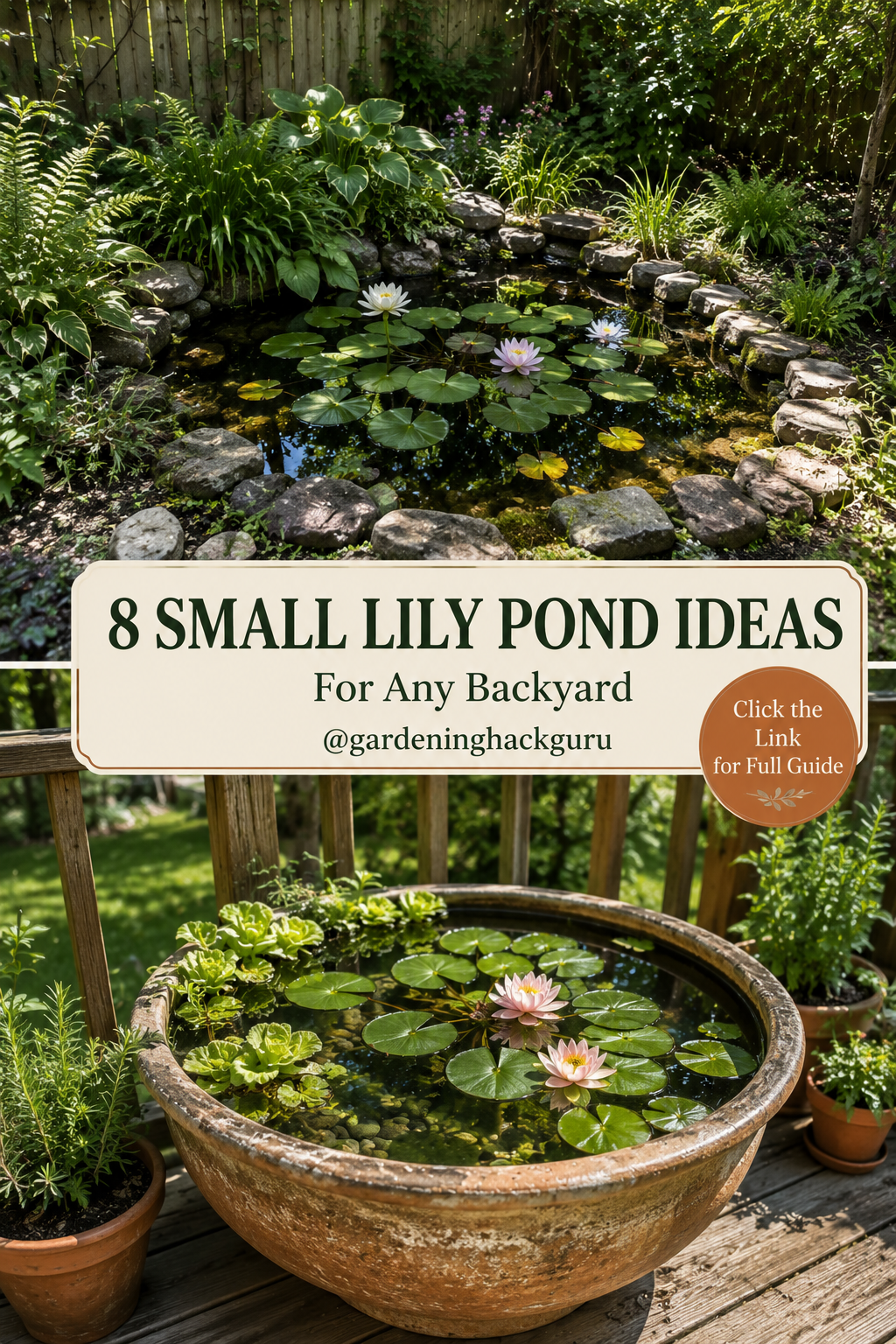
There is something incredibly peaceful about having water in the garden. Even a small pond can completely change the atmosphere of a backyard, adding gentle reflections, beautiful aquatic plants, and a sense of calm that ordinary landscaping can’t quite achieve.
And you don’t need a huge property to create one.
A small lily pond can fit into a garden corner, beside a patio, along a pathway, or even inside a large container on a deck. Water lilies provide beautiful flowers while their floating leaves create the classic pond look that makes a backyard feel established and naturally inviting.
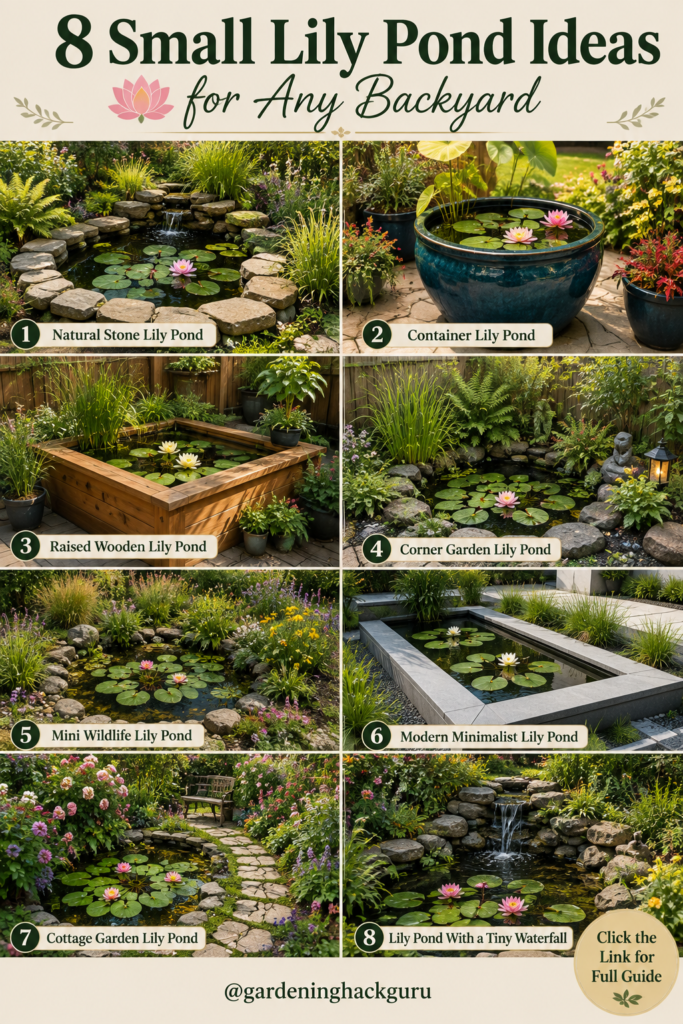
Whether you prefer a rustic wildlife pond, a modern water feature, or a simple container garden that requires no digging, these 8 small lily pond ideas offer inspiration for almost any backyard.
1. Natural Stone Lily Pond
For a pond that looks like it has always belonged in your garden, choose an irregular shape and surround it with natural stone.
Instead of creating a perfectly circular pond, use gentle curves and slightly uneven edges. Weathered fieldstone, slate, and river rocks help soften the transition between water and garden.
Plant ferns, hostas, creeping groundcovers, and ornamental grasses around the perimeter. Allow some foliage to overlap the stones rather than keeping everything perfectly trimmed.
Add a few water lilies rather than covering the entire surface. Leaving open water creates beautiful reflections and keeps the pond from looking overcrowded.
The result is a small backyard pond that feels natural, mature, and peaceful.
2. Container Lily Pond
One of the easiest ways to enjoy water lilies is to create a pond inside a large container.
This is an especially useful option if you don’t want to dig or have only a patio, deck, or small courtyard.
Choose a wide, watertight container such as a large ceramic bowl, half barrel, or stone-look planter. Wider containers usually provide a better surface area for lily pads than tall, narrow pots.
Choose a compact or dwarf water lily suited to the container’s depth and size.
You can also introduce other appropriate aquatic plants around the edges to create a miniature ecosystem.
A container pond surrounded by ordinary terracotta pots and herbs can become one of the most charming features of a patio.
3. Corner Garden Lily Pond
That awkward corner of your backyard could be the perfect location for a small pond.
Instead of filling the area with another shrub or planter, create a compact pond surrounded by layered greenery.
Use taller plants toward the back for privacy and shorter plants closer to the water. Ferns, hostas, sedges, and moisture-tolerant plants can help blend the pond into the landscape.
A small bench nearby can transform the forgotten corner into a quiet place for morning coffee or evening relaxation.
If the pond is visible from a kitchen or living-room window, even better—you’ll be able to enjoy it from inside the house too.
4. Raised Lily Pond
A lily pond doesn’t necessarily have to be installed at ground level.
A raised pond can become an attractive architectural feature, particularly in modern gardens and patios.
Build a low rectangular structure using stone, brick, or timber designed for outdoor conditions. Inside, install a suitable waterproof pond liner or purpose-built pond container.
The raised edge provides a convenient place to sit while making the water easier to see.
Keep the planting relatively simple. A few dwarf lilies combined with restrained greenery can create an elegant water feature without overwhelming a smaller space.
Raised ponds can also be easier to access for routine maintenance.
5. Mini Wildlife Lily Pond
If you want your pond to support backyard wildlife, design it with nature in mind.
Create varying depths and include a gently sloped or shallow edge where appropriate so small wildlife has a way to get out.
Use aquatic and marginal plants suitable for your local climate, and avoid filling every inch with decorative features.
Water lilies provide shade across part of the surface while surrounding vegetation creates shelter.
Depending on where you live, a thoughtfully designed pond may attract dragonflies, birds, frogs, and other garden visitors.
Avoid introducing animals or plants that are invasive in your region. A wildlife pond works best when designed around locally appropriate species.
6. Modern Minimalist Lily Pond
Lily ponds don’t have to look rustic.
For a contemporary backyard, create a clean rectangular or square pond bordered by large-format stone pavers, concrete, or simple dark edging.
Keep the planting restrained.
Instead of dozens of plants, use several carefully positioned water lilies combined with architectural grasses or evergreen plants around the outside.
Dark water can provide beautiful reflections of surrounding trees and architecture, while the lily pads add softness to the geometric design.
This contrast between structured landscaping and organic aquatic plants works particularly well beside modern patios.
7. Cottage Garden Lily Pond
If you love overflowing flowers and relaxed landscaping, incorporate your pond into a cottage-style garden.
Create an irregular pond surrounded by weathered stones and abundant planting.
Around the water, combine suitable moisture-loving plants with nearby cottage favorites such as lavender, salvia, daisies, roses, and ornamental grasses where growing conditions allow.
Add stepping stones or a narrow gravel path leading toward the pond.
The goal isn’t perfection. Let some plants spill naturally over edges and allow the landscape to develop a slightly informal character.
With water lilies floating across the surface, the result can feel like a little hidden garden discovered in the countryside.
8. Lily Pond With a Small Waterfall
If you want both beautiful water lilies and the relaxing sound of moving water, consider adding a small waterfall.
Use several natural rocks to create a short cascade at one end of the pond. Keep the waterfall proportional—a tiny backyard pond doesn’t need a huge dramatic cascade.
A gentle flow creates movement and adds sound without dominating the landscape.
However, water lilies generally prefer calmer water, so position them away from the strongest current and splashing.
Surround the waterfall with ferns, mossy stones, and ornamental grasses to help it blend naturally into the garden.
At night, subtle landscape lighting nearby can make this little corner especially inviting.
Choosing Water Lilies for a Small Pond
Plant selection is particularly important when space is limited.
Large, vigorous water lilies can quickly overwhelm a tiny pond or container. Look for dwarf or compact cultivars recommended for smaller water gardens.
Consider your local climate as well. Hardy and tropical water lilies have different growing requirements and cold tolerances.
Before purchasing, check the mature spread of the variety rather than choosing solely by flower color.
You want enough lily pads to provide visual interest and some shade without completely covering the surface.
Finding the Right Location
Most water lilies flower best when they receive plenty of sunlight, so choose your pond location carefully.
A position with several hours of direct sun is generally preferable, although exact requirements vary by variety and climate.
Avoid placing a tiny pond directly beneath trees if possible. Falling leaves can quickly accumulate in the water, increasing maintenance.
At the same time, consider where you’ll actually see the pond. A beautiful water feature hidden behind the shed won’t bring nearly as much enjoyment as one visible from your patio, deck, or favorite window.
Make It Look Natural
One of the easiest ways to make a small pond look expensive is actually to make it look less perfect.
Nature rarely creates identical rocks arranged at equal distances.
Mix different stone sizes. Let plants overlap the pond edge. Include varying shades of green. Allow lily pads to sit at slightly different angles and stages of growth.
Don’t feel that every inch around the pond needs flowers.
Ferns, moss, grasses, groundcovers, weathered stones, and exposed pockets of soil can make the overall design feel much more believable.
Simple Lily Pond Maintenance
Even a small pond requires some routine care.
Remove fallen leaves and decaying plant material before they accumulate. Trim dying lily leaves and flowers as needed, and monitor water levels during hot weather.
Container ponds can heat up and lose water faster than larger in-ground ponds, so check them regularly during summer.
Avoid automatically reaching for chemicals whenever the water changes appearance. A new pond may take time to establish biological balance.
If mosquitoes are a concern, research locally appropriate pond-management options and keep the system maintained rather than allowing stagnant, neglected water to accumulate.
Final Thoughts
You don’t need a massive backyard to enjoy the beauty of a lily pond.
A weathered container filled with miniature water lilies can bring life to a patio, while a small natural-stone pond can transform an unused garden corner into a peaceful retreat. For something more contemporary, a raised or minimalist pond provides the same calming effect with a cleaner architectural style.
The key is designing the pond to suit the scale of your backyard. Choose compact water lilies, use natural materials, avoid overcrowding, and allow the surrounding plants to soften the edges.
With thoughtful planning, even the smallest lily pond can become one of the most beautiful and relaxing features in your entire garden.