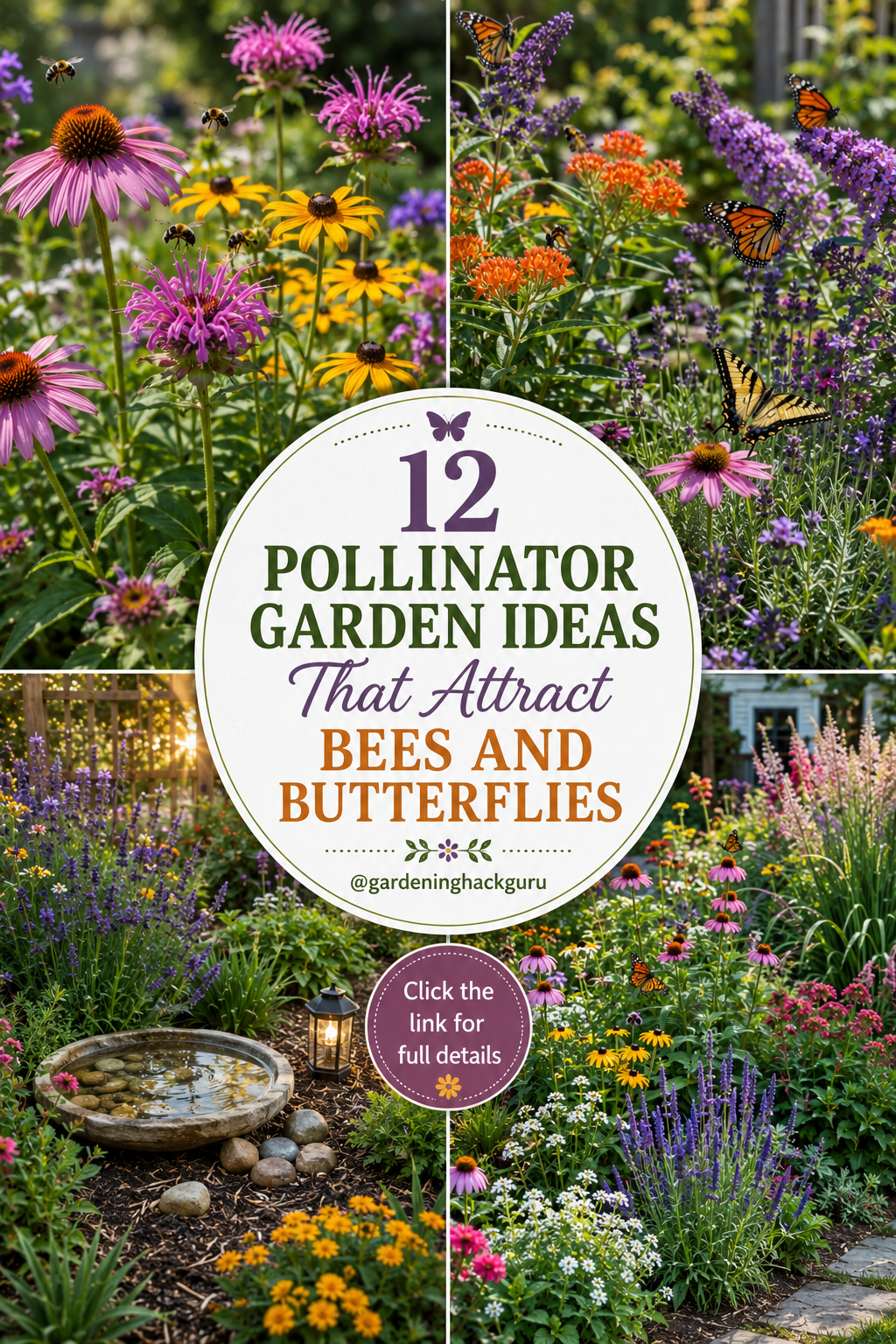
A pollinator garden is one of the most beautiful and rewarding gardens you can create. Not only does it fill your outdoor space with color, movement, and life, but it also helps support bees, butterflies, hummingbirds, and other beneficial insects.
The best part is that a pollinator garden can be created almost anywhere. Whether you have a large backyard, a small patio, a balcony, or a few containers, you can grow flowers and plants that attract pollinators naturally.
Here are 12 pollinator garden ideas that attract bees and butterflies while making your garden look stunning.
1. Plant Native Flowers
Native flowers are one of the best choices for a pollinator garden because local bees and butterflies are already adapted to them.
Great options include coneflowers, milkweed, black-eyed Susans, bee balm, and native wildflowers. These plants usually require less maintenance and attract more pollinators than many ornamental plants.
2. Grow Milkweed for Butterflies
Milkweed is especially important for monarch butterflies. It provides food for caterpillars and helps support the butterfly life cycle.
Plant milkweed in a sunny area and allow it to grow naturally. It may look simple at first, but it can become one of the most valuable plants in your pollinator garden.
3. Add Bee Balm
Bee balm is colorful, fragrant, and highly attractive to bees, butterflies, and hummingbirds.
Its bright flowers make a bold statement in garden beds, and it works beautifully in cottage gardens, wildflower gardens, and natural-style landscapes.
4. Create a Wildflower Corner
A wildflower corner is a simple way to bring life and color into your garden. Choose a sunny area and plant a mix of pollinator-friendly wildflowers.
This creates a natural habitat where bees and butterflies can feed, rest, and return throughout the season.
5. Choose Flowers with Different Bloom Times
Pollinators need food from spring through fall. Plant flowers that bloom at different times so your garden provides nectar for many months.
For example, use early spring blooms, summer flowers, and fall-blooming plants together to keep your garden active and colorful.
6. Add Lavender
Lavender is beautiful, fragrant, and loved by bees. It also adds a relaxing, elegant look to the garden.
Lavender grows best in full sun and well-draining soil. It is also drought-tolerant once established, making it a great low-maintenance choice.
7. Plant Coneflowers
Coneflowers are classic pollinator plants. Their large, daisy-like blooms attract butterflies, bees, and other beneficial insects.
They are easy to grow, drought-tolerant, and come back year after year, making them perfect for beginner gardeners.
8. Include Butterfly Bush
Butterfly bush produces long flower clusters that attract butterflies beautifully.
Plant it in a sunny location where it has room to grow. Its colorful blooms can become a major focal point in your garden.
9. Avoid Chemical Pesticides
Chemical sprays can harm bees, butterflies, and other helpful garden insects. A pollinator garden works best when it stays as natural as possible.
Instead of harsh pesticides, try companion planting, hand-picking pests, or using gentle natural solutions when needed.
10. Add a Shallow Water Source
Pollinators need water too. Add a shallow dish, birdbath, or small water bowl with stones inside so bees and butterflies can safely land while drinking.
Keep the water clean and refill it regularly during hot weather.
11. Grow Herbs That Pollinators Love
Many herbs attract pollinators when allowed to flower. Basil, thyme, oregano, mint, dill, and chives are all great options.
These herbs are useful in the kitchen and beautiful in the garden, making them a smart choice for small spaces.
12. Create Layers with Flowers, Shrubs, and Grasses
A great pollinator garden has different heights and textures. Mix tall flowers, medium plants, low-growing blooms, shrubs, and ornamental grasses.
This creates shelter, beauty, and a more natural environment for bees, butterflies, and other helpful insects.
Final Thoughts
A pollinator garden is more than just pretty flowers. It is a living, breathing space that supports nature while making your garden feel peaceful and full of life.
Start small with a few pollinator-friendly plants like lavender, coneflowers, milkweed, and bee balm. Over time, your garden will become a beautiful place where bees and butterflies love to visit.
With the right plants, natural care, and a little planning, you can create a pollinator garden that looks stunning and helps the environment at the same time.