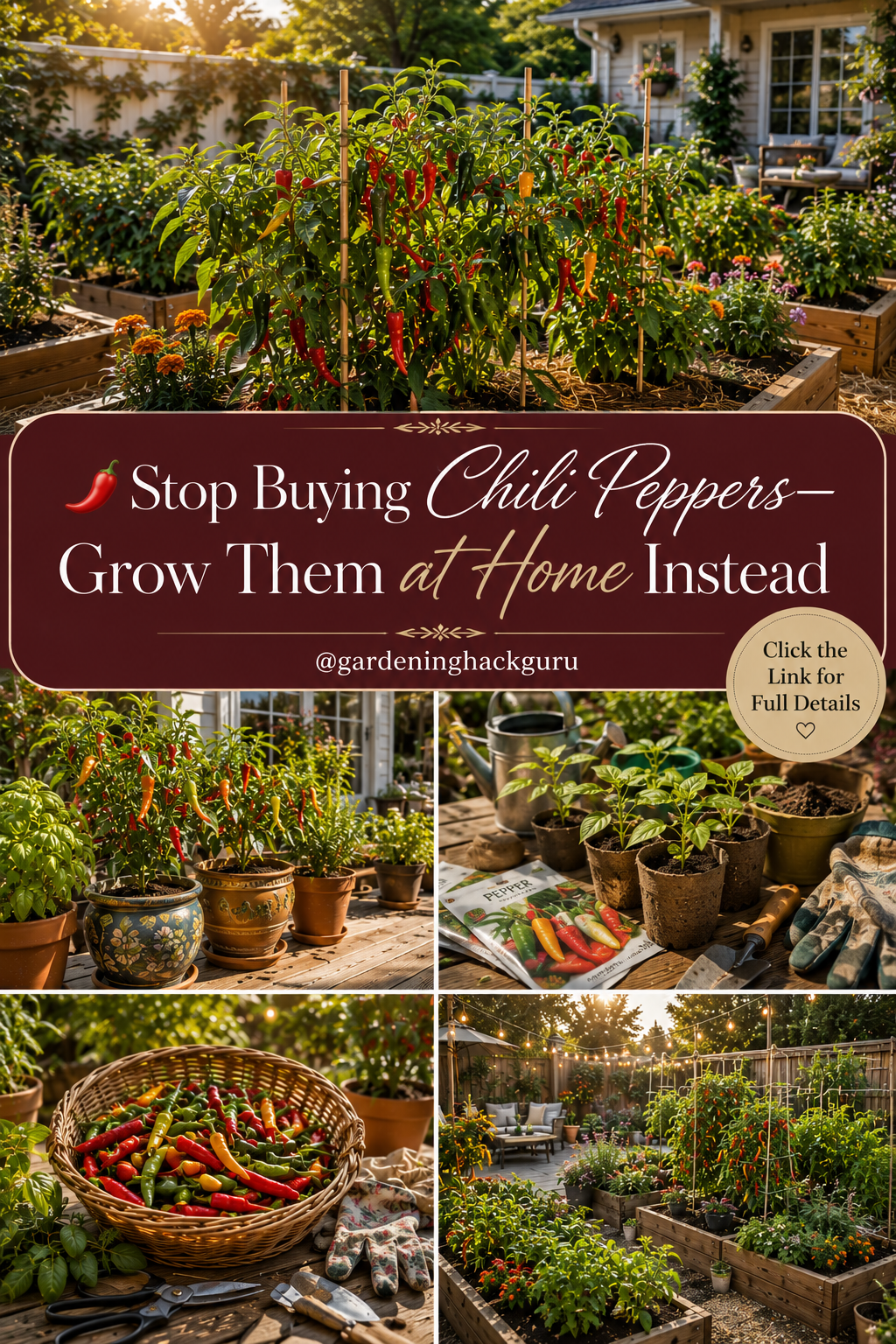
Fresh chili peppers can transform almost any meal, adding flavor, color, and just the right amount of heat. But if you cook often, buying chilies every week can quickly become expensive. The good news? Chili peppers are one of the easiest and most rewarding vegetables to grow at home.
Whether you have a large backyard, a small balcony, or just a sunny windowsill, you can grow healthy chili plants that produce dozens—sometimes even hundreds—of peppers throughout the growing season. With the right care, a single plant can continue producing for months.
Here’s everything you need to know to start growing your own chili peppers at home.
Why Grow Chili Peppers at Home?
Growing chili peppers offers several benefits beyond saving money.
- Enjoy fresh, flavorful peppers whenever you need them.
- Reduce grocery expenses.
- Control how your plants are grown without harmful chemicals.
- Harvest peppers at peak ripeness for better flavor.
- Grow a wide variety of chilies that may not be available in stores.
- Add beauty to your garden with colorful fruits.
Once you grow your first successful chili plant, you’ll likely never want to buy them again.
1. Choose the Right Variety
Not all chili peppers are the same. Choose a variety that matches your cooking style and climate.
Popular options include:
- Jalapeño
- Cayenne
- Thai Chili
- Serrano
- Anaheim
- Bird’s Eye Chili
- Habanero
- Banana Pepper
- Fresno Chili
Beginners often have great success with Jalapeño and Cayenne because they are productive and relatively easy to grow.
2. Start with Quality Seeds or Seedlings
You can grow chili peppers from seeds or purchase young nursery plants.
If growing from seed:
- Start indoors 8–10 weeks before your last frost.
- Use seed-starting mix.
- Keep the soil warm and consistently moist.
- Place seedlings under grow lights or in a bright sunny window.
Healthy seedlings produce stronger plants later.
3. Give Them Plenty of Sunlight
Chili peppers absolutely love sunshine.
Aim for:
- 6–8 hours of direct sunlight daily
- South-facing gardens or balconies
- Bright locations with good air circulation
More sunlight usually means more flowers and larger harvests.
4. Use Rich, Well-Draining Soil
Healthy roots produce healthy plants.
Mix your soil with:
- Compost
- Aged manure
- Coconut coir
- Perlite for drainage
A soil pH between 6.0 and 6.8 works best for chili peppers.
5. Water Consistently
One of the biggest mistakes is overwatering.
Instead:
- Water deeply when the top inch of soil feels dry.
- Avoid soggy soil.
- Water early in the morning.
- Reduce watering slightly once fruits begin developing.
Consistent moisture helps prevent blossom drop and cracked peppers.
6. Feed Your Plants Properly
Chili peppers are heavy feeders.
Use:
- Organic compost
- Fish emulsion
- Seaweed fertilizer
- Balanced vegetable fertilizer
Once flowers appear, switch to a fertilizer slightly higher in phosphorus and potassium to encourage fruit production.
7. Support Larger Plants
As peppers grow, branches become heavy.
Use:
- Bamboo stakes
- Tomato cages
- Plant clips
Supporting the plant prevents broken stems during windy weather.
8. Encourage More Flowers
More flowers mean more peppers.
To increase flowering:
- Remove the first few flowers on young plants.
- Avoid excessive nitrogen fertilizer.
- Ensure plenty of sunlight.
- Keep temperatures between 70°F and 85°F (21°C–29°C).
Healthy plants naturally produce flowers continuously.
9. Watch for Pests
Regular inspections keep problems under control.
Common pests include:
- Aphids
- Spider mites
- Whiteflies
- Thrips
Natural solutions include:
- Neem oil
- Insecticidal soap
- Ladybugs
- Strong water spray to remove insects
Healthy plants are naturally more resistant to pests.
10. Harvest Often
The more peppers you harvest, the more your plant usually produces.
Harvest peppers when they reach their full size.
Many varieties can be picked:
- Green
- Orange
- Yellow
- Red
Allowing peppers to fully ripen often produces sweeter flavor and more heat.
Growing Chili Peppers in Pots
Don’t have a garden?
No problem.
Chili peppers grow exceptionally well in containers.
Choose:
- A 12–16 inch pot
- Drainage holes
- Quality potting mix
- Full sun location
Container-grown peppers are perfect for patios, balconies, and small spaces.
Common Mistakes to Avoid
Avoid these common beginner mistakes:
- Planting too early in cold weather
- Overwatering
- Growing in too much shade
- Using poor-quality soil
- Overfertilizing with nitrogen
- Forgetting to harvest regularly
Correcting these simple mistakes can dramatically improve your harvest.
Extra Tips for Bigger Harvests
Want even more peppers?
Try these tricks:
- Mulch around the base to retain moisture.
- Pinch off weak branches.
- Remove yellow leaves.
- Rotate pots for even sunlight.
- Add compost every few weeks.
- Protect plants from frost.
- Save seeds from your healthiest peppers for next season.
Small improvements throughout the season can lead to significantly larger harvests.
Final Thoughts
Growing chili peppers at home is one of the easiest ways to enjoy fresh, flavorful produce while saving money. With plenty of sunshine, rich soil, regular watering, and a little patience, even a single plant can reward you with an abundant harvest that lasts for months.
Whether you’re growing them in a backyard garden, a raised bed, or a simple container on your balcony, homegrown chili peppers offer unbeatable freshness and satisfaction. Once you taste peppers picked straight from your own plant, you’ll wonder why you ever bought them from the store.