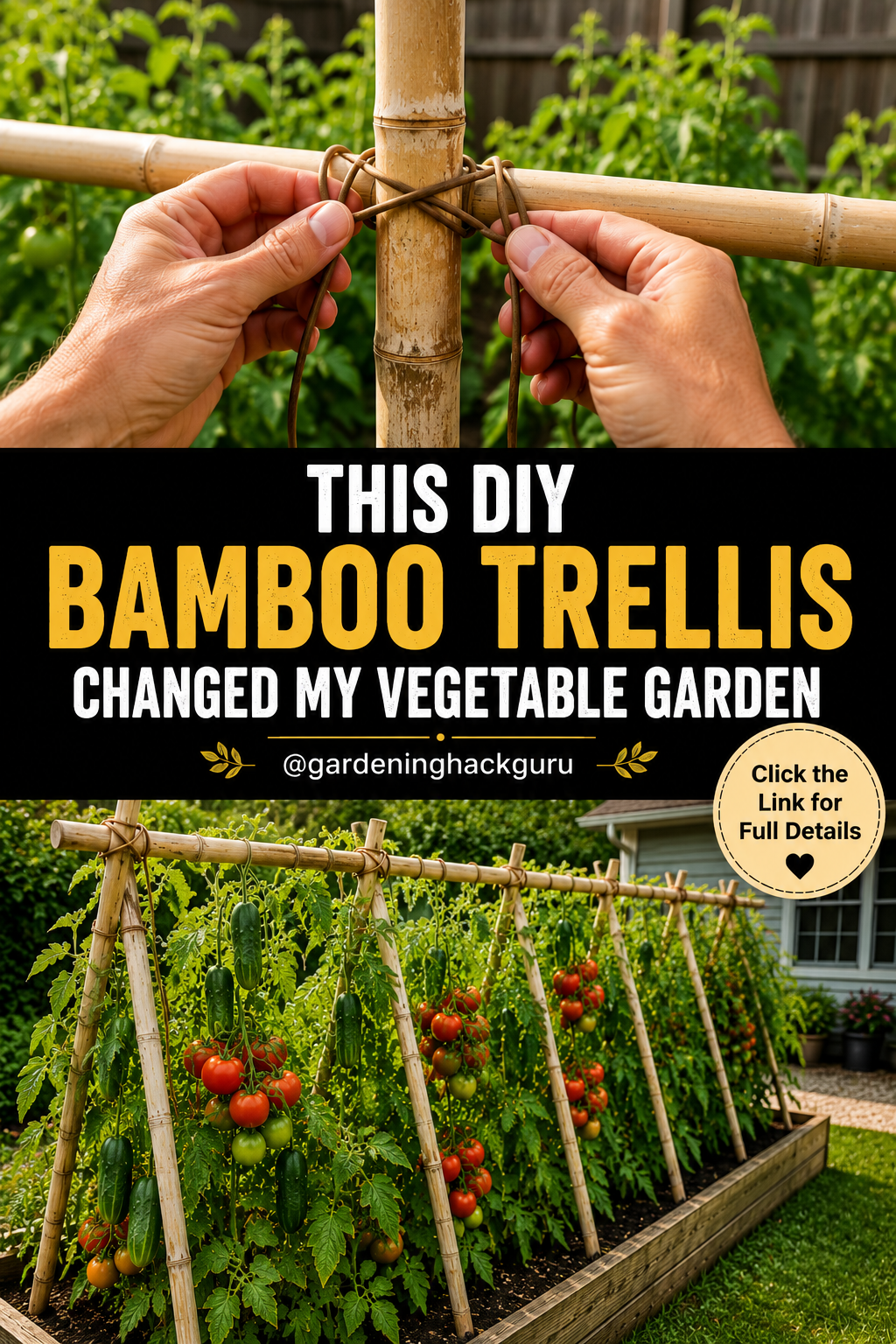
Growing vegetables is rewarding, but watching heavy tomato vines collapse, cucumbers sprawl across the ground, and beans tangle together can quickly turn a thriving garden into a frustrating mess. I used to spend more time untangling plants than harvesting vegetables. My raised beds looked crowded, airflow was poor, and ripe produce often ended up touching the soil.
Everything changed when I built a simple DIY bamboo trellis.
Made from inexpensive bamboo poles and basic garden ties, this sturdy support system completely transformed the way my vegetable garden looked and performed. It created more growing space, made harvesting easier, and gave my backyard a clean, organized appearance. Best of all, it only took a few hours to build.
If you’re growing climbing vegetables, here’s why a bamboo trellis might be the best garden upgrade you’ll ever make.
Why I Needed a Trellis
Before building a trellis, my vegetable plants grew wherever they wanted.
Tomatoes leaned over neighboring plants, cucumber vines spread across the paths, and harvesting became difficult. Fruits often rested on the soil, making them more vulnerable to pests and disease.
I wanted a solution that was:
- Affordable
- Easy to build
- Strong enough for heavy crops
- Natural-looking
- Reusable every season
Bamboo turned out to be the perfect choice.
Why Bamboo Is the Perfect Material
Bamboo is one of the best materials for garden trellises because it’s:
- Strong and lightweight
- Naturally weather-resistant
- Eco-friendly
- Affordable
- Easy to cut and assemble
- Beautiful in any garden
Unlike metal cages, bamboo blends naturally into the landscape while providing excellent support.
1. My Garden Instantly Looked More Organized
The biggest difference wasn’t just the harvest—it was how neat the garden became.
Instead of tangled vines spreading everywhere, every plant had its own place to grow.
The raised beds looked cleaner, pathways stayed open, and the entire garden felt professionally designed.
2. I Grew More in the Same Space
Vertical gardening made a huge difference.
By training plants upward instead of outward, I gained extra space to grow:
- Lettuce
- Herbs
- Peppers
- Carrots
- Flowers
A trellis lets you maximize every square foot.
3. Healthier Tomato Plants
Tomatoes benefited the most.
Keeping vines upright improved:
- Air circulation
- Sunlight exposure
- Fruit quality
- Disease resistance
Healthy airflow also reduced problems like early blight and mildew.
4. Cucumbers Stayed Clean
Before using a trellis, cucumbers rested on damp soil.
After growing vertically:
- Fruit stayed cleaner
- Harvesting became easier
- Plants produced straighter cucumbers
- Less fruit was damaged
5. Easier Harvesting
One of my favorite benefits was how simple harvesting became.
Instead of searching through tangled vines, ripe vegetables were easy to spot and pick.
This saved time while reducing damage to plants.
6. Strong Enough for Heavy Crops
The bamboo frame easily supported:
- Tomatoes
- Cucumbers
- Pole beans
- Peas
- Small melons
Using sturdy bamboo poles and secure garden ties created a frame that remained stable all season.
7. Better Airflow Means Fewer Diseases
When plants grow close together, moisture gets trapped between leaves.
A trellis opens the plant canopy, allowing air to circulate freely.
This helps reduce fungal diseases and keeps leaves dry after rain or watering.
8. A Beautiful Backyard Feature
Beyond being practical, the bamboo trellis became one of the most attractive features in my garden.
The natural wood complemented my raised beds perfectly and gave the backyard a warm, organized look.
Visitors immediately noticed it.
9. Surprisingly Affordable
One of the best parts is the cost.
All I needed was:
- Bamboo poles
- Heavy-duty zip ties or garden twine
- A pruning saw
- Measuring tape
Compared to expensive metal supports, the bamboo version cost very little.
10. Easy to Rebuild Every Year
At the end of the season, I simply cut the ties, stored the bamboo poles, and rebuilt the frame the following spring.
With proper care, quality bamboo lasts for several growing seasons.
Tips for Building a Better Bamboo Trellis
For the strongest results:
- Use thick bamboo poles for the main frame.
- Push legs deep into the soil.
- Secure joints tightly with UV-resistant zip ties or strong garden twine.
- Install the trellis before plants become large.
- Tie vines loosely as they grow.
These simple steps create a sturdy support system that lasts all season.
Best Vegetables for Bamboo Trellises
This style of trellis works wonderfully for:
- Tomatoes
- Cucumbers
- Pole beans
- Peas
- Climbing squash
- Bitter melon
- Luffa
- Small pumpkins
Any climbing crop benefits from growing vertically.
Final Thoughts
Building a DIY bamboo trellis was one of the simplest improvements I’ve ever made to my vegetable garden, yet it delivered some of the biggest results. My plants became healthier, harvesting became easier, and the entire garden looked cleaner and more organized.
If you’re tired of sprawling vines and crowded raised beds, consider building a bamboo trellis before the growing season begins. It’s affordable, beginner-friendly, and reusable—and once you see the difference, you’ll wonder why you didn’t build one sooner.