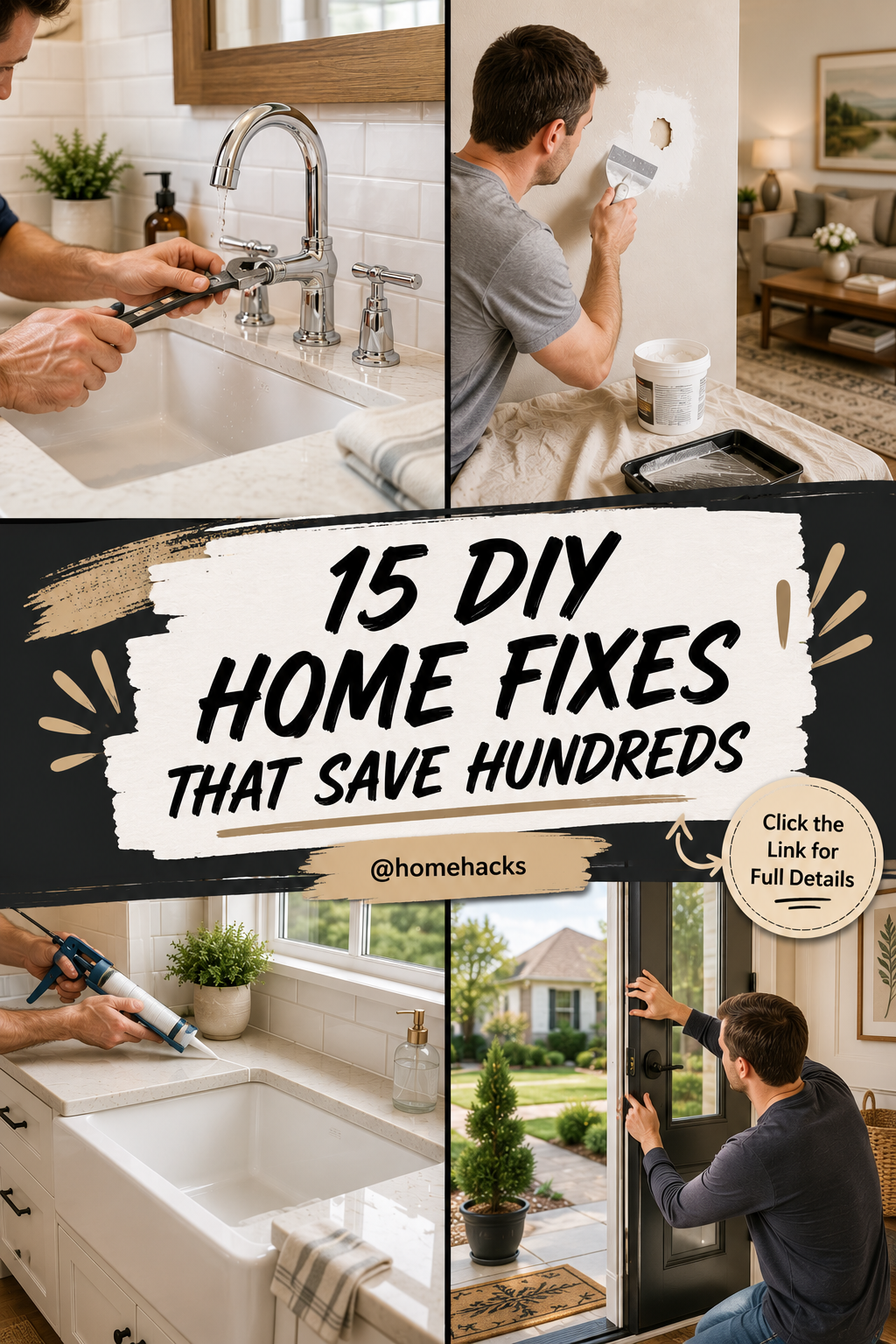
Home repairs don’t always require a contractor or a hefty repair bill. In fact, many common household problems can be fixed with basic tools, a little patience, and the right guidance. Learning a few DIY home repairs not only saves money but also helps you maintain your home and prevent small issues from becoming expensive problems.
Whether you’re a homeowner or a renter, these simple DIY fixes can save you hundreds of dollars over time while making your home safer, more efficient, and better maintained.
Here are 15 DIY home fixes that are surprisingly easy and can save you serious money.
1. Fix a Leaky Faucet
A dripping faucet may seem like a minor annoyance, but it can waste thousands of gallons of water each year.
Most leaks are caused by a worn-out washer, O-ring, or cartridge that costs only a few dollars to replace.
You’ll Need
- Adjustable wrench
- Replacement washer or cartridge
- Screwdriver
Estimated savings: $100–$250
2. Patch Small Holes in Drywall
Picture frames, wall anchors, and accidental bumps often leave holes in drywall.
Instead of hiring a handyman, repair them yourself using lightweight spackle.
Steps
- Clean the damaged area.
- Apply spackle.
- Let it dry.
- Sand smooth.
- Touch up with matching paint.
Estimated savings: $75–$300
3. Replace Cabinet Handles
Old cabinet hardware instantly dates a kitchen or bathroom.
Installing modern handles or knobs takes less than an hour and completely refreshes the space.
Choose finishes like:
- Matte black
- Brushed brass
- Satin nickel
Estimated savings: $200–$800 compared to replacing cabinets.
4. Re-Caulk Your Bathroom
Old caulk around tubs and sinks eventually cracks, allowing water behind walls.
Removing damaged caulk and applying fresh waterproof silicone helps prevent mold and water damage.
Estimated savings: $150–$500
5. Seal Drafty Windows
Small air leaks increase heating and cooling bills.
Install:
- Weather stripping
- Window insulation film
- Caulk around frames
Your home stays more comfortable while reducing energy costs.
Estimated savings: Lower utility bills every month.
6. Unclog Slow Drains
Many clogged drains can be cleared without calling a plumber.
Try:
- Boiling water
- Baking soda and vinegar
- A drain snake
Avoid harsh chemical drain cleaners whenever possible.
Estimated savings: $100–$250
7. Paint a Room Yourself
A fresh coat of paint dramatically changes a room’s appearance.
Preparation is key:
- Clean walls.
- Fill nail holes.
- Use painter’s tape.
- Apply two even coats.
Neutral colors often make rooms feel brighter and larger.
Estimated savings: $300–$1,000
8. Replace Air Filters
Dirty HVAC filters reduce efficiency and increase energy costs.
Replace filters every 1–3 months depending on your home’s needs.
Benefits include:
- Better airflow
- Cleaner indoor air
- Lower energy bills
Estimated savings: Reduced maintenance costs and improved HVAC lifespan.
9. Fix a Running Toilet
A constantly running toilet can waste hundreds of gallons of water each day.
Replacing the flapper valve or adjusting the float usually solves the problem.
Estimated savings: $100–$300 annually on water bills.
10. Tighten Loose Door Hinges
Doors that stick or sag often need nothing more than tightened screws.
If screw holes are stripped, insert wooden toothpicks with wood glue before reinstalling the screws.
Estimated savings: $75–$200
11. Clean Dryer Vents
Lint buildup reduces dryer efficiency and increases fire risk.
Disconnect the vent and clean it thoroughly at least once a year.
Benefits include:
- Faster drying times
- Lower electricity use
- Improved safety
Estimated savings: Lower utility costs and fewer appliance repairs.
12. Install Peel-and-Stick Backsplash
Want a kitchen makeover without remodeling?
Peel-and-stick backsplash tiles are affordable, easy to install, and give kitchens a high-end appearance.
Estimated savings: Hundreds compared to tile installation.
13. Repair Loose Fence Boards
Instead of replacing an entire fence, tighten loose boards and replace damaged screws.
Apply exterior stain or paint afterward for added protection.
Estimated savings: $200–$1,000
14. Refresh Grout Lines
Dirty grout makes bathrooms and kitchens look older than they are.
Clean grout thoroughly or apply grout renewal products for a like-new appearance.
Estimated savings: Avoids expensive tile replacement.
15. Weatherproof Exterior Doors
Install a new door sweep and weather stripping to keep drafts, dust, and insects outside.
This inexpensive project improves comfort while reducing heating and cooling costs.
Estimated savings: Lower energy bills throughout the year.
DIY Safety Tips
Before starting any home repair:
- Turn off electricity when working near outlets.
- Shut off the water supply before plumbing repairs.
- Wear gloves and safety glasses.
- Use the correct tools for each job.
- Read product instructions carefully.
If a repair involves structural damage, gas lines, or major electrical work, contact a licensed professional.
Tools Every DIY Homeowner Should Own
A basic toolkit makes most of these repairs much easier.
Keep these essentials on hand:
- Hammer
- Screwdriver set
- Adjustable wrench
- Utility knife
- Tape measure
- Level
- Cordless drill
- Pliers
- Caulk gun
- Stud finder
Many of these tools will last for years and pay for themselves after just one or two projects.
Final Thoughts
You don’t need to be an experienced contractor to tackle many common household repairs. Simple DIY fixes like replacing caulk, sealing air leaks, patching drywall, or fixing a leaky faucet can save hundreds of dollars while helping your home stay in excellent condition.
Start with the easiest projects, build your confidence, and gradually take on bigger tasks. Not only will you save money, but you’ll also gain valuable skills that make homeownership less stressful and far more rewarding.