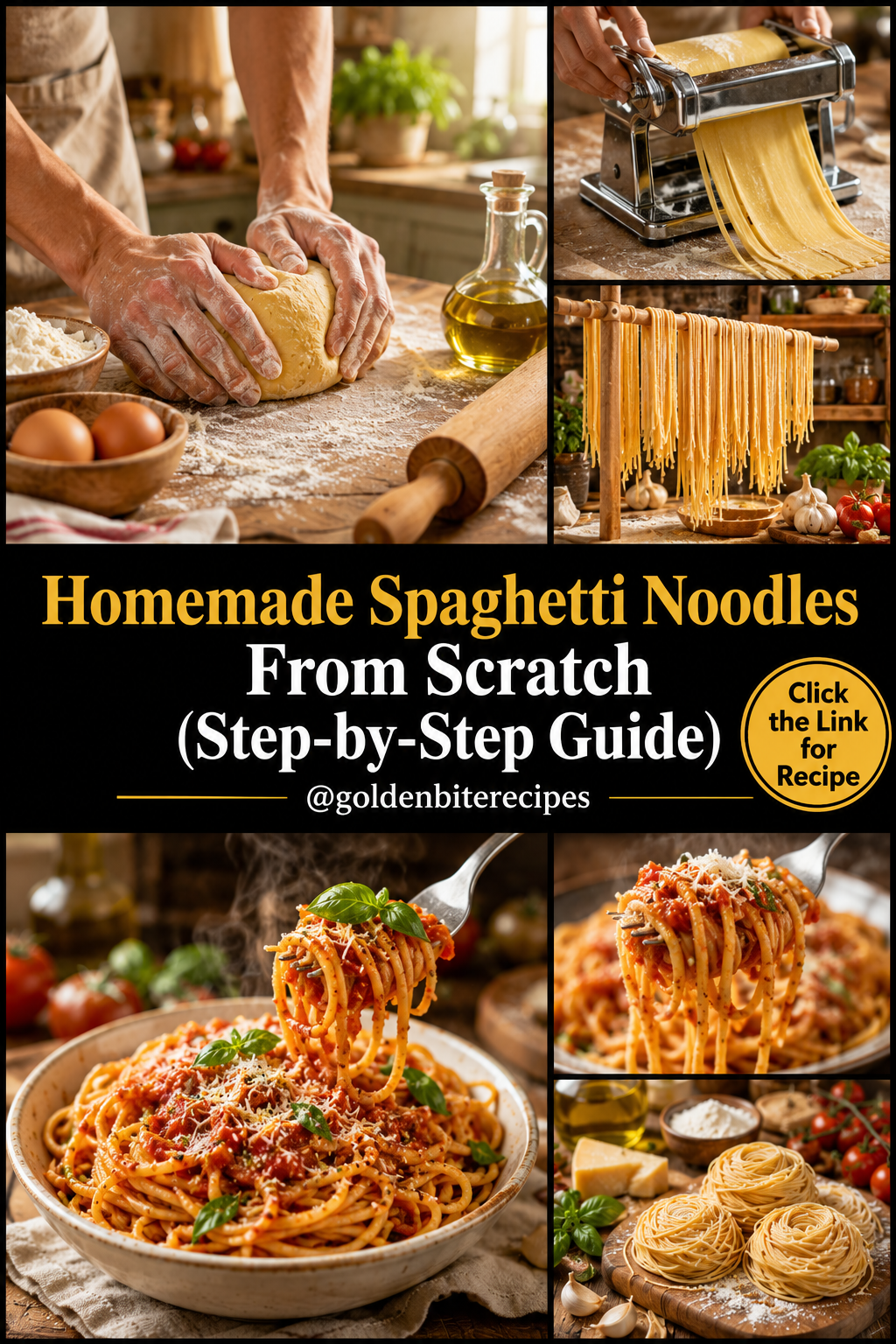
There’s something incredibly satisfying about making pasta from scratch. The simple act of combining flour, eggs, and a little patience transforms everyday ingredients into silky, tender spaghetti noodles that taste far better than anything you can buy at the grocery store. While homemade pasta may seem intimidating at first, it’s actually one of the most rewarding recipes you can master in your kitchen.
Fresh spaghetti has a delicate texture, rich flavor, and satisfying bite that dried pasta simply can’t match. Whether you’re serving it with a classic marinara, creamy Alfredo, garlic butter sauce, or homemade meatballs, fresh noodles instantly elevate any meal into something truly special.
The best part? You only need a handful of basic ingredients and a little practice. Once you learn the process, you’ll wonder why you didn’t start making homemade pasta sooner.
This step-by-step guide will walk you through everything you need to know—from mixing the dough to rolling, cutting, cooking, and storing fresh spaghetti noodles.
Why You’ll Love This Recipe
Making homemade spaghetti is easier than most people think, and the results are absolutely worth the effort.
Here’s why you’ll love it:
- Only four simple ingredients
- Rich, fresh flavor
- Soft yet perfectly chewy texture
- No preservatives or artificial ingredients
- Fun family cooking activity
- Perfect for special occasions or Sunday dinners
- Easy to freeze for future meals
Once you’ve tasted homemade pasta, it’s difficult to go back to store-bought noodles.
Ingredients
Homemade Pasta Dough
- 2½ cups (300g) all-purpose flour or Italian “00” flour
- 3 large eggs
- 1 egg yolk
- 1 tablespoon olive oil
- ½ teaspoon salt
For Rolling
- Extra flour for dusting
Kitchen Tools You’ll Need
You don’t need a professional kitchen to make fresh pasta.
Helpful tools include:
- Large mixing bowl
- Fork
- Rolling pin
- Pasta machine (optional but recommended)
- Sharp knife or pasta cutter
- Clean kitchen towel
- Large pot
- Spider strainer or tongs
Why Use “00” Flour?
Traditional Italian pasta is often made with “00” flour because it’s finely milled and produces silky, tender noodles.
If you can’t find it, regular all-purpose flour works beautifully for homemade spaghetti.
Either option creates delicious pasta.
Step 1: Make the Dough
Pour the flour onto a clean countertop or into a large mixing bowl.
Create a well in the center.
Crack the eggs into the well.
Add the egg yolk, olive oil, and salt.
Using a fork, gently whisk the eggs while slowly pulling flour from the edges into the center.
Continue mixing until a shaggy dough begins to form.
Once the dough becomes difficult to stir, use your hands to bring everything together.
Don’t worry if it looks rough at first.
That’s completely normal.
Step 2: Knead the Dough
Transfer the dough to a lightly floured surface.
Knead for about 8–10 minutes.
Push the dough forward with the heel of your hand, fold it back over itself, rotate slightly, and repeat.
The dough will gradually become smoother and more elastic.
If it feels sticky, sprinkle on a little flour.
If it’s too dry, lightly dampen your hands with water while kneading.
Proper kneading develops the gluten, giving the noodles their signature chewy texture.
Step 3: Let the Dough Rest
Shape the dough into a ball.
Wrap it tightly in plastic wrap or cover it with a clean bowl.
Let it rest at room temperature for at least 30 minutes.
This resting period relaxes the gluten, making the dough much easier to roll out.
Don’t skip this step—it makes a big difference.
Step 4: Divide the Dough
After resting, unwrap the dough.
Cut it into four equal portions.
Work with one piece at a time while keeping the remaining dough covered to prevent it from drying out.
Lightly flatten each piece with your hands.
Step 5: Roll the Pasta
Using a Pasta Machine
Lightly flour the dough.
Feed it through the widest setting.
Fold the dough in half and pass it through again.
Repeat two or three times until smooth.
Gradually reduce the roller setting, passing the dough through each thickness only once.
Continue until you reach your desired thickness.
Using a Rolling Pin
If you don’t own a pasta machine, don’t worry.
Roll the dough into a thin rectangle on a lightly floured surface.
Aim for about 1–2 millimeters thick.
The thinner the dough, the more delicate your spaghetti will be.
Step 6: Cut the Spaghetti
Dust both sides of the pasta sheet with flour.
Use the spaghetti cutter attachment on your pasta machine.
If cutting by hand, loosely roll the pasta sheet and slice thin strips using a sharp knife.
Unroll the strips immediately.
Toss them lightly with flour to prevent sticking.
Arrange the noodles into small nests while preparing the remaining dough.
Step 7: Cook the Fresh Pasta
Bring a large pot of generously salted water to a rolling boil.
Fresh pasta cooks much faster than dried pasta.
Add the noodles carefully.
Cook for just 2–4 minutes depending on thickness.
Taste one noodle to check for doneness.
Fresh spaghetti should be tender while still slightly firm.
Drain immediately.
Reserve about one cup of pasta water before draining.
The starchy water helps sauces cling beautifully to the noodles.
Best Sauces for Homemade Spaghetti
Fresh spaghetti pairs wonderfully with almost any sauce.
Some favorites include:
- Classic Marinara
- Garlic Butter Sauce
- Creamy Alfredo
- Bolognese
- Pesto
- Brown Butter Sage Sauce
- Lemon Parmesan Sauce
- Mushroom Cream Sauce
Because fresh pasta has such a delicate texture, simple sauces often work best.
Tips for Perfect Homemade Pasta
- Always measure ingredients accurately.
- Knead until the dough becomes smooth.
- Let the dough rest before rolling.
- Dust generously with flour while rolling.
- Cook fresh pasta for only a few minutes.
- Reserve pasta water before draining.
- Serve immediately for the best texture.
Common Mistakes to Avoid
Skipping the Resting Time
Resting makes the dough easier to work with.
Adding Too Much Flour
Too much flour can make the noodles tough.
Overcooking the Pasta
Fresh pasta cooks very quickly.
Watch it carefully.
Rolling the Dough Too Thick
Thin sheets produce more delicate spaghetti.
Forgetting Salt in the Water
Properly salted water seasons the pasta from the inside.
Variations
Spinach Pasta
Blend cooked spinach into the eggs before mixing.
Beet Pasta
Add beet puree for naturally pink noodles.
Herb Pasta
Mix chopped basil or parsley into the dough.
Whole Wheat Pasta
Replace half the flour with whole wheat flour for extra fiber.
Storage Instructions
Fresh pasta can be stored in an airtight container in the refrigerator for up to two days.
Dust lightly with flour to prevent sticking.
For longer storage, freeze the pasta nests on a baking sheet before transferring them to a freezer bag.
Frozen pasta keeps well for up to two months and can be cooked directly from frozen.
Frequently Asked Questions
Can I make pasta without a machine?
Yes. A rolling pin and sharp knife work perfectly.
Why is my dough too sticky?
Add a small amount of flour while kneading until it becomes smooth.
Can I freeze homemade pasta?
Absolutely. Freeze the pasta in small nests for easy portions.
What flour is best?
Italian “00” flour produces the silkiest noodles, but all-purpose flour works wonderfully too.
How long does fresh pasta cook?
Usually between 2 and 4 minutes.
Nutrition Information
Approximate per serving (4 servings)
- Calories: 340
- Protein: 12g
- Carbohydrates: 56g
- Fat: 7g
- Fiber: 2g
- Sodium: 180mg
Nutritional values are estimates and may vary.
Final Thoughts
Making homemade spaghetti noodles from scratch is one of the most rewarding skills any home cook can learn. While it may seem like a project at first, the process is surprisingly simple and incredibly satisfying. From kneading the dough to cutting delicate strands of fresh pasta, every step brings you closer to a meal that tastes fresher, richer, and more authentic than anything from a box.
Once you master this recipe, you’ll have the confidence to experiment with different pasta shapes, flavors, and sauces. Whether you’re preparing a cozy family dinner or impressing guests with a homemade Italian feast, fresh spaghetti noodles are guaranteed to make the meal unforgettable.
So roll up your sleeves, dust your countertop with flour, and enjoy the timeless tradition of making fresh pasta from scratch. One delicious bite is all it takes to discover why homemade spaghetti is always worth the effort.