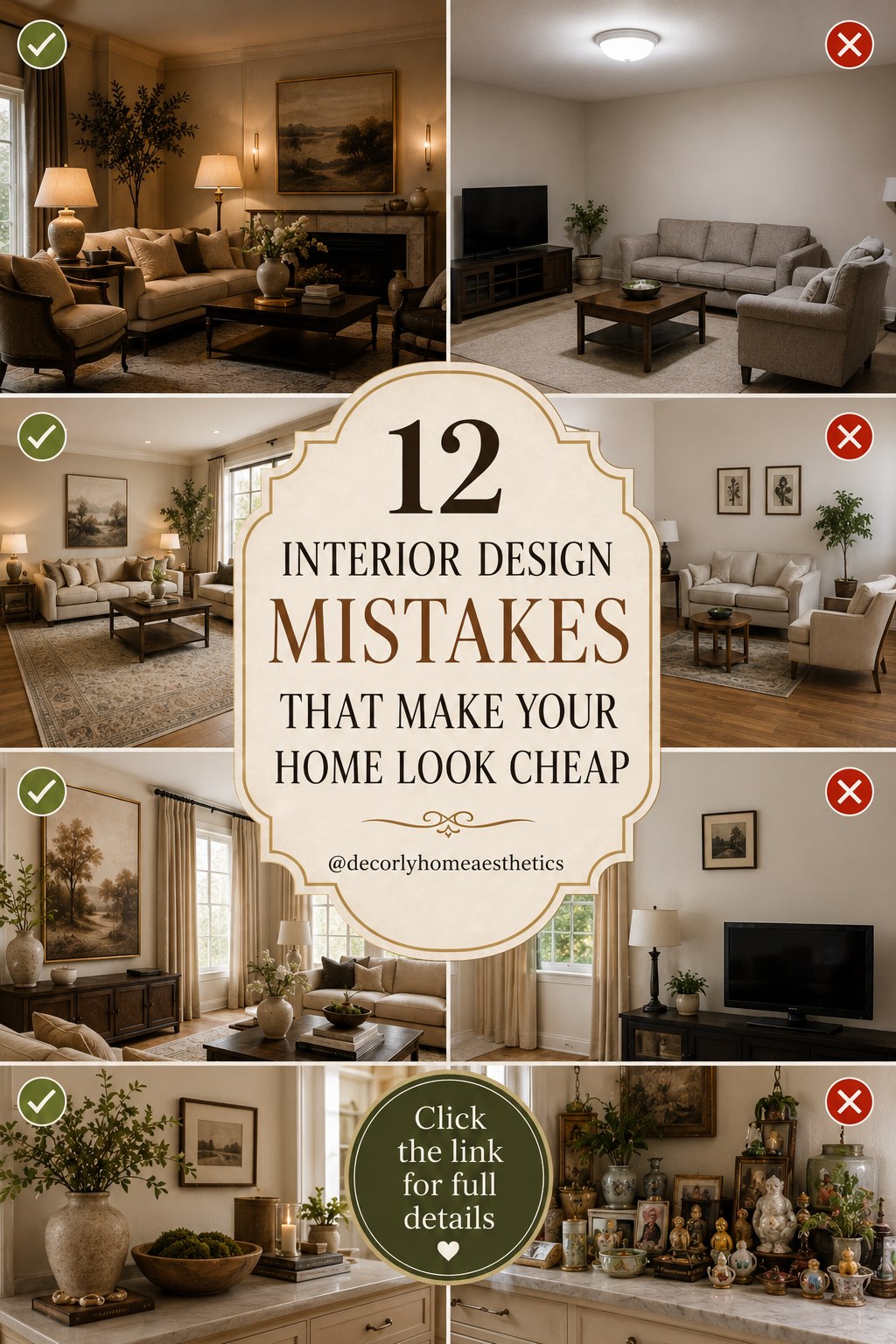
Creating a beautiful home isn’t always about spending more money. In fact, some of the most stylish homes are carefully designed on modest budgets, while some expensive homes still feel unfinished or poorly decorated. The difference often comes down to design choices rather than price tags.
Certain decorating mistakes can make a home look less polished, less inviting, and even less valuable than it actually is. Fortunately, most of these mistakes are easy to fix. Small changes can dramatically improve the overall appearance of your space without requiring a complete renovation.
If your home doesn’t feel as stylish or sophisticated as you’d like, one of these common interior design mistakes might be the reason.
1. Poor Lighting Throughout the Home
Lighting is one of the most overlooked elements of interior design.
Many people rely entirely on a single overhead light in each room. While functional, this often creates harsh shadows and makes spaces feel flat and uninviting.
Instead, layer different types of lighting:
- Table lamps
- Floor lamps
- Wall sconces
- Accent lighting
- Candles
A well-lit room instantly feels warmer, more luxurious, and professionally designed.
2. Furniture That’s Too Small
Many homeowners choose furniture based on price rather than scale.
Tiny sofas, undersized rugs, and small coffee tables can make a room feel awkward and incomplete.
Properly scaled furniture helps create balance and makes a space feel more intentional.
When in doubt, choose slightly larger pieces rather than several small ones.
3. Hanging Artwork Too High
This is one of the most common decorating mistakes.
Artwork should generally be hung at eye level. When pictures are placed too high, they feel disconnected from the room and create visual imbalance.
A gallery wall or statement artwork should feel integrated into the overall design, not floating near the ceiling.
4. Using Rugs That Are Too Small
A small rug can make an entire room feel less expensive.
Area rugs should anchor furniture rather than sit awkwardly in the center of a space.
In living rooms, at least the front legs of furniture should sit on the rug whenever possible.
Larger rugs often make rooms appear more spacious and cohesive.
5. Too Much Matching Furniture
Many people assume that buying an entire furniture set will create a designer look.
In reality, overly matched rooms often feel generic and lack personality.
Professional designers usually mix:
- Different textures
- Various materials
- Complementary finishes
- Unique accent pieces
The goal is creating a collected look rather than a showroom appearance.
6. Cluttered Surfaces Everywhere
Even beautiful furniture can look cheap when surrounded by clutter.
Common clutter hotspots include:
- Kitchen counters
- Coffee tables
- Bathroom vanities
- Entryway tables
- Nightstands
A few carefully chosen decorative items create a much more sophisticated look than dozens of small objects.
7. Ignoring Window Treatments
Bare windows can make a room feel unfinished.
At the same time, cheap or poorly fitted curtains can instantly lower the visual appeal of a space.
For a more luxurious appearance:
- Hang curtains higher than the window frame
- Extend rods beyond the window width
- Use floor-length panels
- Choose quality fabrics
This simple trick makes ceilings appear taller and rooms feel larger.
8. Choosing Trendy Decor Over Timeless Pieces
Trends can be fun, but relying too heavily on them often dates a home quickly.
A room filled entirely with current trends may look outdated within a few years.
Instead, build your home around timeless foundations and incorporate trends through smaller accessories that can be updated easily.
9. Neglecting Texture
Many rooms look flat because they lack texture.
Texture adds depth and visual interest without requiring bold colors.
Consider incorporating:
- Linen
- Boucle
- Wood
- Stone
- Woven baskets
- Natural fibers
Layering textures instantly creates a more expensive and inviting atmosphere.
10. Poor Furniture Layout
A room can contain beautiful furniture and still feel uncomfortable.
Many homeowners push all furniture against the walls, thinking it will make the room appear larger.
Often, the opposite is true.
Creating conversation areas and balanced layouts makes a space feel more welcoming and functional.
11. Using Too Many Small Decor Pieces
Small accessories can quickly create visual clutter.
Instead of filling shelves and tables with numerous tiny decorations, choose a few larger statement pieces.
Examples include:
- Large artwork
- Oversized mirrors
- Statement lamps
- Large plants
- Decorative vases
Fewer, larger items often create a cleaner and more luxurious appearance.
12. Forgetting to Add Personality
Perhaps the biggest mistake of all is creating a home that feels generic.
Beautiful homes reflect the people who live in them.
Include meaningful elements such as:
- Family photos
- Travel souvenirs
- Favorite books
- Collected artwork
- Personal treasures
These details create warmth, authenticity, and character.
How to Make Your Home Look More Expensive
If you recognize some of these mistakes in your own home, don’t worry. Most can be fixed without spending a fortune.
Focus on:
Better Lighting
Layer multiple light sources throughout each room.
Larger Rugs
Choose rugs that properly anchor furniture.
Quality Textures
Add natural materials and cozy fabrics.
Decluttering
Keep surfaces clean and intentional.
Thoughtful Styling
Use fewer decorative items but make them count.
Personal Touches
Create a home that feels uniquely yours.
Final Thoughts
A stylish home isn’t defined by how much money you spend. It’s defined by thoughtful design decisions that create comfort, balance, and visual harmony.
By avoiding these common interior design mistakes, you can make your home feel more polished, inviting, and expensive without undertaking a major renovation.
The most beautiful homes aren’t perfect—they simply pay attention to the details. And often, fixing a few small mistakes can have a bigger impact than buying something new.