Mulch is one of the best tools a gardener can use. It helps retain moisture, suppress weeds, regulate soil temperature, and improve the overall appearance of garden beds. But while mulching seems simple, many gardeners unknowingly make mistakes that can actually harm their plants instead of helping them.
If your plants aren’t thriving despite your efforts, your mulching habits might be part of the problem. Here are 12 common mulching mistakes that hurt plants and how to avoid them.
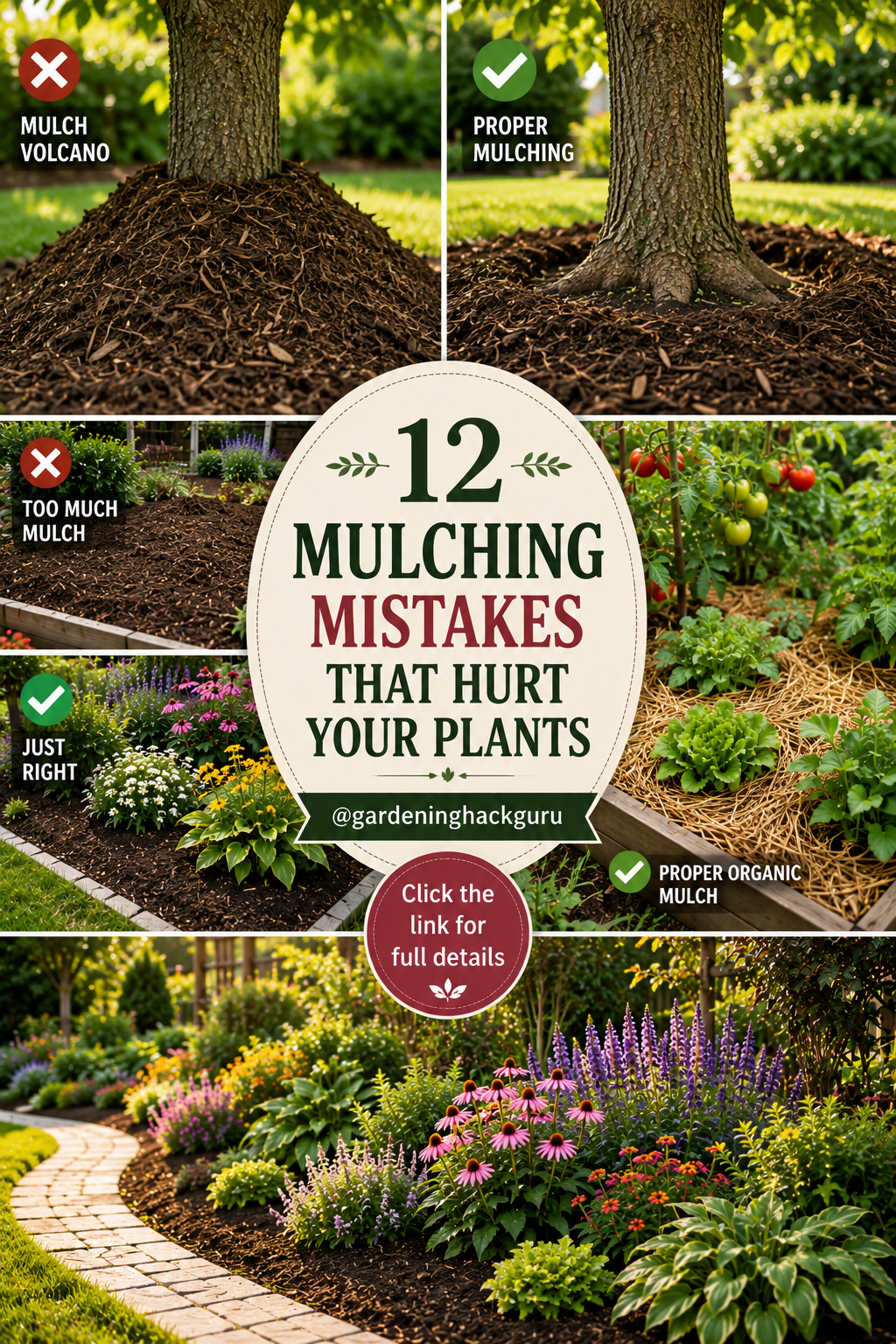
1. Using Too Much Mulch
More mulch isn’t always better. A thick layer can prevent water from reaching plant roots and reduce airflow to the soil.
For most gardens, 2 to 3 inches of mulch is ideal. Anything significantly deeper can create problems.
2. Piling Mulch Against Tree Trunks
One of the most common landscaping mistakes is creating “mulch volcanoes” around trees.
When mulch touches the trunk, it can:
- Trap moisture
- Encourage rot
- Attract pests
- Cause fungal diseases
Always keep mulch a few inches away from the base of trees and shrubs.
3. Using Fresh Wood Chips Immediately
Fresh wood chips can temporarily tie up nitrogen in the soil as they decompose.
If using wood chips:
- Let them age first
- Apply only as a surface layer
- Avoid mixing them directly into soil
Aged mulch is generally a safer option.
4. Forgetting to Water Before Mulching
Mulch helps retain moisture, but it can’t create moisture.
Always water thoroughly before applying mulch so the soil starts out properly hydrated.
5. Applying Mulch Too Close to Plant Stems
Just like tree trunks, flower stems and vegetable plants should not be buried under mulch.
Leaving a small gap around stems helps prevent:
- Rot
- Mold
- Disease
- Pest issues
6. Using the Wrong Type of Mulch
Different plants benefit from different mulch materials.
Popular options include:
- Bark mulch
- Straw
- Compost
- Pine needles
- Shredded leaves
Choose mulch that matches the needs of your plants and garden style.
7. Ignoring Old Mulch Layers
Adding new mulch every year without removing or refreshing old layers can lead to excessive buildup.
Over time, thick mulch layers may:
- Block water penetration
- Reduce airflow
- Create compacted surfaces
Check mulch depth before adding more.
8. Mulching Wet, Diseased Areas
Mulching over diseased plants or infected soil can sometimes trap moisture and worsen existing problems.
Address disease issues first before applying fresh mulch.
9. Using Mulch Containing Weed Seeds
Poor-quality mulch may contain weed seeds that eventually spread throughout the garden.
Purchase mulch from reputable sources whenever possible.
10. Not Mulching Vegetable Gardens Properly
Vegetable gardens benefit greatly from mulch, but the wrong material can cause problems.
Straw, shredded leaves, and compost are often better choices than heavy bark mulch around vegetables.
These materials break down more quickly and improve soil quality.
11. Applying Mulch Too Early in Spring
Mulching too early can slow soil warming and delay plant growth.
Wait until the soil has warmed naturally before applying a thick layer around spring-growing plants.
12. Forgetting to Refresh Mulch
Mulch gradually breaks down over time.
Refreshing mulch:
- Maintains appearance
- Improves weed control
- Enhances moisture retention
- Supports soil health
Most gardens benefit from a light refresh each year.
Why Proper Mulching Matters
When done correctly, mulch can:
- Reduce watering needs
- Improve soil health
- Suppress weeds
- Protect roots
- Create a professional-looking garden
The key is using the right material, applying the correct depth, and avoiding common mistakes.
Final Thoughts
Mulch can be one of the most powerful tools in your gardening toolbox, but only when used properly. Small mistakes like applying too much mulch, burying plant stems, or creating mulch volcanoes can lead to unhealthy plants and disappointing results.
By avoiding these common mulching mistakes, you’ll create healthier soil, stronger roots, and more beautiful gardens throughout the growing season.
Sometimes the difference between struggling plants and thriving plants is as simple as how you spread your mulch.