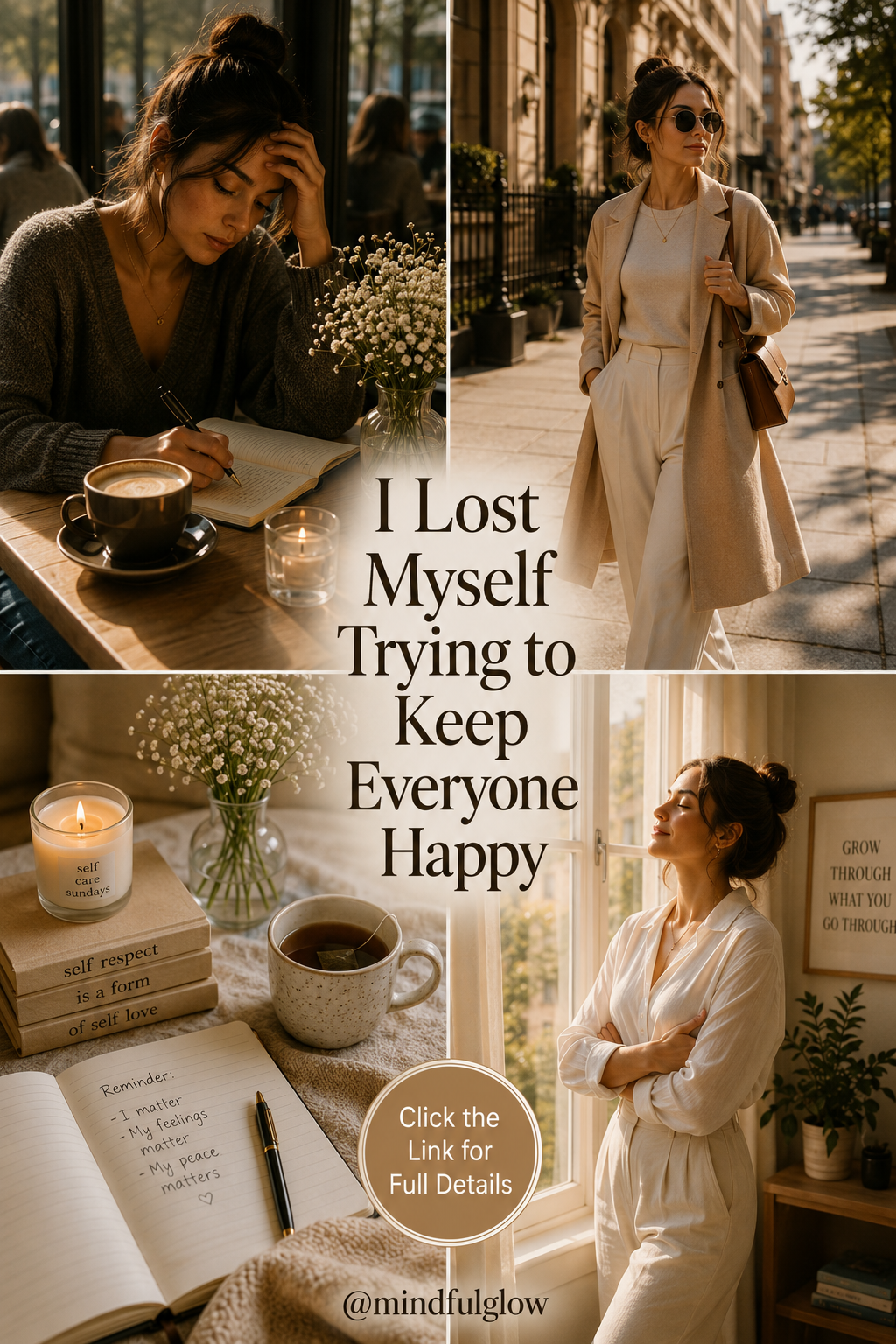
For years, I thought being a good person meant making everyone happy.
I said yes when I wanted to say no.
I apologized for things that weren’t my fault.
I put other people’s needs before my own.
I avoided conflict at all costs.
I convinced myself that being liked was more important than being honest.
And little by little, I lost myself.
At the time, I didn’t realize what was happening.
I thought I was being kind.
I thought I was being selfless.
I thought I was doing the right thing.
But eventually, I learned a difficult truth:
There is a difference between kindness and self-abandonment.
The Need to Be Liked
For a long time, I measured my worth by how other people felt about me.
If someone was upset, I felt responsible.
If someone was disappointed, I blamed myself.
If someone didn’t like me, I spent hours wondering what I did wrong.
I became so focused on managing everyone else’s emotions that I completely ignored my own.
The problem with this mindset is that it creates an impossible standard.
No matter how hard you try, you cannot make everyone happy.
And the more you try, the more exhausted you become.
When People-Pleasing Becomes a Lifestyle
People-pleasing often starts with good intentions.
You want to be helpful.
You want to be supportive.
You want to avoid hurting people.
But over time, those good intentions can turn into unhealthy habits.
You start saying yes when you’re overwhelmed.
You tolerate behavior that makes you uncomfortable.
You stay silent when something bothers you.
You become afraid of disappointing anyone.
Eventually, you stop asking yourself what you want.
And that’s where the real problem begins.
The Moment I Realized Something Had to Change
One day, I looked at my life and realized I was constantly tired.
Not physically tired.
Emotionally tired.
I was carrying responsibilities that weren’t mine.
I was managing expectations that I never agreed to.
I was trying to be everything for everyone.
And yet I felt completely disconnected from myself.
That’s when I realized something important:
If making everyone else happy requires abandoning yourself, the cost is too high.
Learning to Set Boundaries
Setting boundaries felt uncomfortable at first.
I worried people would think I was selfish.
I worried people would be disappointed.
I worried people would leave.
But boundaries aren’t walls.
They’re guidelines.
They teach people how to treat you.
More importantly, they teach you how to respect yourself.
The first few times I said no, it felt difficult.
But every time I honored my own needs, I felt stronger.
Understanding That Not Everyone Will Like You
One of the biggest lessons I learned was accepting that not everyone will approve of me.
And that’s okay.
You can be kind and still disappoint people.
You can be respectful and still be misunderstood.
You can have good intentions and still face criticism.
Trying to avoid all disapproval is impossible.
The goal isn’t to be liked by everyone.
The goal is to be authentic.
Choosing Self-Respect Over Approval
There comes a point where you have to decide:
Do you want everyone’s approval, or do you want your own respect?
Because sometimes you cannot have both.
Choosing yourself doesn’t mean becoming selfish.
It means recognizing that your needs matter too.
It means understanding that your worth is not determined by how useful you are to others.
It means valuing your peace as much as you value everyone else’s.
What Changed When I Stopped People-Pleasing
When I stopped trying to make everyone happy, something surprising happened.
I felt lighter.
I felt calmer.
I felt more confident.
I had more energy.
I had healthier relationships.
Most importantly, I felt like myself again.
The people who genuinely cared about me respected my boundaries.
And the people who only benefited from my lack of boundaries slowly disappeared.
Final Thoughts
If you’re constantly trying to keep everyone happy, I want you to remember this:
You are not responsible for everyone’s feelings.
You are not required to sacrifice your peace to earn love.
You are not selfish for having boundaries.
You are allowed to say no.
You are allowed to change your mind.
You are allowed to prioritize yourself.
Because the truth is, the moment you stop abandoning yourself for other people is often the moment you finally start finding yourself again.
And that may be the most important glow-up of all.