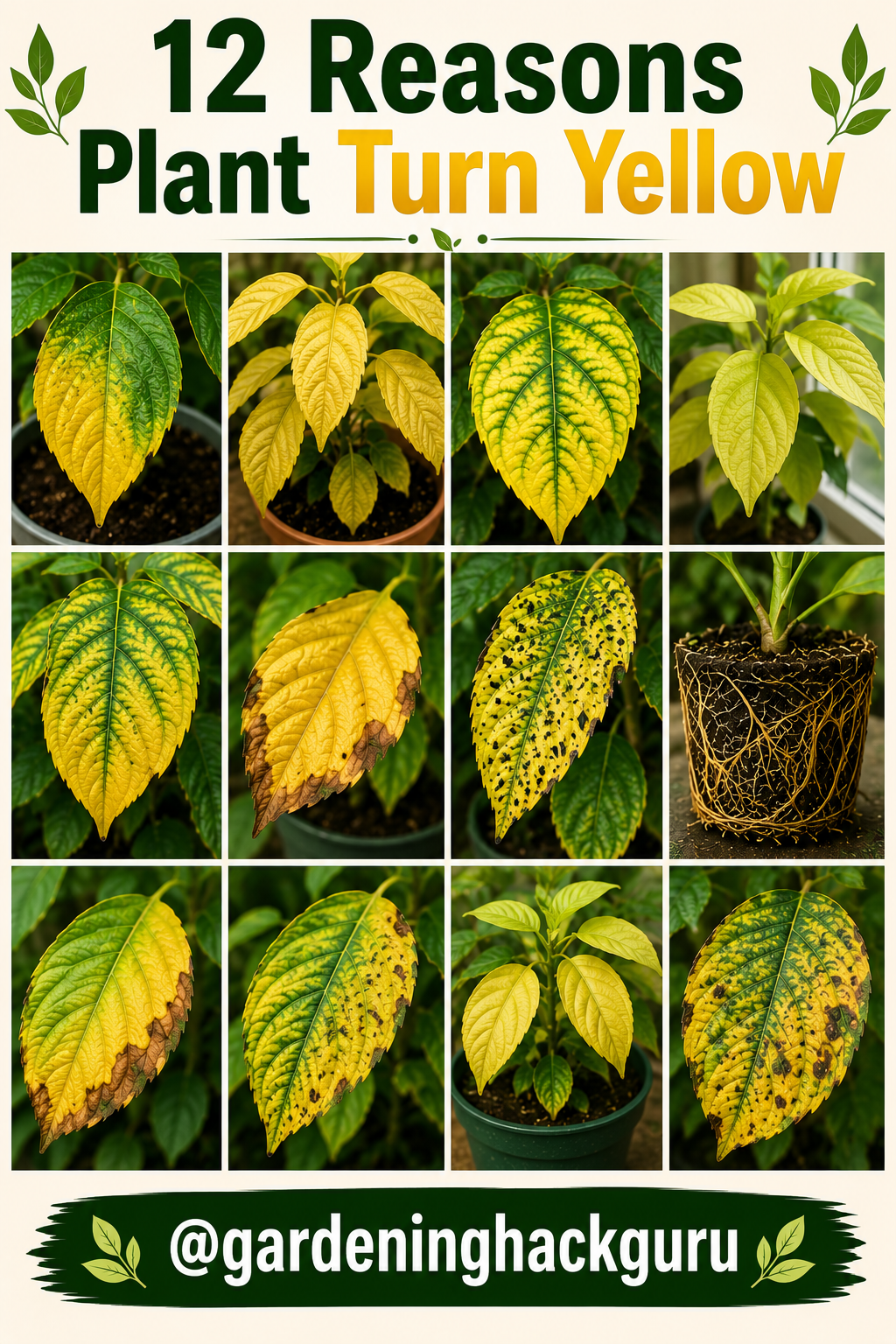
Healthy green leaves are one of the clearest signs of a thriving plant. So when leaves begin turning yellow, many gardeners immediately worry that something is wrong. While yellow leaves can indicate a problem, they are often your plant’s way of communicating its needs.
Understanding the most common causes of yellowing leaves can help you diagnose the issue early and restore your plant’s health before serious damage occurs.
1. Overwatering
One of the most common causes of yellow leaves is overwatering.
When roots sit in constantly wet soil:
- Oxygen cannot reach the roots
- Root rot may develop
- Leaves begin turning yellow and drooping
Always allow the top layer of soil to dry slightly before watering again.
2. Underwatering
Too little water can also cause yellow foliage.
Signs include:
- Dry soil
- Crispy leaf edges
- Wilting leaves
Consistent watering helps plants stay healthy and vibrant.
3. Poor Drainage
Even if you’re watering correctly, poor drainage can create problems.
Containers without drainage holes often trap excess moisture around the roots, leading to yellow leaves and root stress.
4. Lack of Sunlight
Plants need sunlight to produce energy through photosynthesis.
When they don’t receive enough light:
- Growth slows
- Leaves become pale
- Older leaves may turn yellow
Move plants to a brighter location if needed.
5. Nutrient Deficiency
Plants require essential nutrients to stay healthy.
Common deficiencies include:
- Nitrogen
- Magnesium
- Iron
- Potassium
A balanced fertilizer can often correct nutrient-related yellowing.
6. Natural Aging
Sometimes yellow leaves are completely normal.
As plants mature:
- Older leaves naturally die off
- New growth replaces old foliage
If only a few lower leaves are yellowing, natural aging may be the cause.
7. Pest Infestations
Tiny insects can damage leaves and weaken plants.
Common pests include:
- Aphids
- Spider mites
- Whiteflies
- Mealybugs
Regular inspections help catch pest problems early.
8. Root Bound Plants
When roots outgrow their container, plants become stressed.
Symptoms include:
- Slow growth
- Yellow leaves
- Frequent wilting
Repotting into a larger container often solves the problem.
9. Temperature Stress
Plants dislike sudden temperature changes.
Extreme:
- Heat
- Cold
- Drafts
- Frost
can all contribute to yellow foliage.
10. Chemical Buildup
Over time, fertilizers and minerals from tap water can accumulate in soil.
This buildup may:
- Damage roots
- Interfere with nutrient absorption
- Cause leaf yellowing
Flushing the soil occasionally helps prevent salt accumulation.
11. Over-Fertilizing
Too much fertilizer can burn roots and damage leaves.
Common signs include:
- Yellow leaves
- Brown tips
- Salt buildup on soil
More fertilizer doesn’t always mean healthier plants.
12. Plant Diseases
Fungal and bacterial diseases often cause yellowing foliage.
Watch for:
- Spots
- Mold
- Wilting
- Leaf drop
Early treatment can prevent the spread of disease.
How to Keep Leaves Green
For healthier plants:
- Water correctly
- Provide proper sunlight
- Use quality soil
- Fertilize appropriately
- Monitor for pests
- Repot when necessary
Healthy roots are the foundation of healthy leaves.
Final Thoughts
Yellow leaves are not always a reason to panic. In many cases, they simply provide clues about what your plant needs. By understanding the common causes of leaf yellowing, you can quickly identify the issue and take action before it affects the entire plant.
A little observation and proper care can help restore lush, green growth and keep your garden thriving all season long.
🌿 Happy Gardening!
@gardeninghackguru