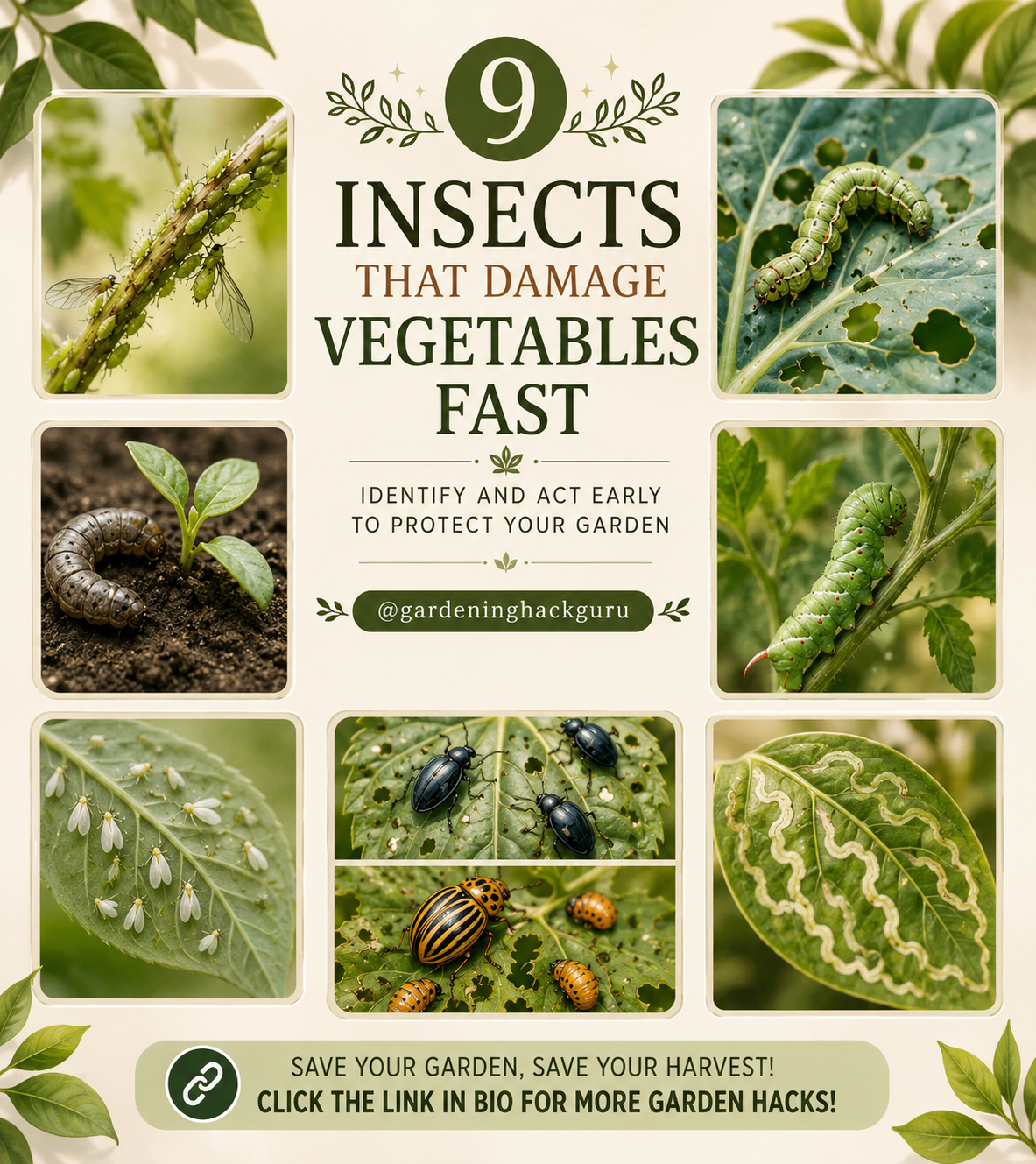
Your vegetable garden may look healthy one day and completely damaged the next. Tiny insects can destroy leaves, roots, stems, and even entire crops before many gardeners notice the signs. The key to protecting your garden is learning how to identify these pests early and taking action before the damage spreads.
Here are 9 common garden insects that damage vegetables quickly and what you can do to stop them naturally.
1. Aphids
Aphids are tiny soft-bodied insects that gather in large groups on stems and leaves. They suck the sap from plants, causing leaves to curl, wilt, and turn yellow.
Signs of Damage:
Sticky leaves
Curled new growth
Ants crawling around plants
How to Control:
Spray plants with strong water pressure
Use neem oil
Introduce ladybugs to your garden
2. Cabbage Worms
These green caterpillars love cabbage, broccoli, kale, and cauliflower. They chew large holes in leaves very quickly.
Signs of Damage:
Large holes in leaves
Green droppings on plants
Missing leaf edges
How to Control:
Hand-pick worms
Use row covers
Spray BT (Bacillus thuringiensis)
3. Cutworms
Cutworms attack young seedlings at night by cutting the stems near the soil surface.
Signs of Damage:
Seedlings suddenly fall over
Stem cut at ground level
How to Control:
Place cardboard collars around seedlings
Keep weeds removed
Turn soil before planting
4. Whiteflies
Whiteflies hide under leaves and suck plant juices, weakening vegetables over time.
Signs of Damage:
Tiny white insects flying when leaves are touched
Yellowing leaves
Sticky residue
How to Control:
Use yellow sticky traps
Spray insecticidal soap
Improve airflow between plants
5. Flea Beetles
These tiny black beetles chew dozens of small holes in leaves, especially on eggplant, radish, and spinach.
Signs of Damage:
Shot-hole appearance on leaves
Weak young plants
How to Control:
Use floating row covers
Apply diatomaceous earth
Mulch around plants
6. Colorado Potato Beetles
These striped beetles are extremely destructive to potatoes, tomatoes, and peppers.
Signs of Damage:
Skeletonized leaves
Orange eggs under leaves
Rapid leaf loss
How to Control:
Remove eggs manually
Rotate crops yearly
Spray neem oil
7. Leaf Miners
Leaf miners tunnel inside leaves, leaving white winding trails.
Signs of Damage:
Curvy white lines inside leaves
Damaged spinach, beets, and tomatoes
How to Control:
Remove affected leaves
Use row covers
Avoid over-fertilizing
8. Tomato Hornworms
These large green caterpillars can strip tomato plants almost overnight.
Signs of Damage:
Missing tomato leaves
Large droppings
Damaged green tomatoes
How to Control:
Hand-pick hornworms
Encourage birds and beneficial insects
Spray organic BT treatment
9. Slugs and Soil Grubs
Although not technically insects, these pests destroy roots and young plants rapidly.
Signs of Damage:
Chewed leaves
Slime trails
Wilting seedlings
How to Control:
Use crushed eggshells around plants
Water in the morning
Set beer traps for slugs
How to Protect Your Vegetable Garden Naturally
Healthy gardens are less likely to suffer severe pest attacks. Here are a few simple habits that help prevent infestations:
Check plants daily
Remove damaged leaves early
Rotate crops every season
Keep weeds under control
Avoid overcrowding plants
Encourage beneficial insects like ladybugs and bees
Natural pest control methods are safer for your vegetables, soil, pets, and pollinators while still keeping harmful insects away.
Garden pests can spread fast, but early identification makes a huge difference. The sooner you notice holes, curling leaves, or strange trails, the easier it becomes to save your vegetables and protect your harvest.
A healthy, thriving garden starts with observation, quick action, and simple natural solutions. 🌱